
Buta no Shogayaki
Buta no Shogayaki is a stir-fried dish made with pork loin, ginger, soy sauce, and mirin, focusing on flavor balance and meat tenderness.
Contents (5 sections)▾
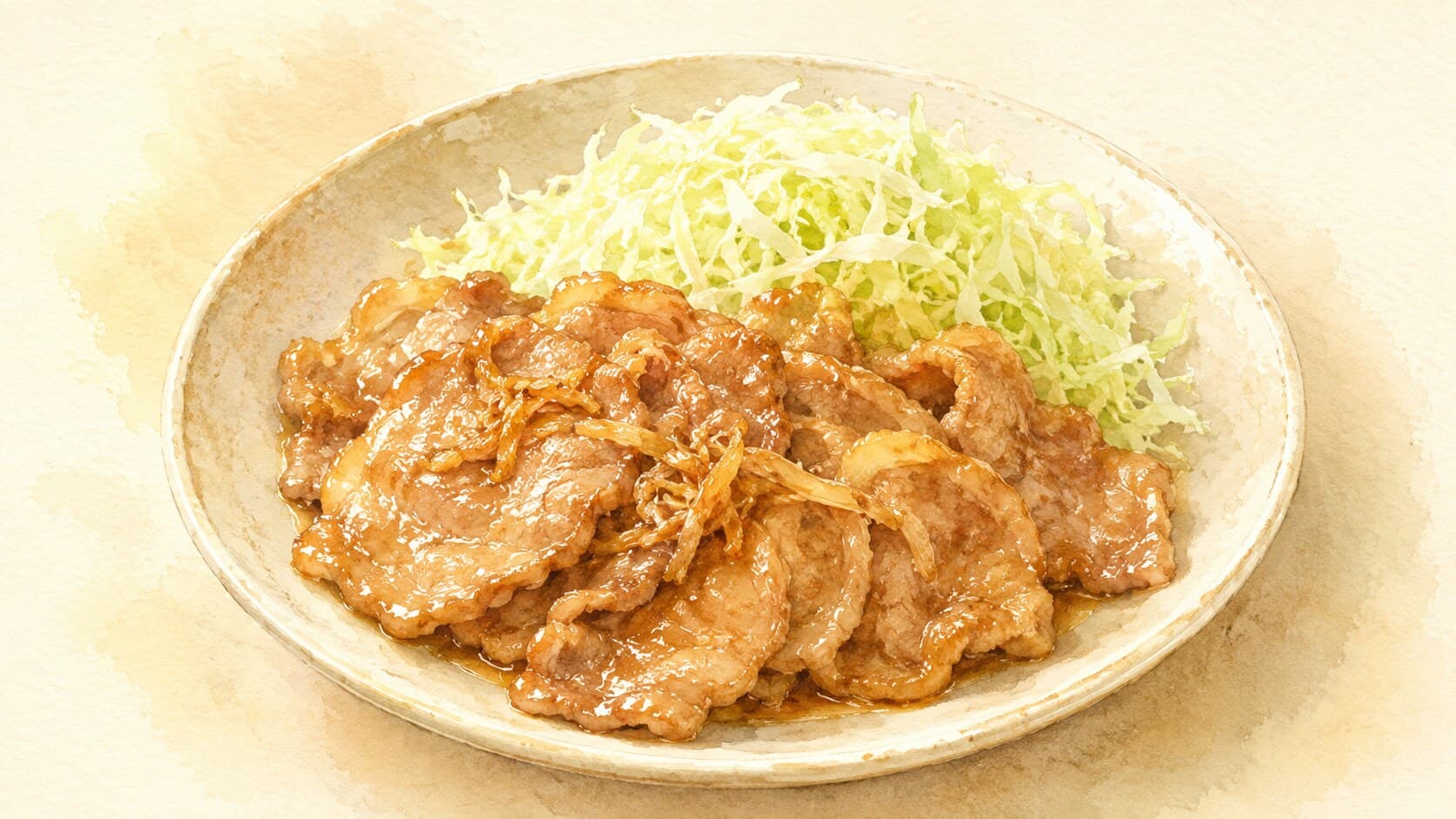
Ingredients
- 300 g pork loin, thinly sliced
- 2 tbsp soy sauce
- 1 tbsp sake
- 1 tbsp mirin
- 1 tbsp fresh ginger, grated
- 2 tbsp vegetable oil
- 1 spring onion, sliced (for garnish)
- Salt and pepper, to taste
Steps
In a bowl, combine the soy sauce, sake, mirin, and grated ginger to create the marinade. This will infuse the pork with rich flavors.
Add the sliced pork loin to the marinade, ensuring all pieces are well coated. Allow to marinate for at least 10 minutes to enhance the flavor.
Heat the vegetable oil in a large frying pan over medium-high heat until shimmering, about 2 minutes.
Add the marinated pork, including the marinade, to the pan. Stir-fry for 5-7 minutes, or until the pork is cooked through and slightly caramelized.
Season with salt and pepper to taste. Before serving, garnish with sliced spring onion for an added burst of freshness.
Tools you'll want
- · Microplane Premium Classic Zester (46020)
Why this works
The technique of sautéing pork loin in a ginger-soy marinade creates a beautifully balanced dish that showcases umami flavors. Ginger enhances taste and helps tenderize the meat, making it succulent. The mirin adds sweetness, while the soy sauce provides depth. Cooking the pork over medium-high heat caramelizes the sugars in the soy and mirin, resulting in a delightful glaze. If the sauce seems too thick, add a splash of water to loosen it. Conversely, if it breaks or becomes too oily, you can balance it by adding a little more soy sauce, which will also enhance flavor without overwhelming the dish. This dish exemplifies the importance of managing heat during cooking to achieve the perfect texture and finish.
Common mistakes
Pork crowded in the pan, releasing water instead of searing
- Target: a single layer of pork with breathing room — half the slices first if needed.
- Why it matters: crowded pork steams in its own juices; the soy-mirin sauce dilutes and never reduces to a glaze.
- What to do: sear in two batches if the pan is small. Slide each batch to a plate and bring it back when the sauce thickens.
Pulling slices off the heat while still pink in the centre
- Target: pork fully opaque, no pink line — internal temperature 63°C / 145°F minimum, with a brief rest.
- Why it matters: the slices are thin and quick to cook, but the ginger marinade does not cure the meat. Cook-through is the only safety.
- What to do: slice thin, cook over medium-high until colour is uniform on both sides, and check with a thermometer (an instant-read probe thermometer for food) if you are unsure.
Adding all the marinade at once and chasing a thin watery sauce
- Target: sauce poured in after the pork has taken colour, then reduced 60-90 seconds to a glossy coat.
- Why it matters: liquid added too early prevents browning; not reducing leaves the sauce thin and dull instead of clinging to each slice.
- What to do: brown the pork first, then add the marinade and tilt the pan, swirling until the sauce reduces enough to coat the back of a spoon.
Grated ginger added too late, then the alliinase punch is lost
- Target: freshly grated ginger added with the soy mixture, not after — and never grated more than thirty minutes ahead.
- Why it matters: ginger's volatile aromatics dissipate quickly once grated; held too long, it loses the sharp top note that gives the dish its name.
- What to do: grate ginger just before the sauce step, including any juice.
What to look for
- the sauce reduces to a clinging glaze, dark brown and glossy — no thin puddle pooling in the pan
- each pork slice shows light caramel edges where it touched the pan, with no pink line at the centre
- the ginger aroma rises sharp and bright in the last thirty seconds, not muddy or sweet alone
- a slice held vertically lets a single drop of glaze slide off slowly — coating, not running
A note on history
Shogayaki — shōga (ginger) plus yaki (grilled or pan-cooked) — became a Japanese home-cooking staple after the Second World War. Pork became more widely affordable as the Japanese food system modernised, and a Tokyo izakaya (a Japanese pub serving small plates with drinks) in Ginza is often credited with developing the dish commercially in the 1940s as a fast, repeatable lunch counter order. By the 1950s and 60s, shogayaki had moved firmly into shokudo (casual neighborhood diner) menus and home kitchens, where it remains a defining dish of post-war Japanese teishoku (set-meal: rice + soup + main + sides) culture.
Get the essays in your inbox — free
Weekly notes on flavor, fermentation, and food history — the writing behind the Atlas of Flavor. No spam; unsubscribe anytime.