
Shish Taouk
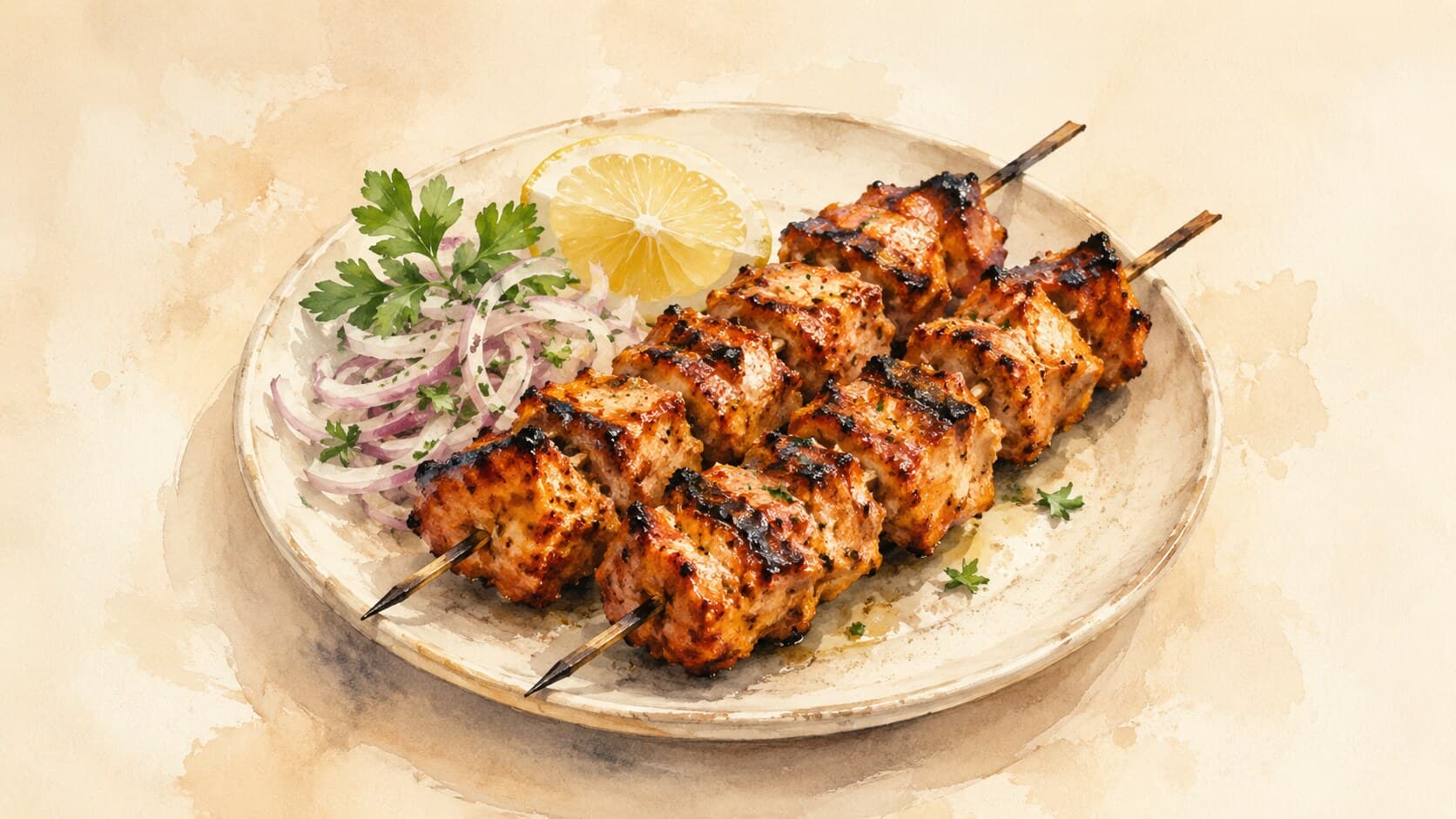
Yogurt-marinated chicken thigh cubes grilled hot over coals and served with toum — a Levantine technique chain built on marinade, char, and contrast.
Contents (5 sections)▾
Ingredients
- 500 g chicken thighs, cut into 2.5 cm cubes
- 150 g plain yogurt
- 4 cloves garlic, minced
- 1 lemon, juiced
- 2 tbsp olive oil
- 1 tsp ground cumin
- 1 tsp paprika
- Salt, to taste
- Pepper, to taste
- Skewers, soaked in water if wooden
Steps
In a bowl, combine yogurt, minced garlic, lemon juice, olive oil, cumin, paprika, salt, and pepper to create the marinade.
Add chicken cubes to the marinade, ensuring they are well coated. Cover and refrigerate for at least 1 hour, preferably overnight for better flavor.
Preheat your grill to high heat, around 200°C (400°F).
Thread the marinated chicken onto skewers, leaving some space between each piece for even cooking.
Grill the skewers for about 12-15 minutes, turning occasionally until the chicken is charred and cooked through, with an internal temperature of 75°C (165°F).
Remove skewers from the grill and let them rest for a few minutes before serving with toum.
Why this works
Marinating the chicken in yogurt tenderizes the meat, which is crucial for achieving juicy, flavorful skewers. The acidity from the lemon juice and the enzymes in yogurt break down proteins, leading to a more tender texture. Garlic adds depth and complements the yogurt's tanginess, while spices like cumin and paprika enhance the overall flavor. It's important to grill at high heat to achieve that desirable char, which adds a smoky flavor and appealing appearance. If the chicken seems too dry after grilling, brushing with a little olive oil during cooking can help maintain moisture and enhance flavor. Remember to soak wooden skewers to prevent them from burning on the grill, ensuring a successful grilling experience.
Common mistakes
Pulling skewers off before the chicken is fully cooked through
- Target: thickest cube at 74°C / 165°F internal on an instant-read thermometer (a probe-style thermometer that reads the temperature in a few seconds).
- Why it matters: the yogurt-acid marinade is for flavor and tenderness — it does not pasteurize the chicken. Cook-through is the only safety.
- What to do: probe the largest cube on each skewer; if any reads short, return to the grill for another minute and recheck.
Crowding the skewer so the cubes touch and steam each other
- Target: a finger's gap between cubes — about 5-10 mm of skewer visible.
- Why it matters: touching cubes block convection, the contact faces stay grey, and you lose the deep char that defines the dish.
- What to do: thread loosely; if the recipe yields more meat than skewers can hold with space, use an extra skewer.
Marinating long past the acid's useful window
- Target: 2-8 hours in the yogurt mixture; never beyond overnight.
- Why it matters: prolonged exposure to lemon acid denatures the surface proteins into a chalky, mealy texture instead of a tender bite.
- What to do: plan the marinade backwards from grill time; if life intervenes, drain the chicken and refrigerate dry until you can cook it.
Cold grill at start, then chasing colour with longer time
- Target: grate fully preheated to 200°C / 400°F before the first skewer touches it.
- Why it matters: on a cool surface, the chicken releases water before it can sear, and you overcook the inside reaching for char outside.
- What to do: preheat at least 10 minutes covered, then oil the grate just before the skewers go on.
What to look for
- the yogurt marinade clings as a thin coating, not a thick paste — it has hydrated the surface, not glazed it
- each cube shows distinct dark grill marks where it touched the grate, with paler skin between
- a quick cut into the largest cube shows uniform white throughout, juices running clear, no pink line at the centre
- the skewers rest a minute before serving so they come off their peak heat and shed less onto the plate
A note on history
Shish taouk (a Levantine grilled chicken kebab) traces its name to the Ottoman skewer tradition — shish from Turkish sış ("pointed stick"), and taouk/tawook from old Turkic takagu via Arabic, meaning chicken. As Ottoman cuisine spread through the Levant (the eastern Mediterranean region — Lebanon, Syria, Jordan, Palestine) from the sixteenth century onward, Lebanese and Syrian cooks rebuilt the marinade around local pantry staples: yogurt, garlic, lemon, olive oil, paprika, sometimes a touch of cinnamon or ginger. That Levantine version is the one most home cooks know today.
Get the essays in your inbox — free
Weekly notes on flavor, fermentation, and food history — the writing behind the Atlas of Flavor. No spam; unsubscribe anytime.