
Semla
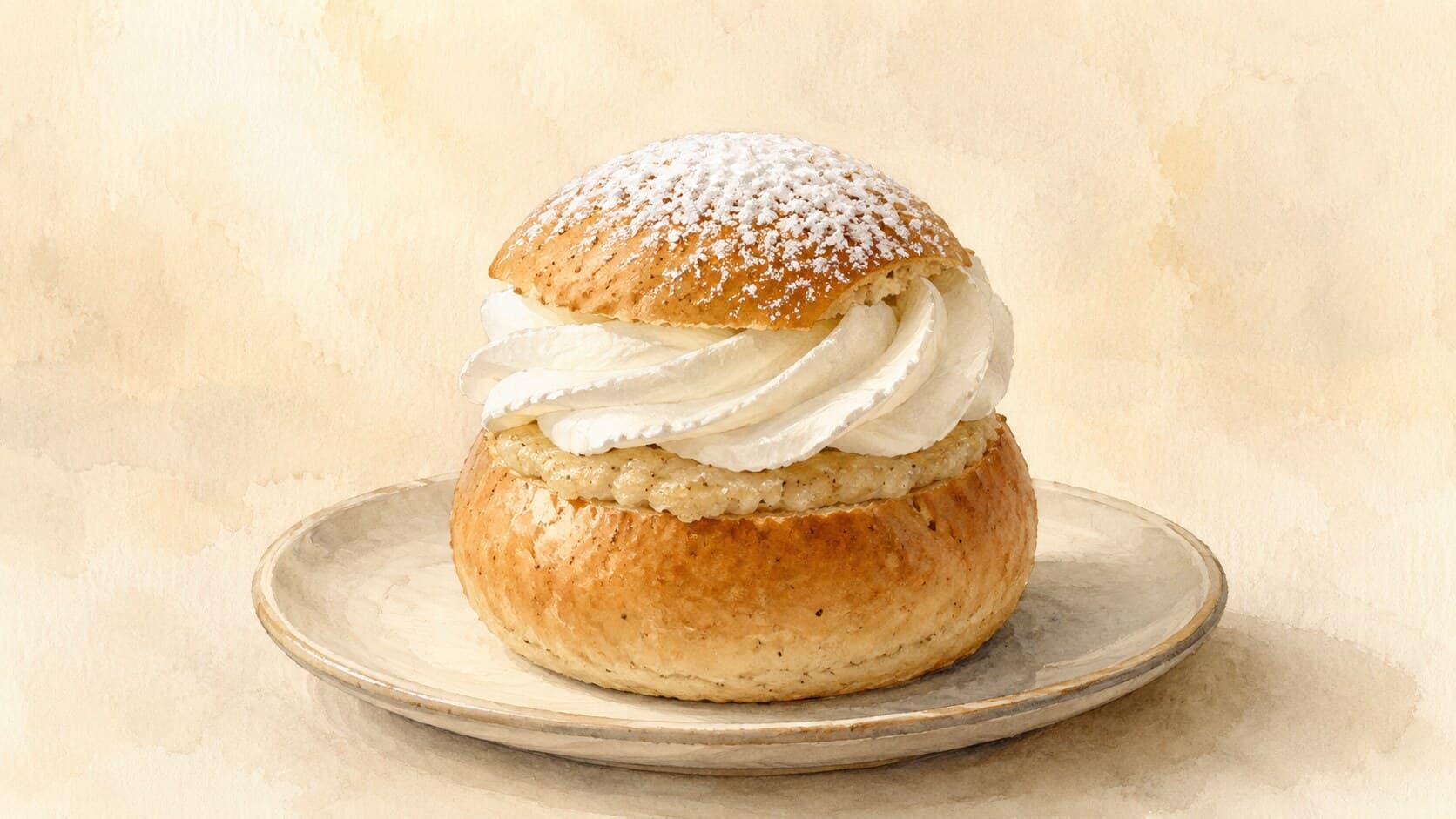
Semla is a Swedish dessert consisting of a cardamom bun filled with almond paste and topped with whipped cream.
Contents (5 sections)▾
Ingredients
- 500 g all-purpose flour
- 75 g unsalted butter, softened
- 250 ml milk, lukewarm
- 50 g granulated sugar
- 1 packet (7 g) active dry yeast
- 1/2 tsp ground cardamom
- 1/2 tsp salt
- 1 large egg
- 125 g almond paste
- 250 ml heavy cream
- Powdered sugar, for dusting
Steps
In a bowl, combine lukewarm milk and active dry yeast. Let it stand for 5-10 minutes until frothy to ensure the yeast is active.
In a large mixing bowl, combine flour, sugar, ground cardamom, and salt. Mix well before adding the softened butter and yeasty milk mixture.
Add the egg and knead the dough for about 10 minutes until smooth and elastic. If the dough is too sticky, gradually add more flour.
Cover the dough and let it rise in a warm place for about 1 hour, or until doubled in size.
Preheat the oven to 200°C (390°F). Once risen, punch down the dough and divide it into 8 equal pieces. Shape each piece into a ball.
Place the dough balls on a baking sheet lined with parchment paper and let them rise for another 30 minutes.
Bake the buns for 12-15 minutes or until golden brown. Remove from the oven and let cool.
Once cooled, cut off the tops of the buns and hollow out a little of the inside. Mix the almond paste with a splash of milk to make it spreadable.
Fill the hollowed buns with the almond paste and top with whipped cream. Replace the tops and dust with powdered sugar.
Why this works
The success of Semla lies in the balance of flavors and textures created during its preparation. The use of cardamom in the dough infuses a warm, aromatic flavor that is quintessential in Swedish baking. The yeast dough must rise sufficiently to develop a light and airy texture; hence, allowing the dough to double in size is crucial. If the dough seems too sticky during kneading, adding a little more flour can help achieve the right consistency, ensuring easy shaping. The filling of almond paste adds a nutty sweetness, while the whipped cream provides a rich contrast. The powdered sugar dusting adds visual appeal and a touch of sweetness, completing this traditional Lenten pastry. The overall harmony of flavors and textures makes Semla a seasonal treat in Sweden.
Common mistakes
Milk too hot when meeting the yeast.
- Target: lukewarm milk, 35-40°C — warm to the wrist, never hot.
- Why it matters: above 50°C the yeast (the living micro-organism that ferments dough and makes it rise) cells start to die and the dough either rises sluggishly or not at all, producing dense, gummy buns.
- What to do: heat the milk just to body temperature; if you overshoot, let it cool before adding the yeast.
Cardamom added pre-ground, weeks old.
- Target: pods freshly cracked and seeds freshly ground for this batch.
- Why it matters: cardamom's volatile aromatics fade within weeks of grinding; old powder gives a flat, dusty buns instead of the warm, almost piney perfume that defines a semla.
- What to do: crack pods, lift out the black seeds, grind in a mortar or spice grinder just before mixing the dough.
Underproofed buns baked too early.
- Target: buns roughly doubled, springing back slowly when poked, after about 30 minutes of second proof (the final rise of shaped dough before baking).
- Why it matters: underproofed buns rise unevenly in the oven, splitting at the sides, and stay heavy inside — they cannot hold a generous cream cap.
- What to do: test by poking gently; the dimple should slowly fill back about halfway. If it springs back immediately, give it more time.
Cream over-whipped into butter.
- Target: soft, billowy peaks that hold their shape but still look glossy.
- Why it matters: over-whipped cream goes grainy and starts separating into butter and buttermilk; that texture in the cap collapses the whole bun.
- What to do: whip cold cream in a cold bowl, stop the moment the whisk leaves clear trails, and finish with a few strokes by hand.
What to look for
- the dough during kneading: smooth, slightly tacky to the touch, never gluey on your fingers
- proofed buns lightly domed and bouncy, springing slowly back when pressed
- the cardamom aroma rises from the oven as soon as you open the door
- the whipped cream cap stands tall but soft, the top "hat" of dough sitting on it like a snowy lid
A note on history
Semla evolved from a simple Lenten (the Christian fasting season before Easter) wheat bun — the word semla derives from the Latin simila, meaning fine wheat flour — and was historically eaten on Fettisdagen (Shrove Tuesday) as a final indulgence before the forty-day Lenten fast. The cream-and-almond-paste form most people recognize today is a modern evolution of an older bun-in-warm-milk version called hetvägg. King Adolf Frederick of Sweden is sometimes blamed for dying of digestion problems in 1771 after eating fourteen hetvägg, though that meal also included lobster, caviar, sauerkraut, smoked herring and champagne, so the bun's exact culpability is debated.
Get the essays in your inbox — free
Weekly notes on flavor, fermentation, and food history — the writing behind the Atlas of Flavor. No spam; unsubscribe anytime.