
Scallion Oil Noodles (Cong You Ban Mian)
Scallion Oil Noodles consist of cooked noodles tossed with scallion-infused oil, enhancing flavor through oil infusion and layering.
Contents (5 sections)▾
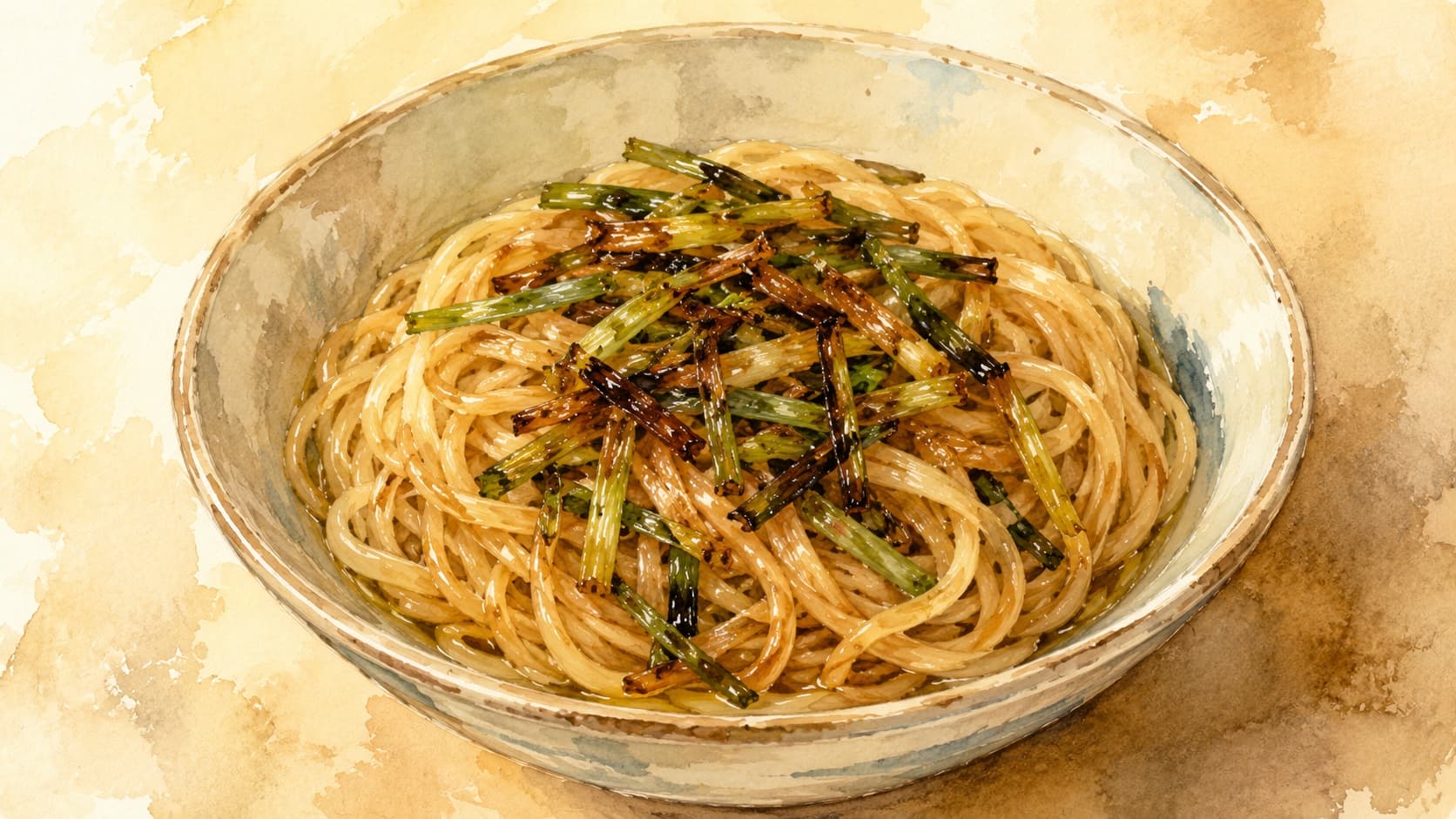
Ingredients
- 200 g Chinese wheat noodles
- 4 tbsp vegetable oil
- 6 scallions, finely chopped
- 1 tbsp soy sauce
- 1 tbsp oyster sauce
- 1 tsp sesame oil
- Salt to taste
- Pepper to taste
Steps
Cook the Chinese wheat noodles in boiling salted water for about 5-7 minutes or until al dente. This ensures the noodles have a firm bite and will hold up well with the oil.
While the noodles are cooking, heat the vegetable oil in a pan over medium heat. Adding the oil slowly allows it to infuse with the scallion flavor.
Once the oil is hot, add the chopped scallions and sauté for about 2-3 minutes until they are fragrant and slightly golden. This step develops the aromatic quality of the oil.
Drain the cooked noodles and add them directly to the pan with the scallion oil. Toss them for about 2 minutes to ensure they are well coated.
Add the soy sauce, oyster sauce, sesame oil, salt, and pepper. Toss again for another minute to combine all the flavors evenly.
Why this works
The key to perfect Scallion Oil Noodles lies in the technique of creating a flavorful scallion oil. By heating the oil with scallions, you release their essential oils and flavor compounds, resulting in a rich and aromatic base. Cooking the noodles just until al dente prevents them from becoming mushy when tossed with the oil. If the scallion oil seems too strong, balance it by adding a bit more sesame oil or a splash of cooking water to mellow the flavor. This dish is versatile, allowing for adjustments based on personal preference or ingredient availability. If the noodles stick together, a splash of hot water can help loosen them, ensuring a smooth, enjoyable dish.
Common mistakes
Scallions cooked over too-high heat.
- Target: gently sizzling oil that turns the scallion whites toasty-gold over 8-10 minutes, not seconds.
- Why it matters: the whole point of the technique is slow extraction (gently coaxing aroma compounds out of an aromatic into the surrounding oil) — high heat scorches the surface and leaves the inside raw, giving a bitter, sharp oil rather than the sweet, deep one you are after.
- What to do: start cold or barely warm oil, raise the heat slowly, and pull the moment the whites are an even amber.
Leftover scallion oil left at room temperature.
- Target: cooled within 1-2 hours, refrigerated, and used within 3-4 days maximum.
- Why it matters: scallions are a low-acid aromatic and infused oil at room temperature is a textbook Clostridium botulinum environment. Botulinum toxin is colorless, odorless and tasteless — you cannot detect it.
- What to do: if you make more oil than one bowl needs, strain it, refrigerate immediately, and discard any leftover past four days.
Noodles overcooked, then tossed cold.
- Target: drained at firm al dente (Italian for "to the tooth" — cooked through but still with a slight bite), immediately into the hot pan with the oil.
- Why it matters: the noodles continue to soften in residual heat; if they cross the line before they meet the oil, the dish goes claggy and the oil sits on top instead of clinging.
- What to do: undercook by 30 seconds against the package time and toss the moment they are out of the water.
Sauce poured in cold instead of warmed in the oil.
- Target: soy and oyster sauce hitting the still-hot oil so they bloom and reduce slightly.
- Why it matters: cold sauce on cooling noodles tastes raw and one-note; brief heat rounds the soy and pulls the salt and umami together.
- What to do: turn the heat back up for the final toss so you hear a quiet sizzle as the sauces hit the pan.
What to look for
- the scallion whites turn an even amber and curl slightly at the edges before you pull them
- the oil takes on a clear, light-green tint and smells sweet and grassy, not sharp
- the noodles glisten evenly with no pool of oil at the bottom of the bowl
- any unused oil goes straight from cooling rack to refrigerator — never sits on the counter
A note on history
Cong you ban mian (葱油拌面) is a humble Shanghainese street and home dish, long associated with the city's working-class breakfast and lunch trade. It is built around one of Chinese cooking's foundational moves — slow-infused aromatic oil (oil quietly steeped with scallion, ginger or other aromatics until it carries their flavor) — and is generally regarded today as one of Shanghai's signature noodle preparations, its exact origin uncertain but its lineage in twentieth-century Shanghainese kitchens well documented.
Get the essays in your inbox — free
Weekly notes on flavor, fermentation, and food history — the writing behind the Atlas of Flavor. No spam; unsubscribe anytime.