
Sayadieh
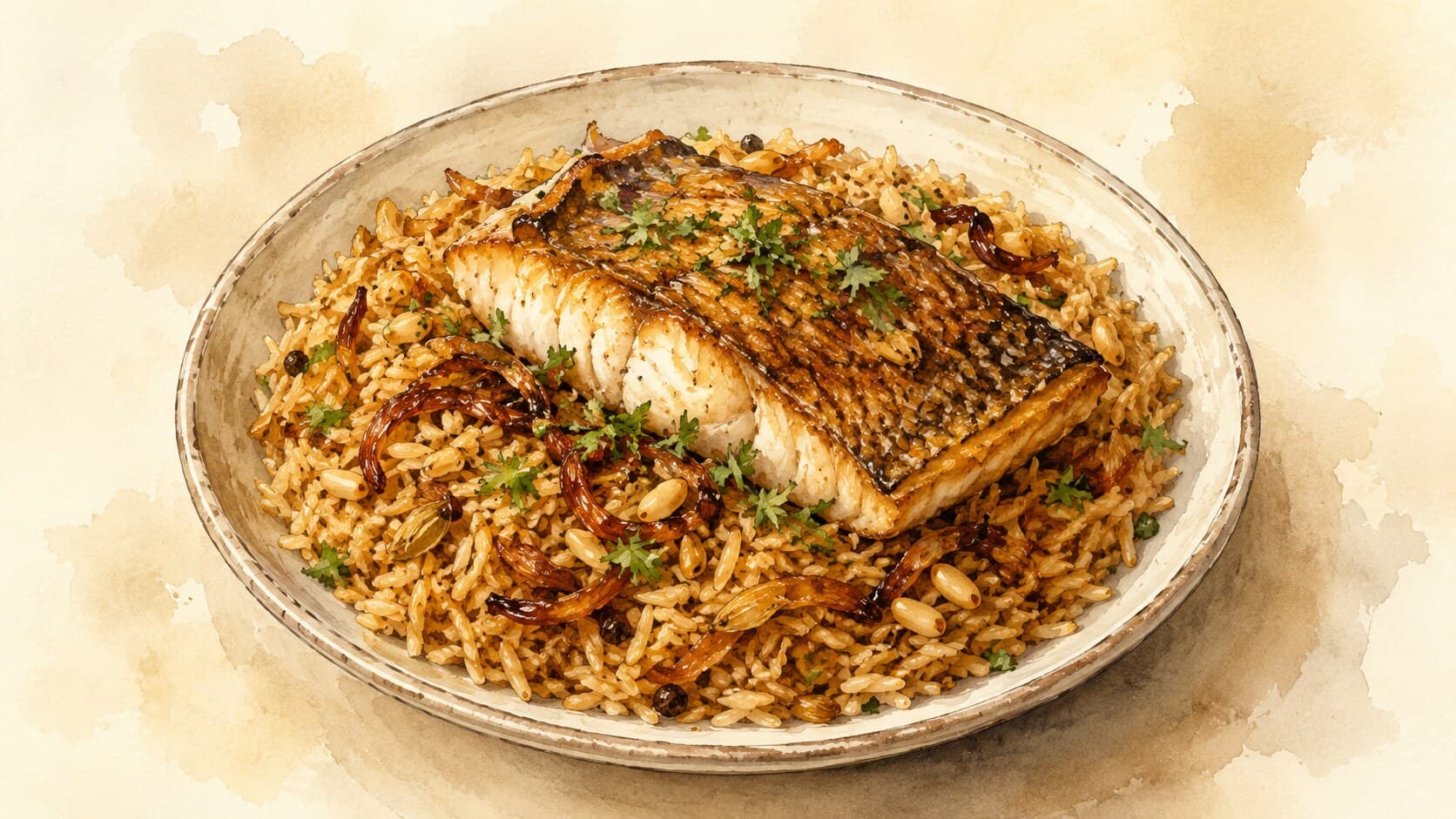
Sayadieh is a Levantine dish featuring cumin-spiced rice, seared fish, and caramelized onions, often served during special occasions.
Contents (5 sections)▾
Ingredients
- 250 g basmati rice
- 500 ml fish stock
- 2 tbsp cumin seeds
- 4 pieces white fish fillets (e.g., cod or haddock)
- 2 large onions, thinly sliced
- 3 tbsp olive oil
- Salt to taste
- Lemon wedges for serving
Steps
Rinse the basmati rice under cold water until the water runs clear. This removes excess starch, preventing the rice from becoming gummy.
In a pot, heat 2 tbsp of olive oil over medium heat. Add the cumin seeds and sauté for 1-2 minutes until fragrant, infusing the oil with flavor.
Add the rinsed rice to the pot and stir for 1-2 minutes, allowing it to toast slightly and absorb the cumin flavor.
Pour in the fish stock and season with salt. Bring to a boil, then reduce heat to low, cover, and simmer for 15 minutes until the rice is tender and liquid is absorbed.
While the rice cooks, heat the remaining olive oil in a skillet over medium-high heat. Season the fish fillets with salt and sear them for about 3-4 minutes per side, until golden and cooked through.
In the same skillet, add the sliced onions and cook over medium heat, stirring frequently, until they caramelize and turn deep brown, about 10 minutes.
Once the rice is cooked, fluff it with a fork and serve on a wide platter, topped with the seared fish and caramelized onions, garnished with lemon wedges.
Why this works
This recipe emphasizes the technique of cooking rice in fish stock, allowing it to absorb flavors while being infused with cumin. Toasting the rice in cumin oil enhances its flavor. Caramelizing onions contributes sweetness and color that contrasts with the fish. If the rice is too wet after cooking, let it sit off the heat with the lid on for a few minutes to evaporate excess moisture. If too dry, add a splash of water and stir gently to restore moisture without breaking the grains.
Common mistakes
Onions pulled too early.
- Target: deep mahogany brown, soft and jammy, not pale gold.
- Why it matters: sayadieh's (Lebanese spiced fish over cumin-scented rice) defining sweetness comes from fully caramelized onions (cooked slowly until natural sugars brown and turn jammy); underdone onions taste sharp and watery against the spiced rice.
- What to do: cook over medium-low for 25-35 minutes, stirring regularly; resist the urge to crank the heat.
Fish under-seasoned and under-cooked.
- Target: fillets opaque throughout, flaking cleanly when prodded with a fork, internal temperature 63°C / 145°F.
- Why it matters: white fish at the center of the dish carries the spice; raw or translucent flesh is both a flavor and food-safety problem.
- What to do: salt the fish 10 minutes before searing, dry the surface, and cook 3-4 minutes per side until fully opaque.
Rice cooked in plain water instead of stock.
- Target: rice grains glossed in cumin-scented oil, then simmered in real fish stock (a savory broth made by simmering fish bones or shells) or a strong dashi-style broth (Japanese kombu-and-fish-flake stock).
- Why it matters: the rice is half the dish; water leaves a flat backdrop and forces you to over-salt the fish to compensate.
- What to do: make or buy fish stock; if unavailable, simmer fish bones or shrimp shells in water with a bay leaf for 20 minutes first.
Cumin burned in the oil.
- Target: fragrant, deepened seeds with a nutty aroma, no acrid smoke.
- Why it matters: burnt cumin turns bitter and there is no way to rescue rice cooked in it.
- What to do: toast for 60-90 seconds in warm — not screaming-hot — oil, then add the rice immediately to halt the toasting.
What to look for
- the onions go from translucent to gold to a dark, jammy brown — pull only at the third stage
- the cumin shifts from raw and dusty to a warm, almost coffee-like fragrance just before the rice goes in
- the fish surface dries to matte before searing, then releases cleanly when the crust has formed
- the finished rice sits dry and separate when fluffed, each grain glossed but not sticky
A note on history
Sayadieh is a Levantine fisherman's dish (Levantine = the eastern Mediterranean coast — Lebanon, Syria, Palestine, Jordan) whose name comes from the Arabic sayad (صياد), meaning "fisherman." Historically it was made along the Mediterranean coast of Lebanon, Syria and Egypt, with cooks using freshly caught white fish and the stock of its bones to flavor the rice. An 1890 cookbook by the Lebanese author Khalil al-Khuri already records multiple variations, suggesting the dish was a firmly established part of coastal home cooking by the late nineteenth century.
Get the essays in your inbox — free
Weekly notes on flavor, fermentation, and food history — the writing behind the Atlas of Flavor. No spam; unsubscribe anytime.