
Sauce Gribiche
Sauce Gribiche is a cold French sauce made with emulsified egg yolks, mustard, vinegar, and chopped herbs, often served with meats or vegetables.
Contents (5 sections)▾
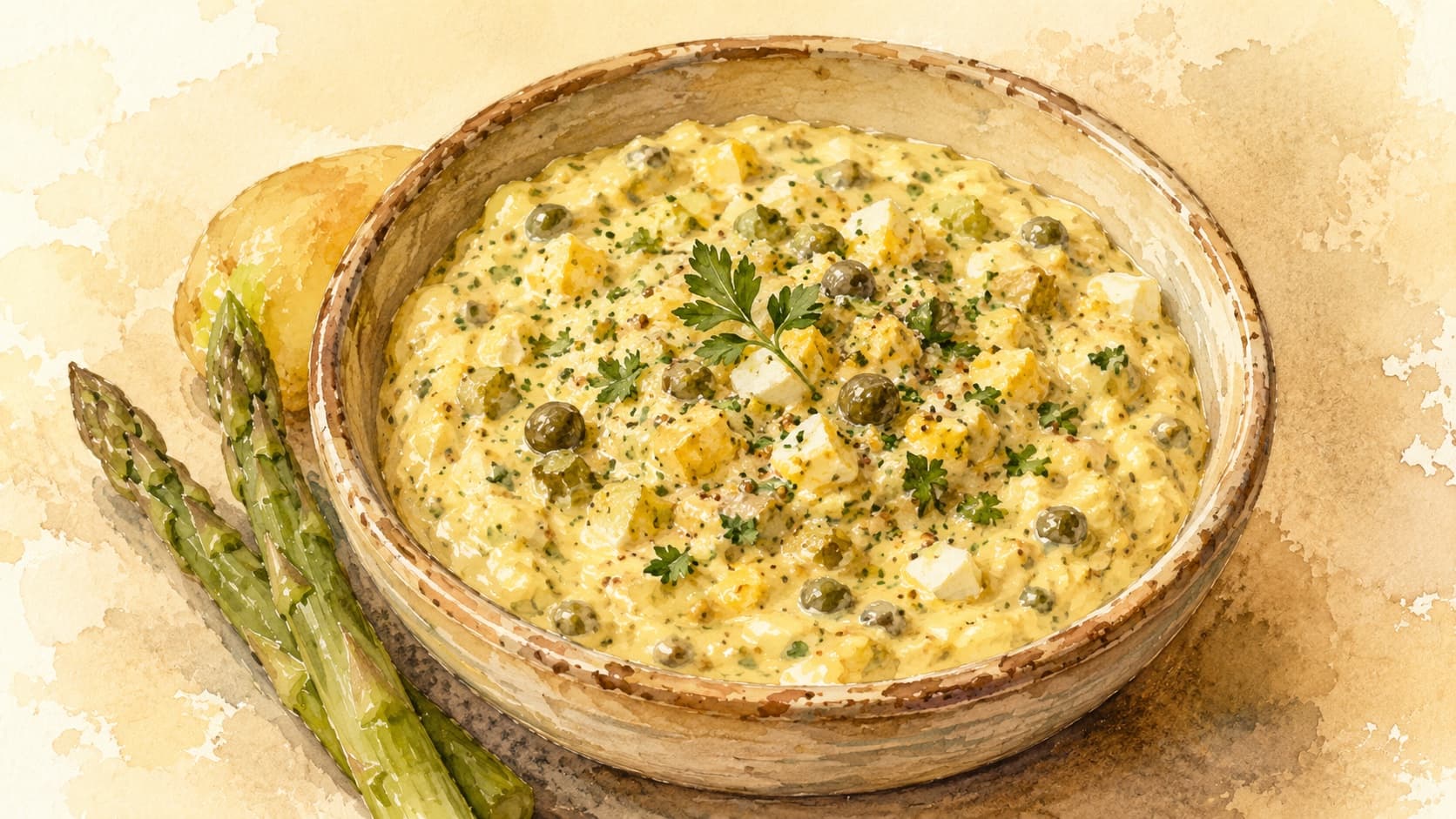
Ingredients
- 4 large eggs
- 150 ml olive oil
- 2 tbsp Dijon mustard
- 1 tbsp white wine vinegar
- 50 g capers, rinsed and drained
- 100 g cornichons, chopped
- 1 small bunch of fresh parsley, finely chopped
- 1 small bunch of fresh chives, finely chopped
- Salt to taste
- Black pepper to taste
Steps
In a pot of boiling water, carefully add the eggs and cook for 10 minutes for hard-boiled eggs. This ensures a firm yolk that will help create a stable emulsion.
Once cooked, transfer the eggs to an ice bath for 5 minutes to stop the cooking process, making them easier to peel.
Peel the eggs and separate the yolks from the whites. Finely chop the egg whites and set aside.
In a bowl, mash the egg yolks with Dijon mustard and white wine vinegar until smooth, then slowly whisk in the olive oil to create a stable emulsion.
Fold in the chopped egg whites, capers, cornichons, parsley, and chives. Season with salt and black pepper to taste.
Chill the sauce in the refrigerator for at least 15 minutes before serving to allow the flavors to meld.
Why this works
Sauce Gribiche is an emulsion-based sauce that combines the richness of egg yolks with the tanginess of mustard and vinegar, resulting in a creamy texture that beautifully enhances many dishes. The key to achieving a stable emulsion lies in the slow incorporation of olive oil into the mashed egg yolks. If the emulsion seems to break or separate, try whisking in a teaspoon of warm water to help bring it back together. Additionally, using fresh herbs like parsley and chives adds flavor and brightens the sauce visually. The capers and cornichons provide a delightful crunch and acidity, balancing the richness of the sauce. This cold herb sauce is excellent served with boiled vegetables, fish, or even as a dressing for salads. Proper chilling allows the flavors to integrate fully, making it a versatile addition to your culinary repertoire.
Common mistakes
Soft-boiled or partially cooked eggs
- Target: eggs hard-boiled for a full 10 minutes, with yolks fully set, opaque pale yellow, and easy to crumble.
- Why it matters: gribiche is built on cooked yolks — that's the safety distinction from raw-yolk mayonnaise (an emulsion made with uncooked egg yolks, oil, and acid) — so any wet, jammy, or runny center is wrong for this sauce.
- What to do: lower eggs into already-boiling water and time exactly 10 minutes, then transfer to an ice bath; if a yolk shows a wet or dark-orange center when peeled, cook a fresh batch rather than use it.
Oil added too fast
- Target: an emulsion thick enough to hold the line of a whisk through it, with no free oil pooling on the surface.
- Why it matters: the mashed cooked yolks can only absorb fat slowly; dumped oil will float instead of emulsifying, leaving you with a greasy paste.
- What to do: start with droplets while whisking constantly, then move to a thin stream once the base looks glossy and tight — if it ever looks slick or broken, stop adding oil and whisk in a teaspoon of warm water to recover.
Watery herbs and pickles
- Target: chopped capers, cornichons, and herbs that look dry on the cutting board, not weeping liquid onto the blade.
- Why it matters: excess brine and herb water will thin the emulsion and make the sauce taste flat and pickle-forward instead of bright.
- What to do: rinse capers, pat cornichons dry, and chop herbs at the last moment — fold everything in by hand at the end rather than during emulsification.
Under-seasoned, flat finish
- Target: a sauce where mustard, vinegar, and salt all sit forward, with the herbs and pickles audible underneath.
- Why it matters: cold fat-based sauces mute flavors, so what tastes well-seasoned at room temperature can taste dull straight from the fridge.
- What to do: salt and taste once before chilling, then taste again after the 15-minute chill and adjust with a few drops of vinegar or a pinch of salt before serving.
What to look for
- A pale, almost yellow-cream sauce flecked with green herbs and visible bits of caper and cornichon.
- A tight, mayonnaise-like ribbon that falls in slow folds from a spoon rather than running off.
- A clean, sharp smell of mustard and vinegar rising first, with parsley and chives close behind.
- No glossy oil slick floating on top — a matte, unified surface.
A note on history
Sauce gribiche belongs to the family of classical French cold sauces and was codified in the early 20th century, most famously in Auguste Escoffier's Le Guide Culinaire (1903), which helped fix its form within haute cuisine (the elaborate, technically demanding tradition of high-end French cooking). Unlike sauces inherited from the aristocratic kitchens, gribiche has roots in home and inn cooking. It is built around hard-boiled egg yolks emulsified (whisked into a stable mixture of oil and water-based liquids that would otherwise separate) with mustard, vinegar, and oil, then finished with chopped whites, capers, cornichons (small, tart French pickled cucumbers), and herbs — and it is traditionally served cold with boiled meats, fish, and vegetables.
Get the essays in your inbox — free
Weekly notes on flavor, fermentation, and food history — the writing behind the Atlas of Flavor. No spam; unsubscribe anytime.