
Salsa Cruda
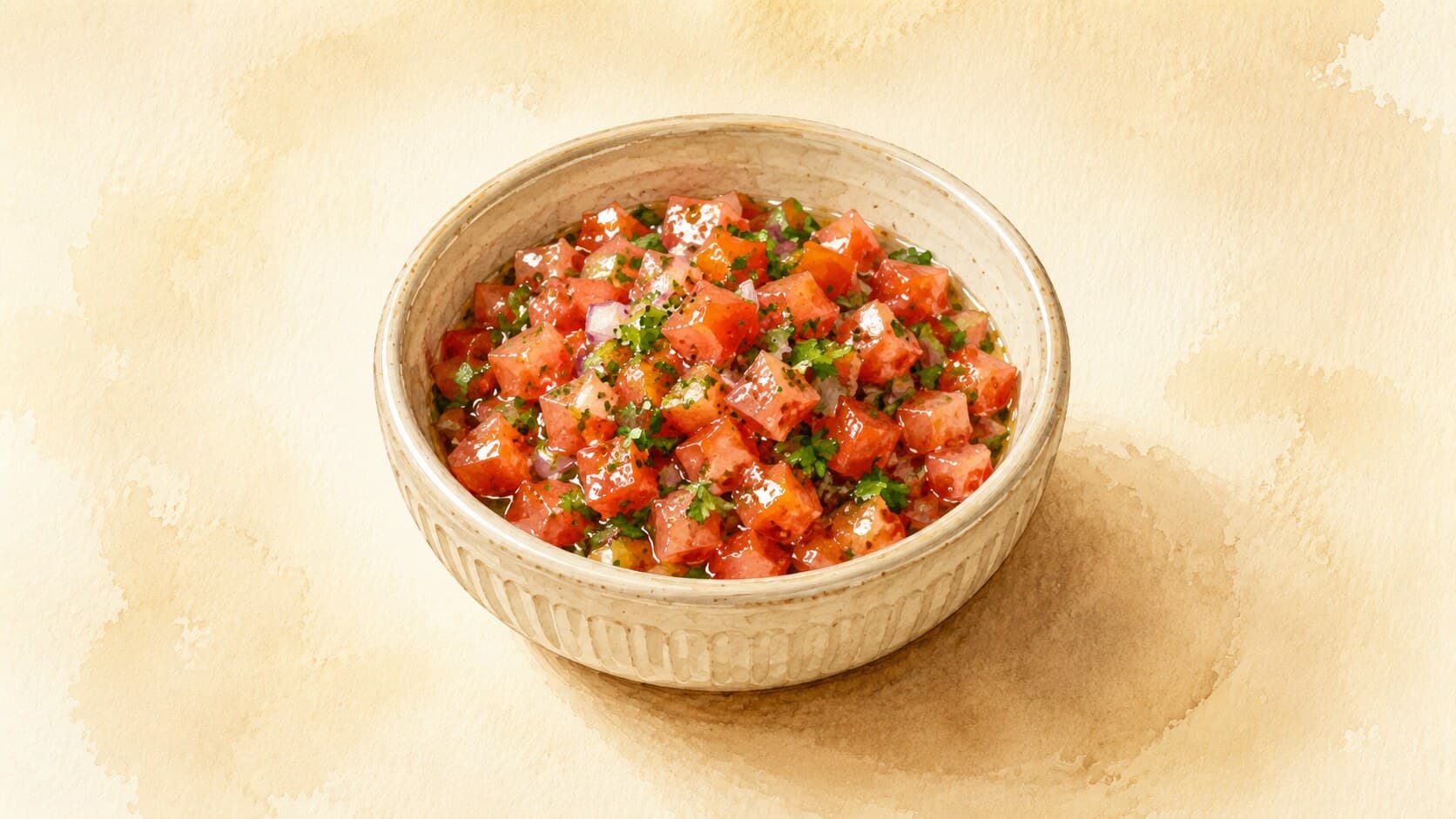
Salsa Cruda is a fresh sauce made from diced ripe tomatoes, onions, cilantro, and lime juice, commonly used to accompany various main dishes.
Contents (5 sections)▾
Ingredients
- 500 g ripe tomatoes, diced
- 1 small onion, finely chopped
- 1 clove garlic, minced
- 1 jalapeño pepper, seeded and minced
- 1/4 cup fresh cilantro, chopped
- 2 tbsp lime juice
- Salt, to taste
- Black pepper, to taste
Steps
In a medium bowl, combine the diced tomatoes, onion, garlic, and jalapeño pepper. This forms the base for your Salsa Cruda.
Add the chopped cilantro and lime juice to the mixture, stirring gently to combine. The lime juice brightens the flavors.
Season with salt and black pepper to taste. Adjust the seasoning based on your preference.
Let the salsa sit for at least 10 minutes at room temperature (around 20°C) to allow the flavors to meld. This resting period enhances the overall taste.
Why this works
Salsa Cruda relies on the freshness and quality of its ingredients, particularly ripe tomatoes, which provide a natural sweetness and juiciness crucial for a delightful sauce. The combination of lime juice and fresh herbs like cilantro adds acidity and complexity, balancing the sweetness of the tomatoes. The technique here involves a simple mixing of raw ingredients, which preserves their vibrant flavors and textures. If the salsa seems too watery, you can drain some of the excess liquid from the tomatoes or add a touch more diced onion to absorb moisture. Conversely, if the salsa is too thick, adding a splash of lime juice can help loosen it, ensuring it remains fluid and easy to scoop. This sauce pairs wonderfully with grilled meats, fish, or even as a topping for tacos, enhancing the dish with fresh, zesty notes. Remember, the quality of your ingredients will directly impact the final flavor, so choose ripe tomatoes and fresh herbs for the best results. Additionally, allowing the salsa to rest for a full 10 minutes is essential; this time is when the flavors truly come together, creating a harmonious blend.
Common mistakes
Watery, bleeding salsa
- Target: chunky, glistening dice (small, evenly-cut cubes) that holds its shape on a chip rather than pooling.
- Why it matters: raw tomato releases a lot of juice once cut and salted, and that liquid dilutes the lime and herb top-notes (the bright, fleeting first-impression flavours) within minutes.
- What to do: seed the tomatoes if they're very ripe, salt them lightly first and let them drain in a sieve for 5 minutes, then mix with the other ingredients.
Raw, harsh onion bite
- Target: onion that registers as sweet-sharp background, not a chemical burn on the tongue.
- Why it matters: freshly chopped onion releases sulfur compounds that taste aggressive when undiluted by acid or time.
- What to do: soak the diced onion in cold water for 5 minutes, drain well, then fold into the salsa — or dice it first and let the lime juice sit on it for a few minutes before the rest goes in.
Flat, one-note flavor
- Target: a balance where you taste tomato, then lime, then a herbal lift, with salt tying it all together.
- Why it matters: raw salsa has no cooked complexity to fall back on — every flavor has to be tuned by hand.
- What to do: salt in two stages — a pinch early to draw out tomato juice, then taste and adjust at the end with more salt, lime, or a sliver more chili until each element is audible.
Skipping the 10-minute rest
- Target: salsa that has sat at room temperature for at least 10 minutes before serving.
- Why it matters: salt and acid need time to migrate between the tomato, onion, and chili so the flavors stop tasting like separate piles in a bowl.
- What to do: assemble, season, cover, and walk away for 10 minutes — then taste and adjust once more before serving.
What to look for
- A juicy sheen on the dice — glossy, not flooded with a pond of pink liquid in the bottom of the bowl.
- The smell of cilantro and lime rising to your nose when you lean over the bowl, with the chili a beat behind.
- Onion pieces that look translucent at the edges, slightly softened by the lime, no longer chalk-white.
- A clean, bright crunch when you scoop a spoonful — not mush, not bone-hard.
A note on history
Salsa cruda belongs to a family of fresh tomato-and-chili sauces with deep Mesoamerican roots — tomatoes, tomatillos (small green husked relatives of the tomato with a tart flavour), and chilies were all domesticated in the Americas long before European contact, and pre-Hispanic cooks were already combining them into raw and cooked mixtures. After the Spanish arrival in the early 16th century, the word "salsa" was applied to these sauces, and Bernardino de Sahagún's Florentine Codex records Aztec sauces of tomatoes, chilies, and seeds. The simple raw form known today as salsa cruda, salsa fresca, or pico de gallo carries that lineage forward.
Get the essays in your inbox — free
Weekly notes on flavor, fermentation, and food history — the writing behind the Atlas of Flavor. No spam; unsubscribe anytime.