
Roasted Sweet Potato with Tahini
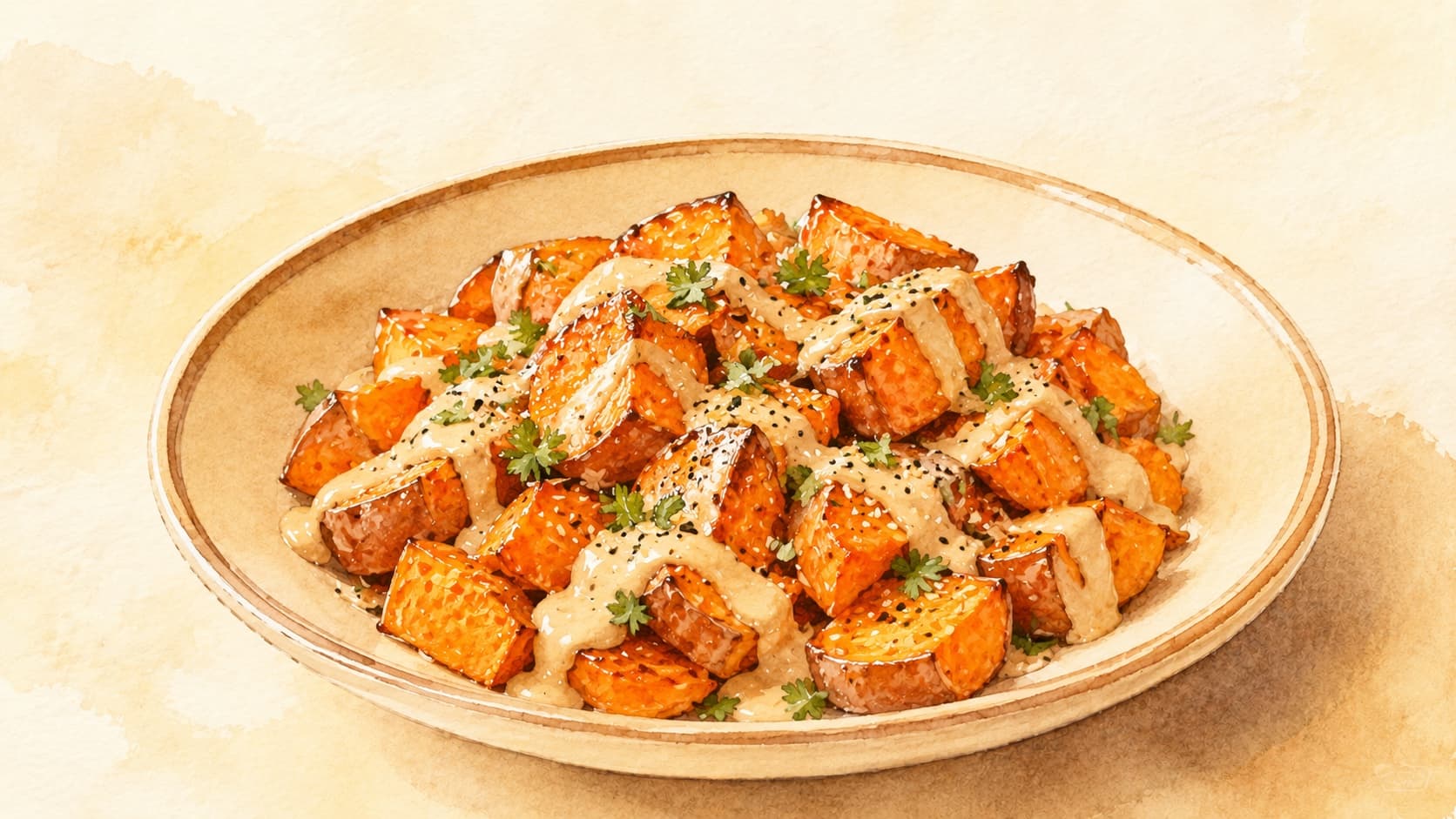
Delicious roasted sweet potatoes drizzled with creamy tahini make a stunning side dish.
Contents (5 sections)▾
Ingredients
- 4 medium sweet potatoes
- 3 tbsp olive oil
- 1 tsp sea salt
- 1/2 tsp black pepper
- 1/4 cup tahini
- 2 tbsp lemon juice
- 2 tbsp water
- 1 clove garlic, minced
- Fresh parsley, for garnish
Steps
Preheat your oven to 200°C (400°F). This high temperature ensures that the sweet potatoes caramelize and develop a rich flavor.
Wash and peel the sweet potatoes, then cut them into 1-inch cubes. Uniform sizes help them cook evenly.
In a large bowl, toss the sweet potato cubes with olive oil, sea salt, and black pepper until well coated.
Spread the sweet potatoes in a single layer on a baking sheet. Bake for 25-30 minutes, turning halfway through, until they are golden and tender.
While the sweet potatoes are roasting, prepare the tahini sauce by whisking together tahini, lemon juice, water, and minced garlic in a small bowl. Adjust consistency with more water if too thick.
Once the sweet potatoes are done, remove them from the oven and let them cool slightly. Drizzle the tahini sauce over the top and garnish with fresh parsley.
Why this works
The roasting technique brings out the natural sweetness of the sweet potatoes while creating a caramelized exterior that enhances their flavor. The combination of olive oil and seasoning adds depth and aids in achieving a crispy texture. If your sweet potatoes seem too dry after roasting, you can toss them in a little extra olive oil before serving. The tahini sauce introduces a creamy, nutty element that complements the sweetness beautifully. It also adds a layer of richness without overwhelming the dish. The acidity from the lemon juice in the tahini sauce balances the sweetness of the potatoes, while the garlic offers a hint of pungency, making the overall flavor more complex and appealing. This dish is visually striking, making it an excellent choice for any gathering or dinner party, as it stands out on the table.
Common mistakes
Cubes that come out pale, soft, and steamed instead of mahogany-edged. Target: 1-inch / 2.5 cm cubes roasted at 200°C / 400°F for 25–30 minutes, turned once at the halfway mark, until edges are deep amber-mahogany and a fork slides through with no resistance. Why it matters: sweet potato flesh is around 70% water and high in natural sugars. In a hot, dry oven, that water has to evaporate from the surface before the surface can really brown. If the cubes are crowded, or the oven hasn't fully preheated, the released steam stays around the cubes and the air becomes humid — you steam them instead of roasting. Real browning depends on caramelisation of the sugars and the Maillard reaction (where natural sugars and amino acids combine under dry, high heat to make the deep, sweet, slightly toasted flavour you want), and both need a dry, hot surface to start. What to do: preheat the oven a full 15 minutes; spread the cubes in a single layer on a heavy tray with 1–2 cm between pieces — use two trays if needed. Don't lid or cover. Turn once at minute 13–15 so the second face also gets contact with the hot pan; the brown floor is where the flavour lives.
A tahini sauce that splits or stiffens into a thick paste. Target: a sauce that pours from a spoon in a thick but flowing stream — somewhere between yoghurt and cream — and stays glossy and emulsified, not clumpy or oily on top. Why it matters: tahini (a smooth Middle-Eastern paste made by grinding sesame seeds) is a high-fat sesame paste; when you add a small amount of cold liquid (lemon juice, water), the fats and the protein-water system first "seize" — the paste tightens and looks broken, almost like cement. Keep adding water past that point, whisking calmly, and you reach an emulsion (a smooth mix of fat and water held together): the sauce loosens, lightens in colour, and goes glossy. Stopping at the seized stage gives you a dense paste that doesn't pour and tastes bitter and one-note. What to do: combine tahini, lemon juice, and minced garlic first. Whisk in cold water 1 tablespoon at a time. Expect it to go thick and pasty first — keep going. As soon as it lightens in colour and the surface looks glossy and ribbon-y, stop.
Skipping the salt on the tahini sauce — or salting only the potatoes. Target: the tahini sauce needs a real pinch of salt on its own, balanced against the lemon and water; the potatoes need salt at the oiling stage, not at the table. Why it matters: tahini is rich but mild; without salt it tastes flat and the bitterness of the sesame skins shows through. Sweet potatoes only soften their cell walls and properly release their sugars when salt is on them early — surface salt added at the end just sits on top. Two correctly seasoned components are what make the contrast between sweet roasted root and bright, savoury cream work. What to do: salt the sauce separately to taste, then toss the cubes with oil + salt + pepper before they hit the tray. Adjust at the end only if needed; one source of seasoning never carries the whole plate.
Storing the tahini-dressed dish at room temperature, or holding tahini sauce too long. Target: refrigerate any leftover tahini sauce within an hour; use within 3–4 days. Refrigerate dressed sweet potatoes within 2 hours of cooking; reheat the potatoes separately. Why it matters: tahini sauce includes raw garlic and fresh lemon juice. It is acidic and refrigerator-stable for a few days, but at room temperature it ferments and spoils quickly, and dressed warm vegetables sitting in a soft sauce on the counter sit in the bacterial growth zone (4–60°C / 40–140°F). Hot food in a sealed container also condenses water back into the sauce, which dilutes the emulsion and shortens its life. What to do: store sauce and potatoes in separate containers, both refrigerated. To serve again, warm the potatoes uncovered in a hot oven or skillet so they re-crisp, then drizzle cold tahini at the table.
What to look for
- A loud sizzle when the cubes land on the hot tray. A dry hiss means the tray and oil are properly hot; silence means humidity will set in and the cubes will steam.
- Crisped mahogany edges and a soft, almost custardy centre. Squeeze a cube between your fingers — it should yield like soft butter, with crisp, slightly chewy edges. If it's the same texture all the way through, it's either under-roasted or over-roasted to mush.
- A tahini sauce the colour of café au lait. Properly emulsified tahini sauce lightens from beige to soft cream as the water comes together with the fat. Stays deep tan? Add water and keep whisking. Goes greyish? Too much lemon — adjust with water.
- A clean, nutty smell from both halves. The potatoes should smell faintly of caramel and butter; the sauce should smell of sesame and lemon, not bitter or sour. A sour edge on the sauce usually means too much lemon for the water you've added.
A note on history
The sweet potato (Ipomoea batatas) is native to the Americas and was domesticated more than 5,000 years ago in Central and South America, possibly cultivated in Peru as early as 2500 BCE (FoodPrint, Many Eats). After 1492, Spanish and Portuguese contact carried the plant to Europe, and from there it spread to Africa, India, Southeast Asia and the Philippines; today, several African nations are among the world's top producers (Many Eats). Sweet potato cultivation in Polynesia is documented from around 1000 CE, which predates Columbus by centuries and remains an open puzzle in the dispersal history of the plant (Wikipedia: Sweet potato cultivation in Polynesia). Tahini, by contrast, is a Levantine (eastern-Mediterranean) sesame paste with documentary references back to the 13th century, when sesame paste appeared in Arabic cookbooks of the period (Mighty Sesame Co., Jewish Book Council). The pairing of roasted sweet potato with a tahini-lemon dressing is a modern Mediterranean-and-Levantine-fusion combination — both ingredients have deep, separate histories that meet on the contemporary plate.
Get the essays in your inbox — free
Weekly notes on flavor, fermentation, and food history — the writing behind the Atlas of Flavor. No spam; unsubscribe anytime.