
Roasted Red Pepper Hummus
Roasted red pepper hummus combines blended chickpeas, tahini, garlic, and roasted red peppers for a smoky, sweet dip.
Contents (5 sections)▾
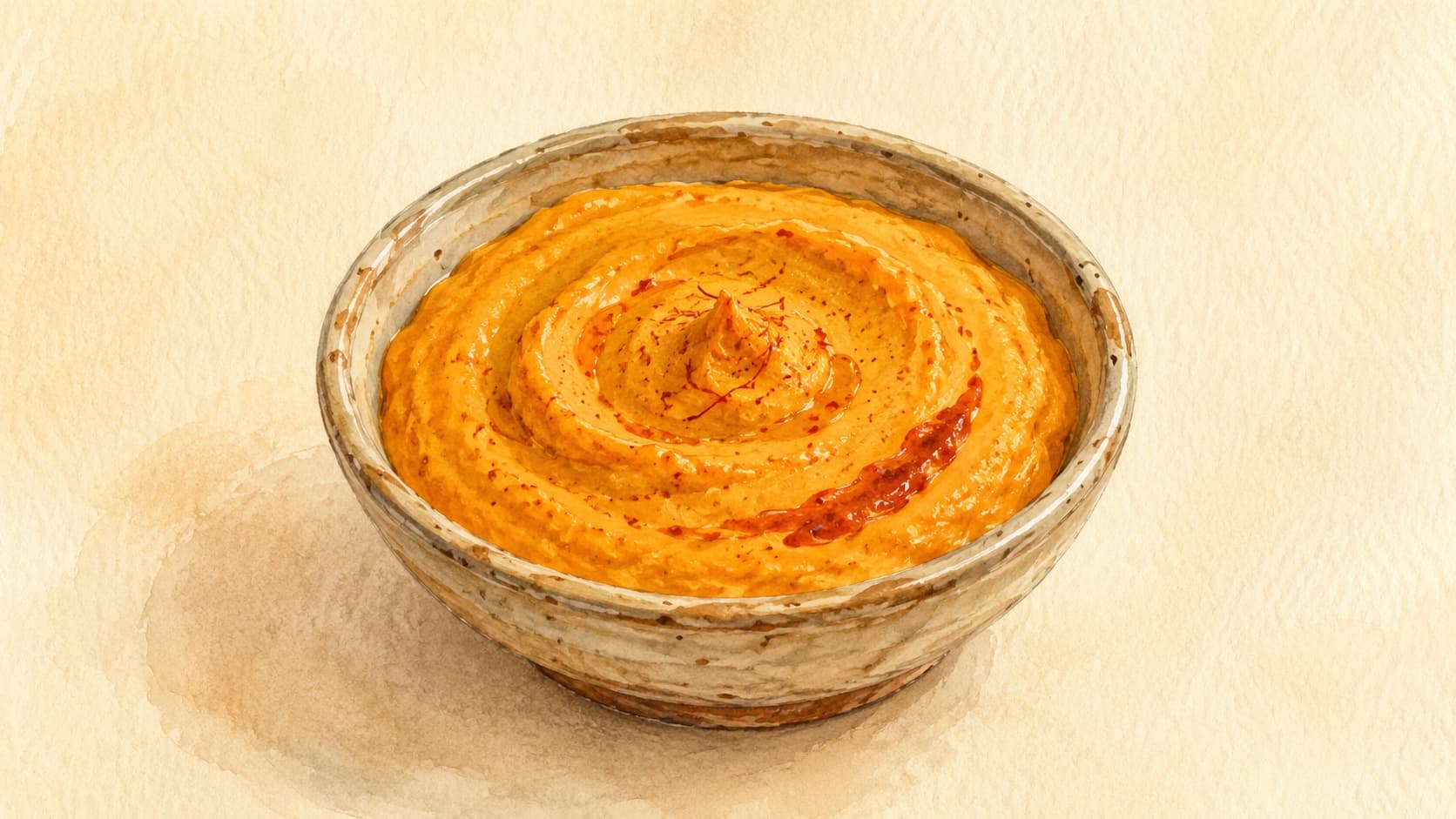
Ingredients
- 400 g canned chickpeas, drained and rinsed
- 2 large roasted red peppers, peeled and chopped
- 60 ml tahini
- 60 ml olive oil
- 2 clove(s) garlic, minced
- 30 ml lemon juice
- 1 tsp ground cumin
- Salt to taste
- Paprika for garnish
Steps
Preheat your oven to 200°C (392°F) and roast the red peppers for 15 minutes until charred and soft.
In a food processor, combine the chickpeas, roasted red peppers, tahini, olive oil, garlic, lemon juice, cumin, and salt.
Blend the mixture for 1-2 minutes until smooth, scraping down the sides as necessary. If it seems too thick, add water, 1 tablespoon at a time, to reach your desired consistency.
Transfer the hummus to a serving bowl, drizzle with 1 tablespoon of olive oil, and sprinkle paprika on top for garnish.
Why this works
Roasted red pepper hummus takes the classic chickpea-based dip and enhances it with the sweet, smoky flavor of roasted peppers, creating a unique twist. The roasting process caramelizes the natural sugars in the peppers, resulting in a deeper, more complex taste that is both sweet and savory. Chickpeas provide a creamy texture when blended, while tahini contributes a rich nuttiness that complements the peppers beautifully. If the hummus is too thick after blending, adding water gradually helps to achieve the desired creaminess without compromising flavor; start with just 1 tablespoon at a time to avoid making it too runny. This method ensures a smooth consistency, preventing any graininess, and allows the flavors to meld perfectly. Additionally, the garlic and cumin add aromatic depth, making the dip more flavorful. For a striking presentation, drizzling olive oil and a sprinkle of paprika highlight the vibrant color of the hummus, inviting your guests to indulge. The balance of flavors and textures makes this dip an excellent choice for gatherings or a delightful snack.
Common mistakes
Storing the hummus too long, or leaving it on a warm table. Target: refrigerate at or below 4°C / 40°F within an hour of finishing; use within 3–4 days. At a buffet, serve in a small bowl sitting in ice and pull leftovers back into the fridge after no more than two hours at room temperature. Why it matters: chickpeas, tahini, garlic, and roasted peppers are all cooked or thermally processed, but once blended they form a moist, mildly acidic dip — a comfortable medium for spoilage organisms once it warms up. Garlic in particular has been associated with rare cases of botulism when sat for long periods in oil at room temperature; this hummus has acid from the lemon juice, which helps, but warm storage is still a real risk. What to do: make it, taste it, transfer it to a clean container with a lid, level the surface with a spoon, and refrigerate. If you covered it with a thin oil layer to seal it, store it in the fridge — never on the counter. Anything left out for more than 2 hours on a warm day goes in the bin.
Skipping the proper char on the peppers, or roasting them dry. Target: roast the peppers at 200°C / 392°F (or under a hot broiler) until the skin is fully blistered and blackened in patches, then sweat them covered for 10 minutes before peeling. Why it matters: the real flavour of a "roasted red pepper" hummus comes from two things — the sweetness left behind when the pepper's water has been driven off, and the smoky-sweet notes created by the partial charring of the skin (controlled scorching of natural sugars and proteins, related to the Maillard reaction). Stopping early gives you a stewed, watery pepper; the dip will taste flat and dilute. Skipping the sweat step means the skin won't lift cleanly and you'll end up with sharp bits of papery skin in the dip. What to do: roast or broil until the skin is properly blistered, then transfer the hot peppers to a bowl, cover with a plate or cling film, and let them sit 10 minutes — the residual steam loosens the skin. Peel, deseed, then add to the processor along with any juice that's pooled.
Under-processing, so it stays grainy. Target: blend for at least 90 seconds — not 30 — scraping down the sides at least once, until the dip is silky and lifts off the spoon in a soft ribbon. Why it matters: the smoothness of a great hummus isn't from extra oil — it's from breaking the chickpea skins down past the point where the tongue notices them, and from fully emulsifying tahini, lemon juice and water into a thick, smooth cream. The processor needs time and ideally a wet enough mix to keep things moving. A 30-second blast leaves the chickpea hulls intact and the dip feels sandy on the tongue. What to do: blend the tahini (a smooth paste of ground sesame seeds, common across Middle Eastern cooking) and lemon juice first until pale and thick (the tahini-only stage actually develops the creamiest base), then add chickpeas and roasted peppers, then run for at least 60 seconds. Scrape down. Run another 30 seconds, adding water 1 tablespoon at a time only if the machine starts to stall.
Treating salt and lemon as a "garnish" rather than the spine. Target: taste with a clean spoon at the end, salt slightly more aggressively than you'd think, and adjust lemon juice in 1-teaspoon increments until the dip tastes bright but not sour. Why it matters: chickpeas are sweet and mild; tahini is rich and slightly bitter; roasted peppers are sweet and smoky. Without enough salt the whole dip tastes dull and muddy, and without enough acid it tastes flat and oily. Salt and acid together are what make people reach for another piece of bread. What to do: start with the salt in the recipe, finish blending, then taste cold from a clean spoon. Add salt in pinches, lemon in teaspoons, and re-taste after each. Rest 10 minutes; the flavours settle and you can decide if a final correction is needed.
What to look for
- A smooth, soft-ribbon body, not a stiff scoop. Lift the spatula straight out of the processor — properly made hummus drapes back into the bowl in a slow ribbon, like soft yoghurt; if it stands in a stiff blob, add water 1 tablespoon at a time and blend again.
- A warm, coral-red colour, not muddy pink. Good roasted peppers give the dip a deep coral; pale, pink-grey colour usually means the peppers were under-charred or watery.
- A smell that opens with smoke, then sesame, then garlic. Lean in: distinct layers in that order is correct. A muddled, single "dip" smell often means the processor didn't run long enough.
- A surface that holds the spoon-back swirl when you plate it. A correctly seasoned, correctly emulsified hummus keeps the classic spoon-back groove when you swirl it into a bowl; if the groove fills back in, you have too much water or too little blending time.
A note on history
Hummus belongs to the broader Levantine tradition (the eastern-Mediterranean cooking heritage of the Levant region) — the region covering modern-day Lebanon, Palestine, Syria, Jordan, and Israel — where chickpea farming and sesame cultivation have coexisted for millennia (Wikipedia: Hummus, KimEcopak overview). The combination of chickpeas and tahini (sesame paste) is documented in 13th-century Arabic cookbooks; a ḥummuṣ kasa recipe with chickpeas, tahini, lemon, and garlic is recorded in al-Baghdadi's Kitāb al-Ṭabīkh (Book of Cooking, c. 1226) and other anonymous Levantine manuscripts of the period (Cookist). The individual building blocks are far older — chickpeas have been cultivated in the Middle East for around 10,000 years, and sesame was a prized oil and food crop in Mesopotamia and the Levant as far back as 3,000 BCE (Cookist). The roasted-pepper variant is a modern Mediterranean-and-North-American twist on the canonical Levantine dip.
Get the essays in your inbox — free
Weekly notes on flavor, fermentation, and food history — the writing behind the Atlas of Flavor. No spam; unsubscribe anytime.