
Remoulade
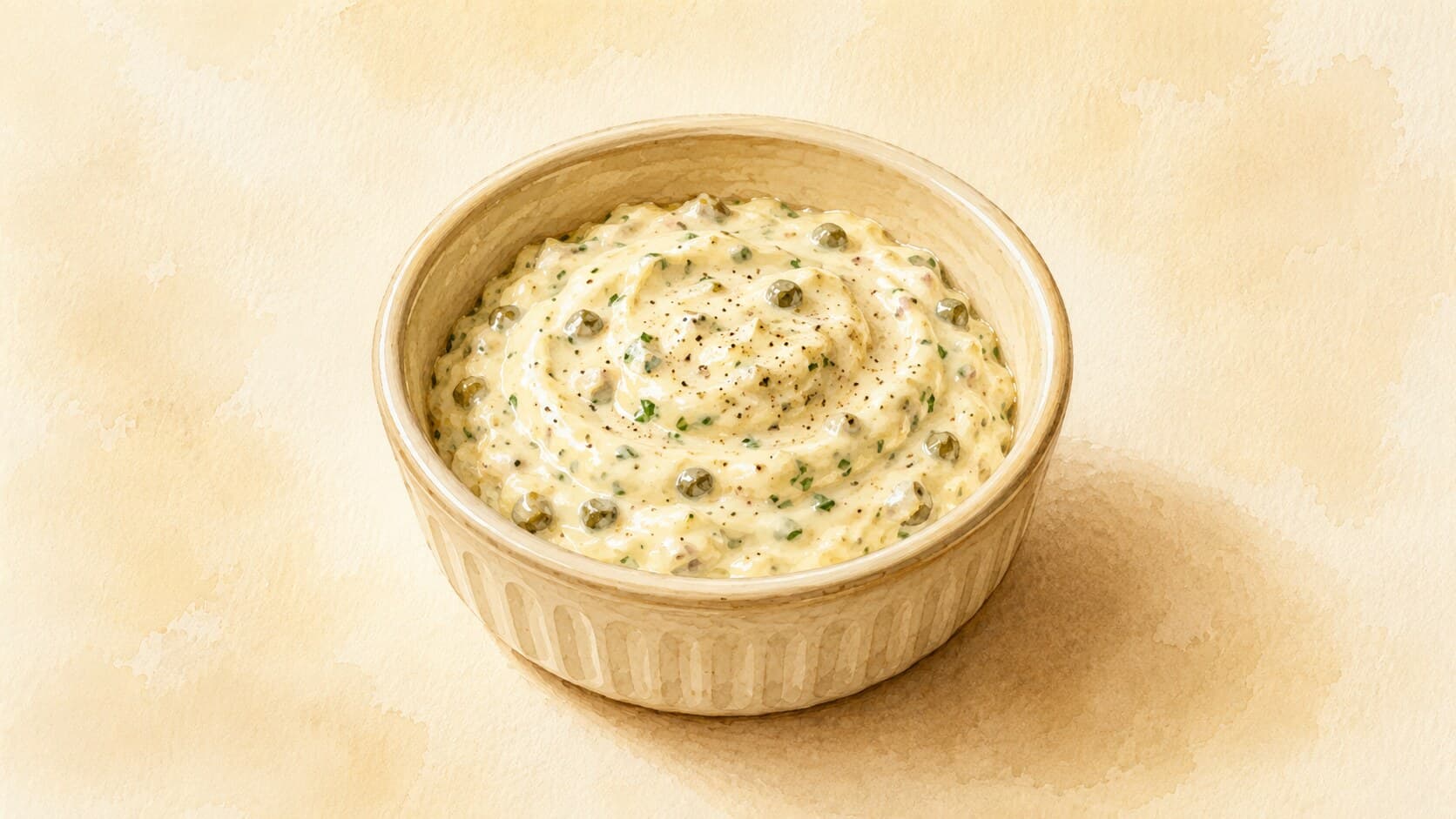
Remoulade is a mayonnaise-based sauce, typically flavored with mustard, capers, and herbs, used as a condiment for seafood or as a dip.
Contents (5 sections)▾
Ingredients
- 200 g mayonnaise
- 2 tbsp Dijon mustard
- 2 tbsp capers, finely chopped
- 1 tbsp Worcestershire sauce
- 1 tbsp lemon juice
- 1 tsp hot sauce (to taste)
- 2 tbsp fresh parsley, finely chopped
- Salt (to taste)
- Black pepper (to taste)
Steps
1. In a medium bowl, combine the mayonnaise, Dijon mustard, capers, Worcestershire sauce, lemon juice, and hot sauce. Whisk until smooth and fully incorporated to create a stable base for the emulsion, about 2 minutes.
2. Add the chopped parsley, and season with salt and black pepper to taste. Mix thoroughly for 1-2 minutes to ensure even distribution of flavors.
3. Taste the remoulade and adjust seasoning if necessary. If the sauce seems too thick, you can add a little water or more lemon juice, about 1 teaspoon at a time, to achieve your desired consistency.
4. Cover the bowl with plastic wrap and refrigerate for at least 30 minutes and up to 2 hours before serving. This allows the flavors to meld and intensify.
Why this works
Remoulade is an emulsion (a stable mixture of two things that normally don't mix, like oil and water), meaning it combines fats and liquids to create a creamy texture that enhances various dishes. The mayonnaise serves as the primary fat, while the mustard adds acidity and a slight tang, balancing the richness. Capers (the pickled buds of the caper bush, small and salty-bright) and Worcestershire sauce (a fermented British condiment built on anchovy, vinegar, and tamarind) introduce umami depth, enriching the overall flavor. If the remoulade breaks and separates, you can rescue it by whisking in a teaspoon of warm water slowly to help re-emulsify the mixture. Additionally, adjusting the seasoning with salt and lemon juice can brighten the taste, ensuring it complements the dish it accompanies. The resting time in the refrigerator, ideally 30 minutes but up to 2 hours, allows the flavors to develop fully, making it a versatile condiment that pairs beautifully with seafood, fried foods, or even as a sandwich spread. The balance of acidity and creaminess is vital for a well-rounded remoulade, and knowing how to adjust its consistency and flavor can make all the difference. The precise measurements and resting time ensure a consistently exceptional result.
Common mistakes
Leaving the sauce on the counter, or keeping it longer than a few days. Target: refrigerate at or below 4°C / 40°F within 30 minutes of finishing; use within 2–3 days. Why it matters: remoulade is a mayonnaise-based emulsion (a stable mix of egg-based fat and water-based acid). Even with the acidity from mustard and lemon juice, the sauce is a soft target for spoilage bacteria at room temperature, and the soft, moist body gives them somewhere to grow. If you whisked your own mayo from raw egg yolks, the risk window is shorter still — pasteurised egg yolk or shop-bought mayo is the safer base, and anyone vulnerable (pregnant, very young, elderly, immune-compromised) should avoid the raw-egg version entirely. What to do: make it, taste it, cover it, refrigerate it. Serve straight from the fridge in a small bowl; if you're at a picnic, sit the bowl in a larger bowl of ice. Toss anything that has spent more than two hours out of the fridge on a warm day.
Whisking the sauce hard at the end and watching it slacken instead of tighten. Target: the finished sauce should hold a soft peak on the back of a spoon, the colour of fresh cream stained with mustard. Why it matters: mayonnaise is held together by a delicate film of egg lecithin (a natural emulsifier — the molecule that lets fat and water hold hands) wrapped around droplets of oil. Beating in cold lemon juice or watery capers too fast floods that film and the oil droplets coalesce — the sauce "breaks" and weeps. What to do: add acidic and watery ingredients in small amounts, folding rather than whipping. If it does break, don't keep beating. Put a fresh egg yolk (or 1 tsp Dijon) in a clean bowl and dribble the broken sauce into it a teaspoon at a time, whisking — you are rebuilding the emulsion from scratch around a new emulsifier.
Seasoning while everything is still bright and fresh, then serving immediately. Target: mix, season lightly, rest 30 minutes minimum, then re-taste and adjust salt and acid. Why it matters: salt, mustard heat, and the volatile aromatics in Worcestershire and capers all need time to dissolve into the fat phase and meet each other. A remoulade tasted at minute zero is louder and flatter than the same sauce 30 minutes later; if you season hard at minute zero, you'll over-salt. What to do: under-salt by a pinch at first. Rest. Re-taste cold from the fridge — that's how you'll actually be eating it — and only then adjust.
Treating remoulade as one fixed recipe. Target: match the build to what it's dressing — French-classic (cornichons, anchovy, herbs) for cold meats; Louisiana-style (paprika, cayenne, Creole mustard, lemon) for shrimp and fried seafood. Why it matters: the sauce's job is to cut richness and add aromatic lift. A delicate cold poached fish wants a quieter, herb-led version; deep-fried oysters or remoulade-glossed shrimp want the spicier red Louisiana build. Using one default everywhere makes the sauce feel monotonous against varied food. What to do: decide the partner dish first. For fried seafood, lean into smoked paprika, cayenne, and a touch more lemon. For cold cuts and crudités, lean into capers, cornichons, tarragon, and parsley.
What to look for
- A satin, not a gloss. A correctly built remoulade has a matte-satin surface that pulls into soft peaks when you lift the whisk; a glassy, oily gloss usually means the emulsion is on the edge of breaking and the oil is starting to separate.
- A pale ivory body shot through with green flecks. The base should look like soft cream — not bright yellow (too much mustard, or unripe lemon) and not grey (over-mixed Worcestershire). The parsley and capers should be visible flecks, not a uniform tint.
- A smell that opens with mustard, then capers, then lemon. Lean in and you should pick out distinct notes in sequence, not one flat "mayo" smell. A muddled aroma usually means the sauce hasn't rested long enough.
- A cold-fridge body, not a kitchen-counter body. Spoon it just before serving: it should mound and hold, not slump and pool. If it slumps, return it to the fridge for another 20 minutes — it's also a doneness cue for the emulsion.
A note on history
Remoulade traces to northern France around the 1600s, where it began as a sharper, mustard- and herb-led sauce; the name is often linked to the French rémolat, an older word for horseradish, hinting that the original sauce was hotter than today's mayonnaise-based version (see Britannica and MasterClass). French settlers carried the idea to Louisiana in the early 1700s. The turning point from white French to red New Orleans remoulade is often dated to 1920, when Arnaud's restaurant introduced a paprika- and Creole-mustard-led version with shrimp Arnaud, and the spicier "red" style became a New Orleans signature (Tasting Table).
Get the essays in your inbox — free
Weekly notes on flavor, fermentation, and food history — the writing behind the Atlas of Flavor. No spam; unsubscribe anytime.