
Quinoa Buddha Bowl
A Quinoa Buddha Bowl combines cooked quinoa, assorted vegetables, and protein, providing a balanced meal with varied textures and flavors.
Contents (5 sections)▾
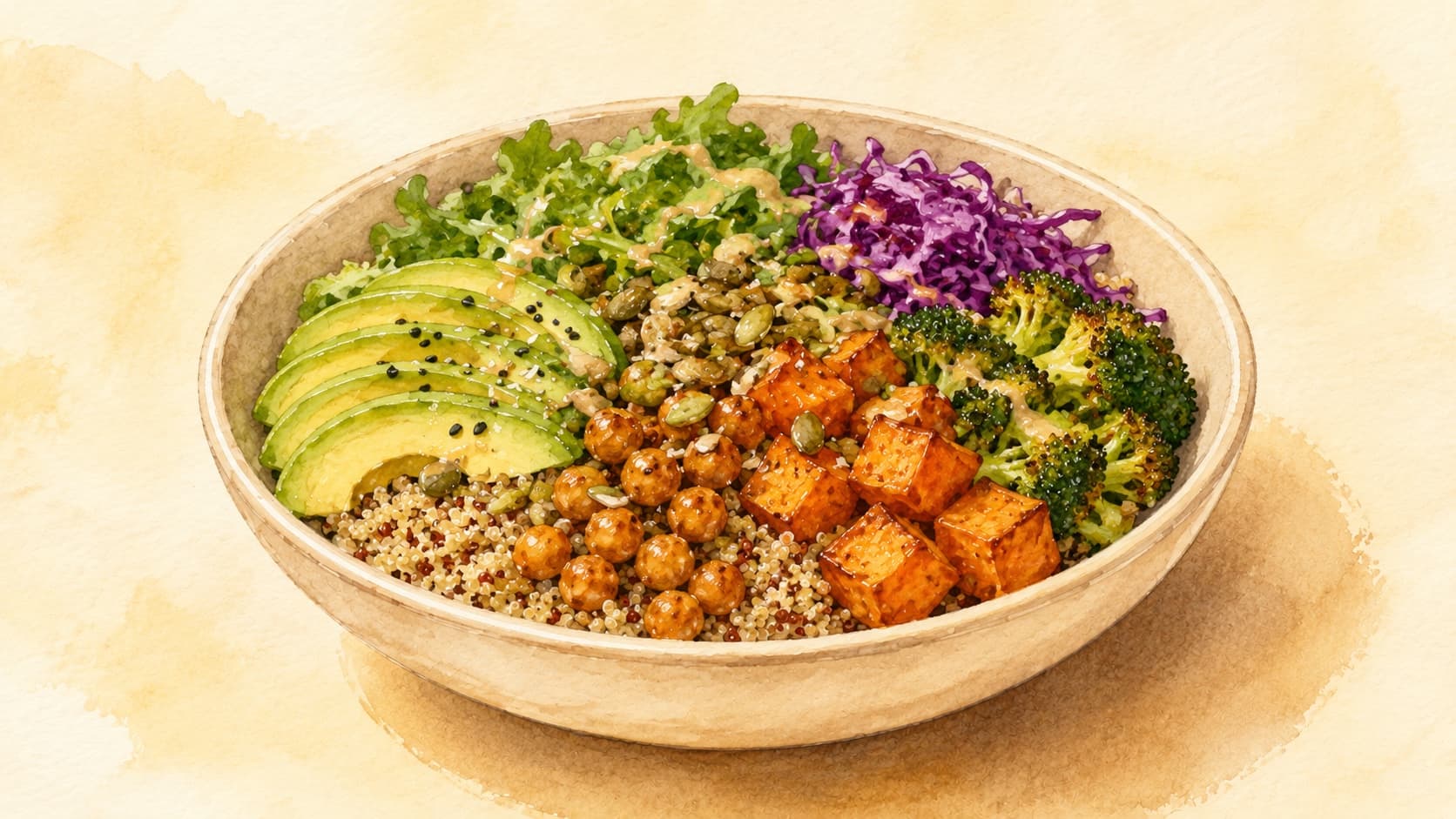
Ingredients
- 150 g quinoa
- 300 ml water
- 1 tbsp olive oil
- 1 small red bell pepper, diced
- 1 small cucumber, diced
- 100 g cherry tomatoes, halved
- 100 g chickpeas, drained and rinsed
- 1 avocado, sliced
- 50 g feta cheese, crumbled
- 2 tbsp tahini
- 1 tbsp lemon juice
- Salt and pepper to taste
- Fresh herbs (parsley or cilantro) for garnish
Steps
Rinse the quinoa under cold water to remove bitterness. Combine the quinoa and water in a pot, bring to a boil, then reduce heat to low, cover, and simmer for 15 minutes.
While the quinoa cooks, heat olive oil in a skillet over medium heat. Add diced red bell pepper and cook for 5 minutes until softened.
In a bowl, combine cooked quinoa, sautéed bell pepper, cucumber, cherry tomatoes, and chickpeas. Season with salt and pepper to taste.
Prepare the dressing by whisking together tahini, lemon juice, salt, and a little water to thin it out if necessary.
Top the quinoa mixture with avocado slices and crumbled feta cheese. Drizzle with tahini dressing and garnish with fresh herbs.
Why this works
The Quinoa Buddha Bowl strikes a harmonious balance of flavors and textures, which is crucial for a satisfying meal. The quinoa acts as a nutritious base, offering protein and fiber, while the varied vegetables provide freshness and crunch. Sautéing the bell pepper enhances its sweetness and brings out its natural flavors. The creamy avocado and feta introduce richness, complementing the bowl's overall texture. If the dressing seems too thick, simply add a splash of water to achieve the desired consistency. This dish is versatile; feel free to substitute vegetables based on seasonal availability or personal preferences, ensuring the bowl remains vibrant and appealing.
Common mistakes
Skipping the rinse and ending up with bitter quinoa. Target: quinoa rinsed under cold running water in a fine-mesh sieve until the water runs clear, about 30–60 seconds; no soap-like foam. Why it matters: quinoa seeds are naturally coated with saponins (the plant's bitter, soapy defense against birds and insects). These compounds taste astringent and soapy and will not cook away. Rinsing physically washes them off the outer layer; skip this and you'll wonder why the whole bowl tastes like dish detergent. What to do: transfer quinoa to a fine-mesh strainer, run cold water through while rubbing the seeds with your fingers for 30–60 seconds. The soapy froth at the start is the saponins lifting off. Stop when the water is clear.
Cooking the quinoa in too much water and getting a mushy, gelatinous bowl. Target: about 1 part quinoa to 1.7–2 parts water by volume; once boiling, reduce to a bare simmer, covered, for about 15 minutes, then rest off the heat 5 minutes. Why it matters: quinoa is a seed, not a pasta — it absorbs its cooking water rather than being drained. Too much water and the seeds split and turn slimy; too little and the centers stay crunchy and starchy. What to do: measure the water. After 15 minutes, lift the lid: the spiral "tails" should be just visible curling out of the seeds. Rest with the lid on for 5 minutes, then fluff with a fork.
Sautéing the bell pepper in a cold pan and getting bitter, raw notes. Target: olive oil shimmering in a hot pan before the pepper hits it; you hear an immediate sizzle, not a soft puddle. Why it matters: sweet peppers carry sharp, grassy notes that mellow only when their surface chars slightly via Maillard browning (the amino-acid-and-sugar reaction that creates roasted depth). Tossing diced peppers into cool oil simply boils them, and that raw vegetable bitterness lingers. What to do: heat the pan dry first, add oil, wait until it shimmers, then add the peppers. Leave them alone for 60–90 seconds before stirring so they pick up some char.
Letting raw chickpeas, undercooked grains, or unrefrigerated dressing carry the bowl. Target: if you use canned chickpeas (already cooked), rinse and warm or roast them; if you cook them from dried, soak overnight and boil until tender. Any animal protein on top must be fully cooked through. Tahini (a Middle Eastern paste of ground hulled sesame seeds, oily and slightly bitter) dressing made with raw garlic is best eaten the day it's made. Why it matters: Buddha bowls are often eaten as meal prep, and that's where home food safety quietly fails. Canned chickpeas are safe but bland cold; dried chickpeas, like other legumes, must be cooked thoroughly; and any chicken, fish, or egg added must hit a safe internal temperature. Tahini-lemon dressings with raw garlic develop sharpness within hours and should not sit at room temperature. What to do: treat the bowl as composed at serving time. Cook each protein component separately to its proper doneness, keep dressing refrigerated, and let only the warm grain meet the cold vegetables on the plate.
What to look for
- Quinoa with visible curly germ "tails" — those little spirals are the embryo that uncoils when the seed is fully cooked. If the tails aren't showing, give it another 2–3 minutes covered.
- A bright, clean smell from the dressing rather than a metallic or sulfurous one — tahini-lemon dressing should smell like roasted sesame and citrus. A bitter, almost-burnt smell means the tahini was old or oxidized.
- Vegetables that hold their shape and color — over-rinsed quinoa with watery vegetables creates a sad gray pool. Pat watery cucumbers and tomatoes dry, and dress just before serving.
- Each bite carrying three textures — soft grain, crisp raw vegetable, and creamy avocado or sautéed pepper. If you taste only one texture, something has been over-cooked, over-dressed, or over-rested.
A note on history
Quinoa has been cultivated in the high Andes — modern-day Bolivia, Peru and Chile — for at least 5,000 to 7,000 years, where the Inca (the South American empire centered in 15th-century Peru) called it chisaya mama, "mother of all grains" (Grand Teton Ancient Grains). Technically a pseudo-cereal (the seed of a plant in the same botanical family as spinach and beets, rather than a true grass), it survives at altitudes above 3,600 m where conventional grains cannot grow (Producers Market). The "Buddha bowl" framing — a single vessel holding grain, vegetable, protein and sauce — is a modern Western invention; the name evokes a rounded, abundant belly rather than any specific religious lineage (Wikipedia: Buddha bowl).
Get the essays in your inbox — free
Weekly notes on flavor, fermentation, and food history — the writing behind the Atlas of Flavor. No spam; unsubscribe anytime.