
Poulet à la Moutarde
Poulet à la Moutarde features seared chicken braised in a creamy mustard sauce, perfect for a weeknight dinner.
Contents (5 sections)▾
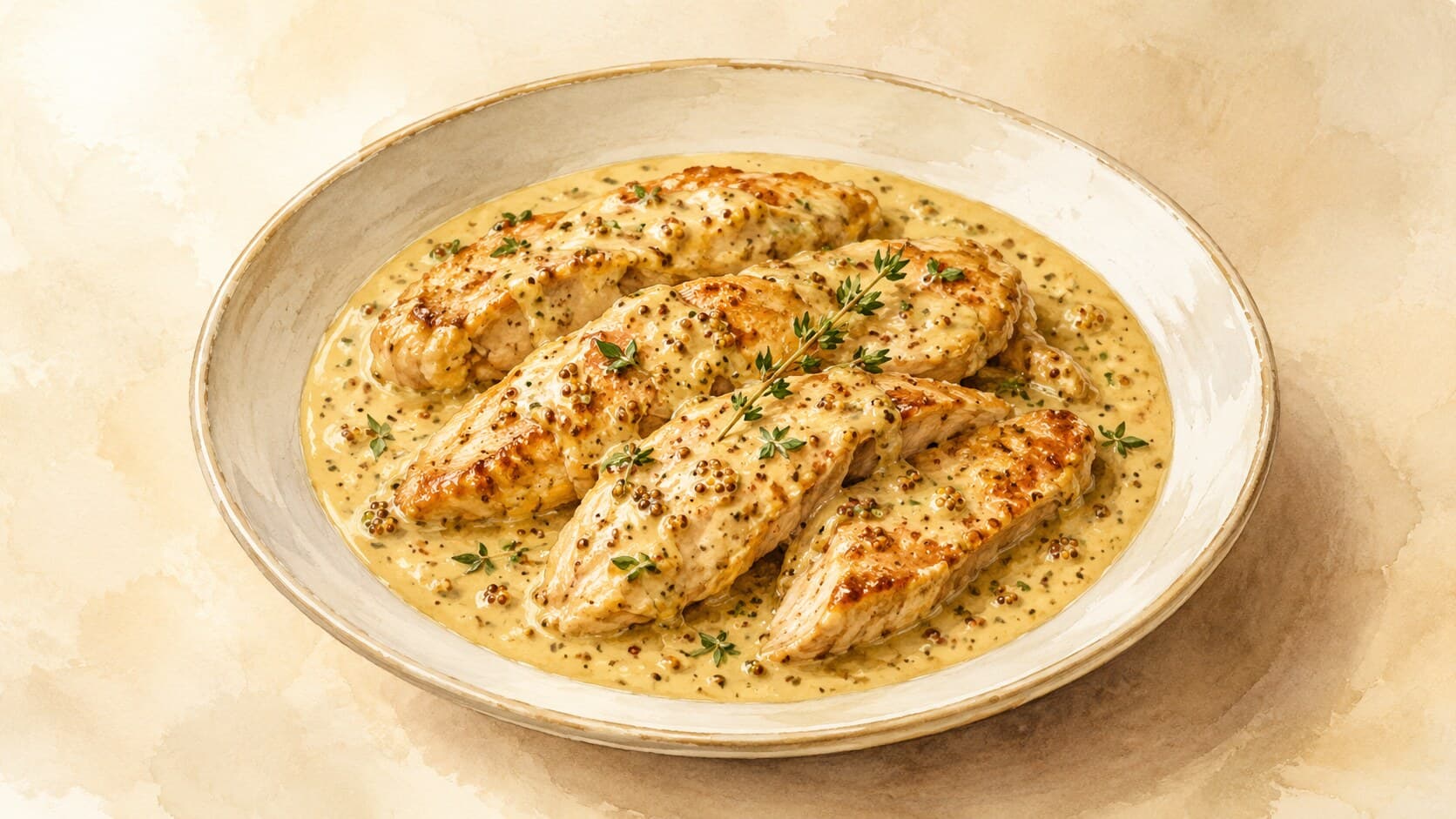
Ingredients
- 1 kg bone-in chicken pieces
- 2 tbsp Dijon mustard
- 200 ml dry white wine
- 150 ml heavy cream
- 2 shallots, finely chopped
- 2 tbsp olive oil
- Salt to taste
- Black pepper to taste
- Fresh tarragon leaves for garnish
Steps
Heat olive oil in a large skillet over medium-high heat. Season chicken pieces with salt and pepper, then sear them for 5-7 minutes on each side until golden brown.
Remove the chicken and set aside. In the same skillet, add chopped shallots and sauté for about 2-3 minutes until translucent.
Deglaze the pan with dry white wine, scraping the bottom to release any browned bits, and let it simmer for 2 minutes.
Stir in Dijon mustard and heavy cream, mixing well. Return the chicken to the skillet, ensuring they are coated with the sauce.
Cover and reduce heat to low, braising the chicken for 15 minutes until cooked through. After removing from heat, let sit for a minute.
Before serving, check the sauce's consistency. If it seems too thick, add a splash of water; if too thin, simmer on low for 2-3 minutes until reduced.
Garnish with fresh tarragon leaves and serve with steamed potatoes.
Why this works
The technique of searing the chicken first creates a deep flavor base through the Maillard reaction, which enhances the dish's overall richness. Braising in a mixture of dry white wine, Dijon mustard, and cream adds layers of complexity to the sauce, balancing acidity and creaminess. The critical moment occurs when finishing the sauce—removing it from heat before adding cream prevents curdling, maintaining a smooth texture. If the sauce breaks and appears grainy, you can salvage it by whisking in a bit of cold cream off the heat, which helps re-emulsify the mixture. This dish showcases French culinary elegance and teaches the vital balance of flavors and textures in creamy sauces, making it a perfect choice for a weeknight meal.
Common mistakes
Pulling the chicken off the heat early. Target: Chicken cooked through to an internal temperature of 74°C / 165°F at the thickest part of the thigh near the bone; juices run clear, no pink meat at the bone. Why it matters: Bone-in chicken pieces braise unevenly — the surface and thinner parts reach safe temperature long before the thickest sections near the bone. Pulling the pan because the outside "looks done" leaves raw or pink meat in the middle. Poultry needs to be fully cooked through; this is a non-negotiable safety point. What to do: Use an instant-read thermometer at the thickest part, away from the bone. If you don't have one, slice into the thickest piece down to the bone — meat should be opaque all the way and the juices that run out should be clear, not pink or red. If anything looks underdone, return the pan to the heat with the lid on for a few more minutes.
Boiling the cream sauce hard. Target: A gentle simmer at most — small bubbles, never a vigorous rolling boil — once the cream and mustard are added. Why it matters: A mustard-cream sauce is an emulsion (cream emulsion — fat dispersed in tiny droplets through a water phase, with proteins and mustard particles helping the system hold together). Aggressive boiling tears that emulsion apart, breaking the sauce into oily yellow droplets and grainy curds. Dijon also contains living enzymes and volatile aromatics that go flat and bitter when overheated. What to do: Once the cream and mustard join the pan, reduce the heat to low and keep the sauce just at a tremble. If it does start to split into oil and watery liquid, pull it off the heat immediately, whisk in a tablespoon of cold cream off the heat, and gently rewarm.
Skipping the deglaze. Target: Scrape every browned bit (the fond, the sticky brown layer left behind by the chicken) off the bottom of the pan when you add the wine. Why it matters: Those browned bits are concentrated chicken flavour from the Maillard reaction (proteins and sugars browning under dry heat). Left stuck to the pan, they burn during the simmer and add a bitter, scorched note. Lifted into the wine, they dissolve and become the backbone of the sauce. What to do: As soon as the wine hits the hot pan, scrape with a wooden spoon. The bottom should come clean. If anything refuses to lift, lower the heat and let the liquid do the work for a minute before scraping again.
Adding the Dijon at the very end and serving immediately. Target: Stir Dijon in just before the cream and let everything come together for a couple of minutes off — or barely on — the heat before serving. Why it matters: Raw Dijon (the sharp pale-yellow French mustard from Dijon, Burgundy) dropped onto a hot sauce just before plating tastes harsh and sharp; given a brief, gentle melding with the cream and wine, it rounds out into something deeper. What to do: Whisk the mustard into the deglazing liquid first, then the cream, and let the sauce settle for a minute or two on the lowest heat. Taste and adjust salt at this point — the cream tames the Dijon and you don't want to oversalt before it does.
What to look for
- Chicken that gives no resistance and runs clear. Pierce the thickest part with a thin knife; juices that run out should be clear yellow, not pink. The thermometer reads 74°C / 165°F.
- A pale, glossy sauce that coats the back of a spoon. Run a finger across the spoon — the line should hold without rivulets of clear liquid running down. That's an emulsion still in one piece.
- A clean, sweet-mustard aroma. Dijon, cream, and wine should smell harmonious and rounded, not sharp or acrid. Sharp = under-cooked Dijon; acrid = sauce was boiled.
- No yellow oil droplets sitting on the surface. Pooling oil means the emulsion has split. If you see any, pull the pan off and whisk in cold cream to bring it back.
A note on history
Poulet à la moutarde is closely associated with Burgundy — the region of central-eastern France famous for both its wines and Dijon mustard (The Food Dictator, Alicia Recipes). Mustard production rose to prominence in medieval Burgundy when monks in Dijon refined cultivation of the seeds, and by the 14th century the city of Dijon held an exclusive right to produce it. The pairing of chicken with a mustard-cream-wine sauce grew out of Burgundian home cooking, where the three local ingredients were always to hand. By the 18th century, mustard-and-cream preparations had become shorthand for a French style of cooking that prized sharpness, balance, and restraint — a quietly confident counterpart to the showier sauces of cuisine classique (the formal, codified haute-cuisine repertoire of 19th-century French restaurants).
Get the essays in your inbox — free
Weekly notes on flavor, fermentation, and food history — the writing behind the Atlas of Flavor. No spam; unsubscribe anytime.