
Pot-au-Feu
Pot-au-Feu is a classic French winter dish featuring tender beef and seasonal vegetables simmered in a rich broth.
Contents (5 sections)▾
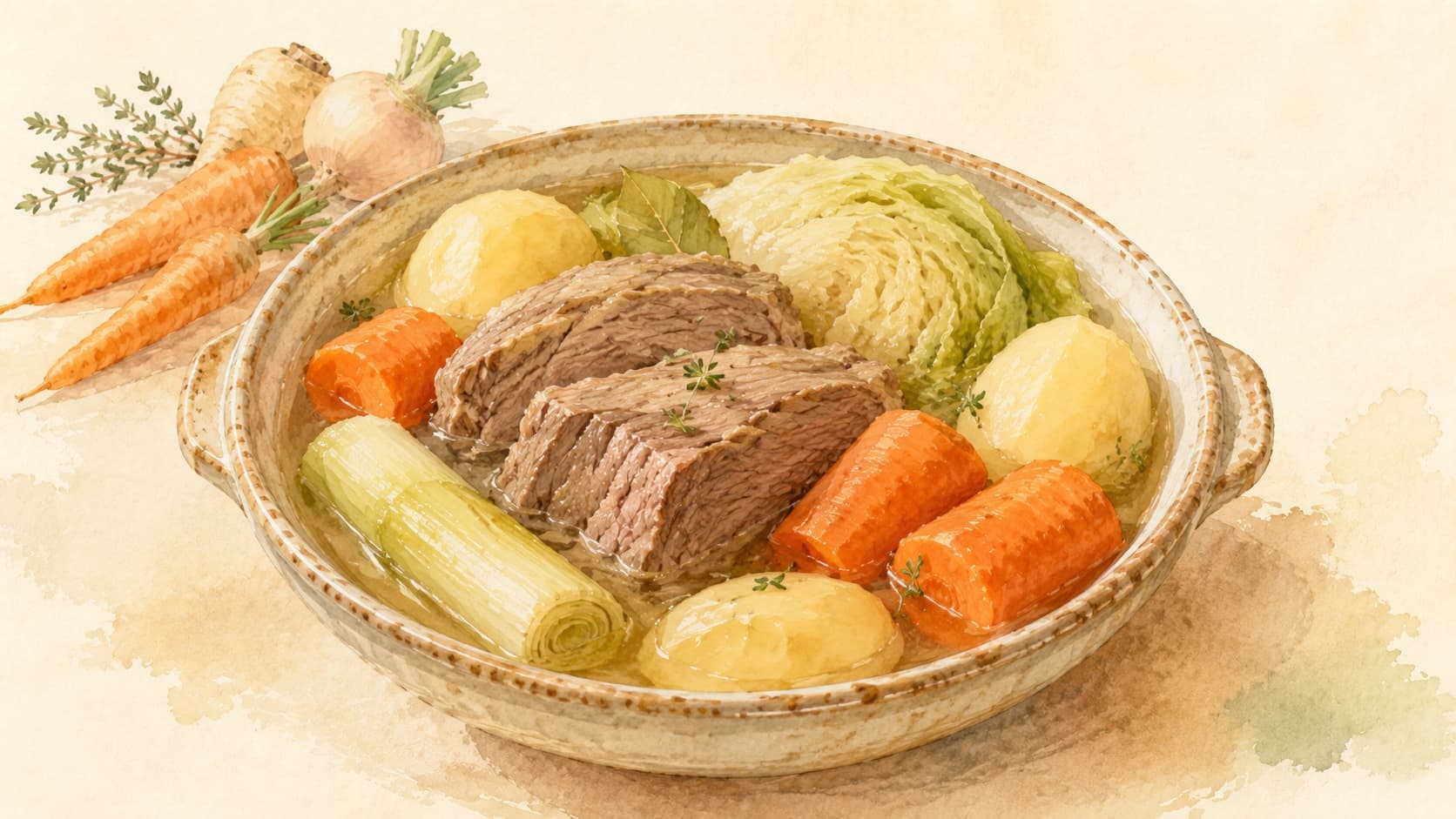
Ingredients
- 1 kg beef chuck, cut into chunks
- 2 liters water
- 2 large carrots, peeled and cut into chunks
- 2 medium potatoes, peeled and quartered
- 1 large onion, quartered
- 3 cloves garlic, crushed
- 1 bouquet garni (thyme, bay leaf, parsley)
- Salt to taste
- Pepper to taste
- 4 marrow bones, optional
Steps
In a large pot, combine beef, water, onion, garlic, and bouquet garni. Bring to a simmer over medium heat for about 10 minutes.
Skim off any foam that forms on the surface, then add carrots and potatoes. Season with salt and pepper.
Cover and let simmer for 1.5 to 2 hours on low heat until the beef is tender.
If using marrow bones, add them to the pot during the last 30 minutes of cooking.
Remove the bouquet garni and serve the dish hot, with the broth and vegetables ladled into bowls.
Why this works
Pot-au-Feu is a dish that exemplifies the technique of braising, where tougher cuts of meat, such as beef chuck, are cooked slowly in liquid to break down the connective tissue, resulting in tender, flavorful meat. The simmering process extracts flavors from the beef and vegetables into the broth, creating a rich and hearty meal. The addition of marrow bones enhances the depth of the broth, providing extra richness. If the meat seems too tough after the simmering time, simply continue cooking for an additional 30 minutes, allowing the heat to further break down the fibers. Careful temperature management is key; too high of a heat can lead to a cloudy broth and tough meat. Allowing the pot to simmer gently is essential for achieving the desired textures and flavors.
Common mistakes
Boiling the beef hard instead of barely simmering it. Target: A gentle simmer — surface barely trembling, occasional bubbles, around 85-95°C / 185-200°F — for at least 2-3 hours, until the beef pulls apart easily with a fork. Why it matters: Pot-au-feu is built on collagen — the connective tissue in tough cuts like chuck that slowly breaks down into gelatin (collagen-to-gelatin conversion: long, gentle heat unwinds the collagen strands and dissolves them into the liquid, giving the broth body and the meat tenderness). A rolling boil rips the muscle fibres apart before that conversion finishes — you end up with stringy meat and a cloudy, fatty broth. The beef must be fully cooked through and tender, and marrow bones (if used) must also be simmered long enough to be fully cooked. What to do: Bring the pot up to a simmer, then drop the heat low. If you see big rolling bubbles, the heat is too high. Test the beef with a fork after two hours — if it still resists, give it another 30 minutes and check again.
Skipping the skim. Target: Skim the grey foam from the surface during the first 20-30 minutes, until the broth runs clear and only fat sits on top. Why it matters: The first foam is denatured protein and impurities released as the meat heats. Left in, they cloud the broth and add a stale, bitter taste. Pot-au-feu is judged largely on the clarity and flavour of its broth — a cloudy stock is a tell that the cook didn't watch the first 30 minutes. What to do: Stay with the pot during the first half hour. Use a small ladle or shallow spoon to lift foam off — skim only the grey scum, not the fat (you can defat at the end if needed).
Throwing all the vegetables in at the start. Target: Aromatics (onion, garlic, bouquet garni — a small bundle of herbs, usually thyme, parsley, and bay leaf, tied together for easy removal) at the start with the beef; firm root vegetables (carrots, potatoes, turnips) in the last 30-60 minutes. Why it matters: Vegetables that simmer for three hours collapse into mush, give up all their flavour to the broth, and have nothing left for the plate. Stagger them by cook time so each one is tender but still distinct when served. What to do: Build the broth with the beef and aromatics first. Add carrots and turnips around the last hour; potatoes in the last 30-40 minutes. Taste a piece — they should yield easily but still hold their shape.
Underseasoning the broth and the plate. Target: Salt the broth gradually, taste as it concentrates, and offer flaky salt and Dijon mustard at the table. Why it matters: Pot-au-feu is built on quietly layered savoury notes — beef, root vegetables, marrow. Without proper seasoning the whole pot tastes flat. The traditional plate is also dressed at the table: salt, mustard, sometimes cornichons or coarse mustard. What to do: Salt lightly at the start, taste after each hour, and adjust toward the end as the broth reduces. Serve the broth first as a clear consommé, then the meat and vegetables, with salt and mustard on the table.
What to look for
- A clear, golden broth with a thin amber slick of fat on top. Cloudy or grey means the simmer ran too high or the foam wasn't skimmed; perfectly translucent is the goal.
- Beef that pulls apart with a fork's gentle pressure. No need to saw — the fibres separate easily because the collagen has melted.
- Vegetables that hold their edges. Carrots and turnips should yield to a knife but keep their shape; falling-apart vegetables mean they went in too early.
- A faint trembling at the surface, never a rolling bubble. That gentle motion is the visible sign of the temperature window where collagen melts but muscle fibres stay intact.
A note on history
Pot-au-feu's roots reach back to medieval France, where simmering tough cuts in a pot kept on the hearth was the only practical way to make them tender (History Today, Lit Hub). Until the 18th century it was largely "poor man's food" — one of the few ways the working class could afford to eat meat. After the French Revolution, with the rise of a robust middle class, it was elevated to gastronomic status. Antonin Carême (an early-19th-century chef often called the founder of French grande cuisine) opened his 1828 L'Art de la cuisine française with pot-au-feu, calling it the principal food of the nation's working class, and by the 19th century it was being celebrated by writers including Alexandre Dumas. It is sometimes described as France's national dish — what roast beef is to England, pot-au-feu is to France (Bonjour Paris).
Get the essays in your inbox — free
Weekly notes on flavor, fermentation, and food history — the writing behind the Atlas of Flavor. No spam; unsubscribe anytime.