
Pkhali (Georgian Vegetable Spreads)
Pkhali is a Georgian spread made from processed vegetables and ground walnuts, seasoned with spices and vinegar for flavor balance.
Contents (5 sections)▾
Ingredients
- 250 g spinach, fresh
- 250 g beetroot, cooked and peeled
- 250 g white beans, cooked
- 150 g walnuts, finely chopped
- 2 cloves garlic, minced
- 1 tsp ground coriander
- 1 tsp vinegar
- Salt, to taste
- Pomegranate seeds, for garnish
Steps
Blanch the spinach in boiling water for 2 minutes, then drain and cool it quickly in ice water to retain its vibrant color.
In a food processor, combine the blanched spinach, walnuts, garlic, ground coriander, vinegar, and salt. Blend until a smooth paste forms.
For the beet spread, blend the cooked beetroot with walnuts, garlic, ground coriander, vinegar, and salt until smooth.
Repeat the process with the cooked white beans, adding walnuts, garlic, ground coriander, vinegar, and salt to make a creamy bean spread.
Chill each spread in the refrigerator for at least 30 minutes to firm up and enhance flavors.
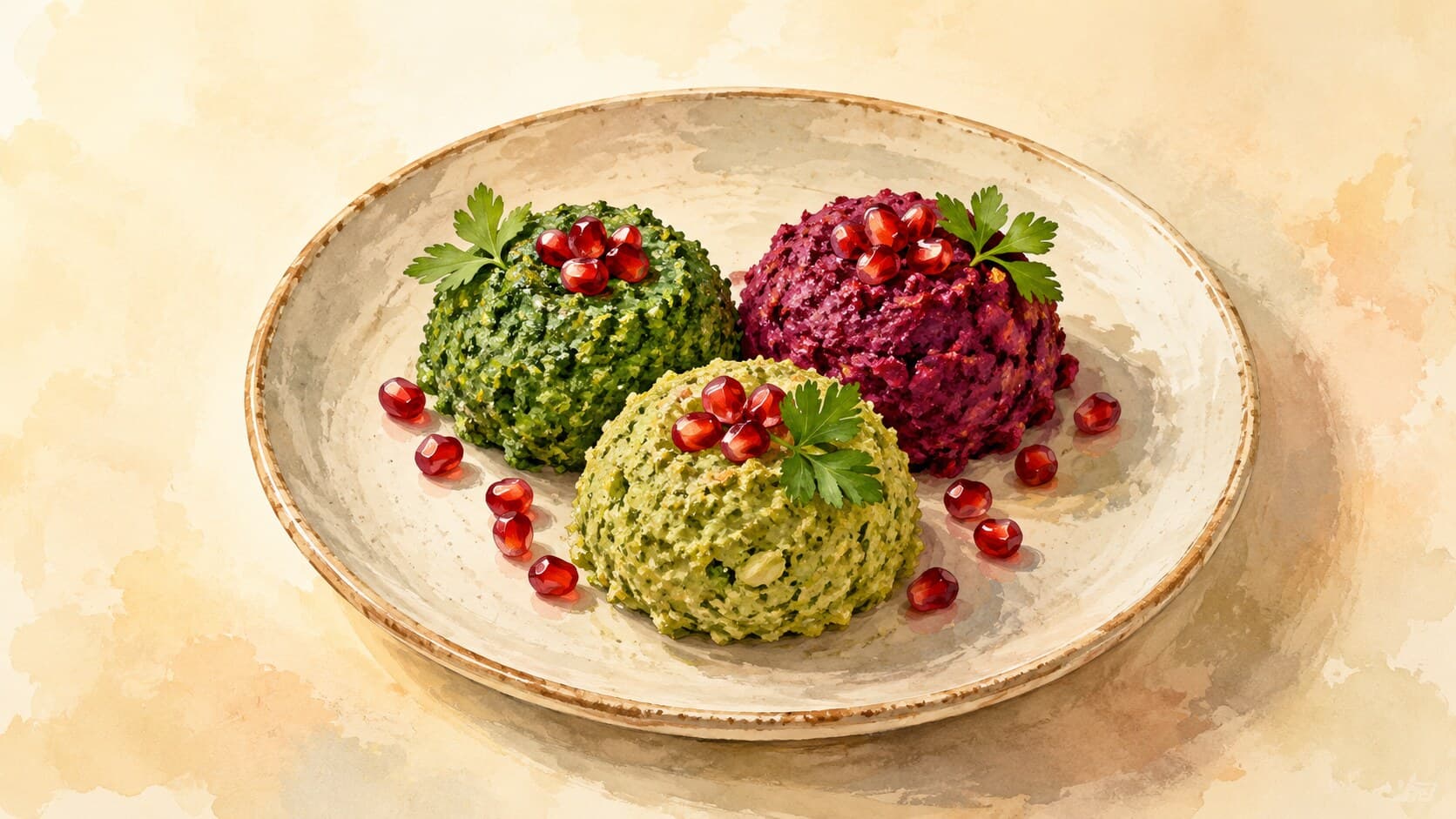
To serve, scoop each spread onto a plate, forming mounds, and garnish with pomegranate seeds.
Why this works
Pkhali relies on the natural flavors and textures of the vegetables combined with the richness of walnuts, making it a nutritious and flavorful dish. Blanching the spinach preserves its vibrant green color and reduces bitterness, enhancing the overall taste. If the spreads seem too thick, add a splash of olive oil or a little water to adjust the consistency. Additionally, the use of vinegar adds brightness, balancing the richness of the walnuts. The chilling step is crucial as it allows the flavors to meld together, resulting in a more harmonious dish. If the flavors feel muted, a pinch more salt or a dash of vinegar can brighten the taste profile significantly.
Common mistakes
Skipping the blanch (or undercooking the vegetables). Target: Spinach blanched 1-2 minutes in well-salted boiling water, then shocked in ice water; beetroot roasted or simmered until a thin knife slides in with no resistance; white beans cooked through to a creamy interior. Why it matters: Pkhali is a cold spread eaten as-is, with no further cooking. Vegetables that aren't fully cooked tender stay grassy or fibrous in the paste, and underdone beets in particular taste raw and earthy. Pkhali is also a refrigerated dish — keep it covered in the fridge and eat within about three days; if anything smells off or shows surface mould, discard it. What to do: Blanch, shock (plunge briefly into ice water to stop the cooking and lock the colour), and squeeze the spinach dry before processing. Test beets and beans by feel — they should yield easily. Cool everything before blending so the walnut oils don't go bitter from residual heat.
Letting the walnut paste turn into nut butter. Target: A textured, slightly grainy paste — not a smooth oily slick. Why it matters: Walnuts are around 65% fat. Over-processing breaks the cell walls completely and releases that oil into a heavy, bitter slick that masks the vegetables. The hallmark texture of pkhali is short, with a faint bite from the nuts. What to do: Pulse rather than run the processor continuously. Stop the moment the walnuts look like coarse, damp sand bound by the vegetable. If it does start to look oily, fold in a spoon of cold water or a little more cooked vegetable to bring it back.
Going too easy on the acid and salt. Target: A bright, savoury seasoning where the vinegar pierces the richness of the walnuts — taste, then adjust. Why it matters: Walnuts plus cooked vegetables are inherently mild and earthy. Without enough acid (vinegar, lemon, or a touch of wine vinegar) and salt, the spreads taste muted and one-note. Chilling also flattens flavour, so seasoning that tastes "just right" at room temperature will read flat once cold. What to do: Season slightly above where you think it should land, then chill and re-taste before serving. Adjust with another splash of vinegar or pinch of salt if needed.
Blending all three colours into one beige mound. Target: Three distinct mounds — green from spinach, deep red-purple from beet, pale from beans — each tasting like its own vegetable. Why it matters: Pkhali is traditionally served as a trio precisely because each spread is meant to read as a separate flavour and colour. Washing the food processor between batches keeps the colours and aromas clean. What to do: Process beets last (they stain everything), or rinse the bowl and blade between vegetables. Plate each spread in its own quenelle (a smooth oval shape formed between two spoons) or mound so the colours stay distinct.
What to look for
- A walnut paste that just barely holds its shape. Press a small mound with the back of a spoon: it should sit upright with soft edges, not slump into a puddle (too oily) and not crack apart (too dry).
- Vegetables that yield without resistance. A knife tip slides into a cooked beet and through a blanched spinach stem effortlessly. Anything that crunches or twists is undercooked.
- A clean, layered aroma at the bowl. You should smell walnut, then garlic, then the specific vegetable — not a single muddy "Mediterranean" haze.
- Bright, separate colours after chilling. Beet pkhali stays deep magenta, spinach holds its green, beans stay pale ivory. Brown or grey tones mean too much oxidation — blend more quickly next time and chill covered.
A note on history
Pkhali is a traditional Georgian dish of finely chopped vegetables bound with a walnut-based sauce, with roots tracing back to the Mingrelia region of western Georgia (Wikipedia, 196flavors). Walnuts have been central to cooking in the Caucasus since pre-Christian times, and pkhali grew out of a long practice of preserving and flavouring seasonal vegetables with nuts, vinegar, and herbs (Memoire Travel). The word itself comes from an older Georgian term for finely minced vegetables blended with seasonings. The trio of spinach, beetroot, and white beans is the form most often seen on the supra — the Georgian feast table — where a spread of cold appetisers anchors the long, layered meal.
Get the essays in your inbox — free
Weekly notes on flavor, fermentation, and food history — the writing behind the Atlas of Flavor. No spam; unsubscribe anytime.