
Pissaladière
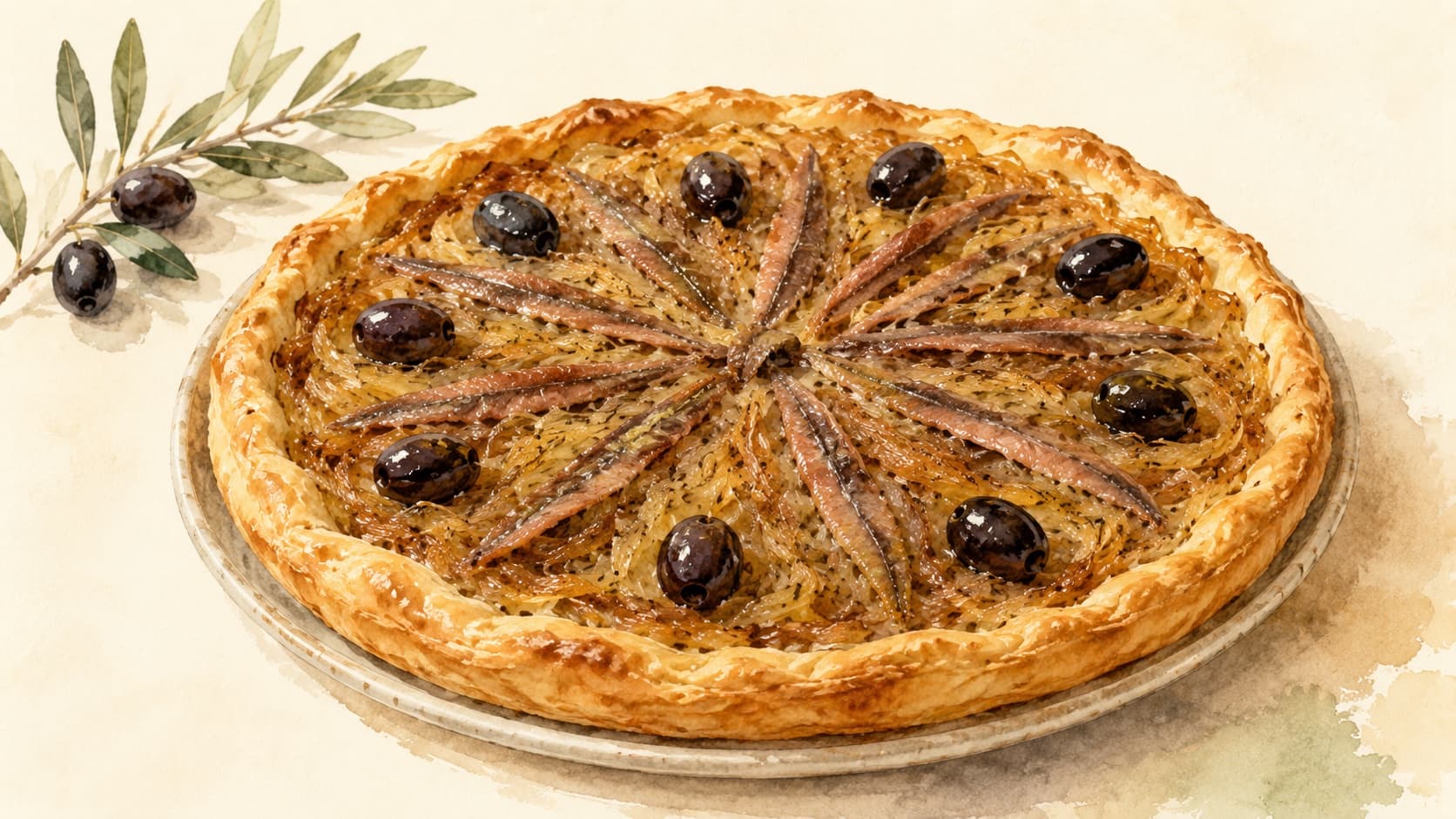
Pissaladière is a savory tart from Nice, featuring sweet caramelized onions, olives, and anchovies on a flaky pastry crust.
Contents (5 sections)▾
Ingredients
- 250 g all-purpose flour
- 125 g unsalted butter, chilled and diced
- 1/4 tsp salt
- 60 ml cold water
- 500 g Niçoise onions, thinly sliced
- 3 tbsp olive oil
- 100 g black olives, pitted and halved
- 6 anchovy fillets, drained
- 1 tsp fresh thyme leaves
- black pepper, to taste
Steps
In a large bowl, combine the flour and salt, then rub in the chilled butter until the mixture resembles breadcrumbs. Gradually add cold water until a dough forms. Wrap in cling film and refrigerate for 30 minutes.
While the dough chills, heat olive oil in a large skillet over medium heat. Add the sliced onions and cook for about 20 minutes, stirring occasionally, until they are soft and caramelized. Season with black pepper and thyme.
Preheat your oven to 200°C (390°F). Roll out the dough on a floured surface to fit a tart pan. Place the rolled dough into the pan and prick the base with a fork.
Spread the caramelized onions evenly over the pastry base, then arrange the halved olives and anchovy fillets on top. Bake for 15 minutes until the edges are golden brown.
Remove from the oven, allow to cool slightly, then slice and serve warm or at room temperature.
Why this works
Pissaladière achieves a delightful balance of flavors and textures through a combination of techniques that highlight the main ingredients. The key is in the caramelization of the onions, which transforms their natural sugars, resulting in a sweet and rich flavor that beautifully contrasts with the brininess of the anchovies and the saltiness of the olives. This tart features a flaky pastry that serves as the perfect base, providing a light and crisp texture. If the onions seem too sharp at first, continue cooking them gently until they soften and sweeten, ensuring that the flavor is mellow and well-rounded. The anchovies and olives, when placed on top before baking, enhance the overall umami profile without overpowering the sweet onion foundation. The final bake creates a harmonious dish that can be enjoyed warm or at room temperature, making it an ideal starter for any occasion.
Common mistakes
Rushing the onions over high heat. Target: 30-40 minutes on medium-low heat (around 140-160°C / 285-320°F at the pan surface), stirring every few minutes until the onions are soft, glossy, and deep amber. Why it matters: Pissaladière is essentially a vehicle for caramelised onions (slow-cooked onions where natural sugars break down into sweet, brown compounds). On high heat the outside scorches while the inside stays sharp and raw, leaving the tart with burnt edges instead of the mellow sweetness that anchors the dish. What to do: Use a wide pan so the onions sit in a single layer, salt them lightly at the start to draw out moisture, and resist the urge to turn up the heat. If they begin to stick, splash in a tablespoon of water and scrape the brown fond (the sticky brown layer on the pan) back into the onions.
Burning the onions instead of caramelising them. Target: Deep amber, soft, and sweet — never bitter or charcoal-edged. Why it matters: Once onions cross from caramelised into burnt, the sugars turn acrid and no amount of seasoning will recover the sweetness. This is the single most common reason a pissaladière tastes harsh. What to do: Pull the pan off the heat the moment you smell anything acrid. If only a few flecks have darkened too far, pick them out; if a whole patch has scorched, start that portion again. Better to have less caramelised onion than burnt onion on the tart.
Underbaking the base. Target: Bake until the crust edges are a clear golden brown and the bottom of the tart is dry and crisp when you lift it — internal oven around 200°C / 390°F as written, and watch the colour rather than just the clock. Why it matters: Cured anchovies are already preserved and edible from the tin, so the bake is about the dough, not the topping. A pale, doughy base collapses under the moisture from the onions and tastes raw at the centre. What to do: Pre-prick the dough, place the tart on a hot baking sheet if your oven runs cool, and check the underside before pulling it out. Extend the bake by a few minutes if the bottom is still pale.
Salting heavily on top of the anchovies. Target: Taste before adding any extra salt — the anchovies and olives both bring their own. Why it matters: Anchovies and brined olives are heavily salted by curing; an extra pinch of sea salt at the end can tip the dish into harshness. What to do: Season the onions during cooking, then taste the finished tart with the anchovies and olives in place before reaching for the salt cellar.
What to look for
- A pan that smells sweet, not sharp. Once the raw, eye-watering edge of the onions disappears and the kitchen smells faintly like jam, the sugars are breaking down properly.
- A glossy, deep-amber colour on the onions. Not pale gold (undercooked, still sharp) and not dark brown-black (burnt, bitter). Amber with a slight sheen is where the sweetness lives.
- A base that lifts cleanly from the pan. When you slide a knife under a corner of the baked tart, the bottom should be dry and lightly browned, not soft or damp.
- Anchovies that sink slightly into the onions during baking. Their oils melt into the onion layer and bind the flavours; if they sit on top like dry sticks, the bake was too short or the onions too dry.
A note on history
Pissaladière (a Provençal onion-and-anchovy tart from Nice) is a Niçoise tart with roots that likely stretch back to the Middle Ages or Renaissance, though the first written records under the name "pissalat à la niçoise" appear only in the 19th century (196flavors, CIA France). The name comes from pissalat, a traditional fermented anchovy (a small, oily fish cured in salt; the source of much of the tart's umami depth) paste once spread on the dough — itself derived from Niçard peis salat, meaning "salted fish" (Wikipedia). Because Nice belonged to the Kingdom of Sardinia until 1860, the tart shares lineage with the Ligurian pissalandrea, a closely related onion-and-anchovy flatbread from across the border. The classic finish is a scattering of niçoise olives (small, dark, brine-cured olives from Provence with a clean, slightly bitter bite). Historically, it was workers' and fishermen's food — made from the cheapest, most abundant ingredients on the Mediterranean coast.
Get the essays in your inbox — free
Weekly notes on flavor, fermentation, and food history — the writing behind the Atlas of Flavor. No spam; unsubscribe anytime.