
Pickled Red Onion
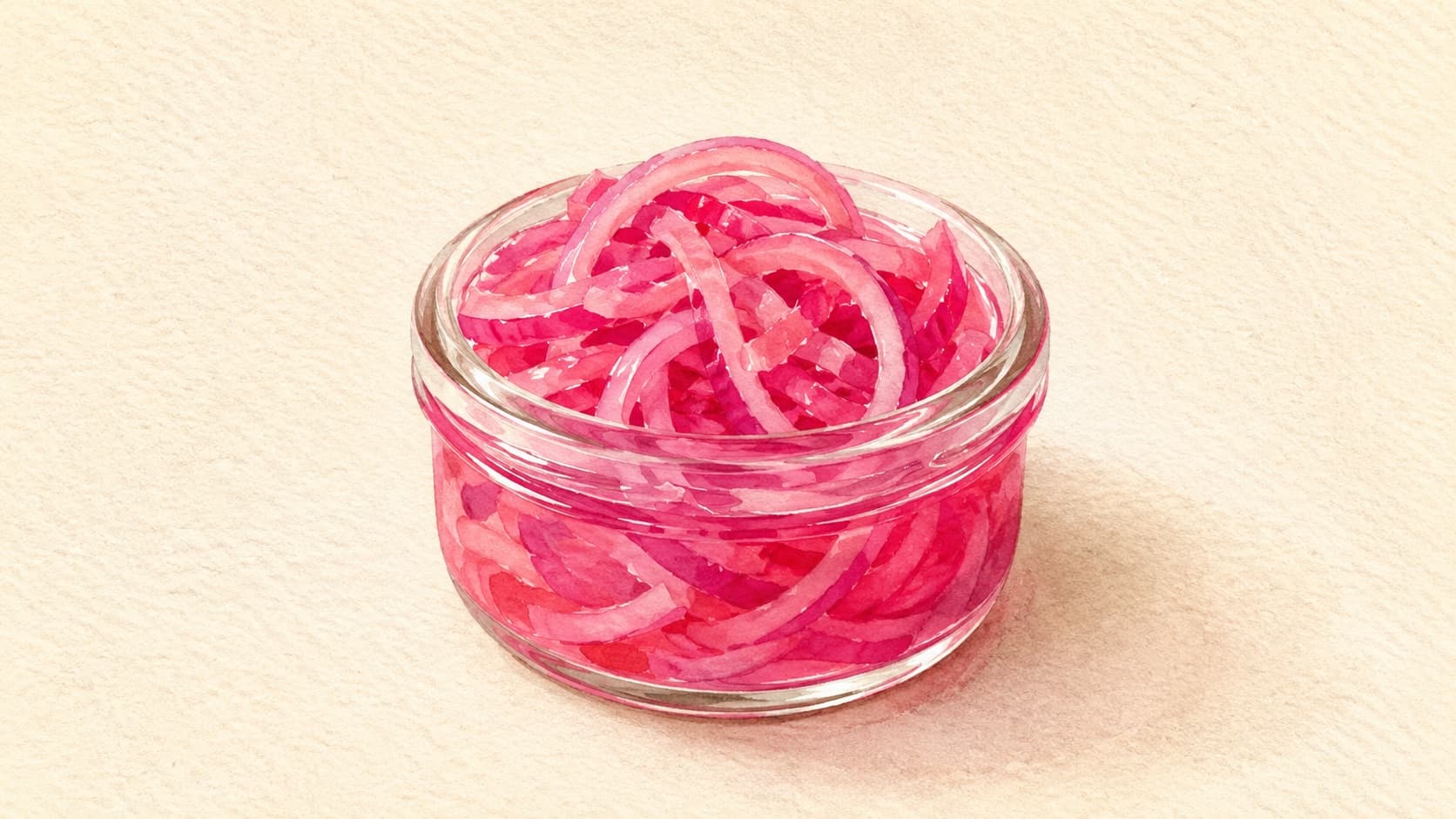
Pickled red onions are a condiment made by soaking sliced onions in a vinegar solution, enhancing dishes with acidity and flavor.
Contents (5 sections)▾
Ingredients
- 1 large red onion, thinly sliced
- 240 ml apple cider vinegar
- 120 ml water
- 2 tbsp sugar
- 1 tsp salt
- 1 tsp black peppercorns
- 1 tsp mustard seeds
- 1/2 tsp red pepper flakes (optional)
Steps
In a small saucepan, combine apple cider vinegar, water, sugar, salt, black peppercorns, mustard seeds, and red pepper flakes. Heat over medium heat until the sugar and salt dissolve, about 5 minutes.
While the liquid heats, place the sliced red onion in a heatproof jar or bowl. Once the vinegar mixture is ready, pour it over the onions, ensuring they are fully submerged.
Let the mixture sit at room temperature for 10 minutes to allow the flavors to meld. For a stronger pickled flavor, refrigerate for at least 30 minutes.
Why this works
This quick-pickle technique leverages the acidity of vinegar to transform the sharpness of raw red onions into a tangy, vibrant condiment in no time. The sugar balances the acidity, creating a harmonious flavor that enhances the onions without overwhelming them. The addition of spices like black peppercorns and mustard seeds contributes depth and complexity. If the onions seem too soft, ensure you don't overheat the vinegar mixture, as excessive heat can break down their structure. Additionally, if you desire a more pronounced flavor, let the pickled onions sit longer in the refrigerator; they continue to develop their tanginess over time.
Common mistakes
Using a dirty or warm jar — short shelf life and risk of spoilage. Target: a clean glass jar (washed in hot soapy water and air-dried, or rinsed with boiling water and dried). Refrigerate immediately once the brine cools to warm; use within about 2 weeks. Why it matters: this is a quick refrigerator pickle, not a shelf-stable canned product. The acid (vinegar) suppresses spoilage organisms only at refrigerator temperatures and only for so long. A residue-streaked jar introduces other organisms that the acid alone cannot fully control over weeks. What to do: if you ever see white film, fuzzy growth, or smell off (yeasty, sour beyond vinegar, or sulfurous), discard the whole jar — do not try to skim. Always submerge the onions fully in brine; expose air gaps lose their acid protection first.
Pouring boiling brine straight onto onions, then sealing in a hot jar. Target: brine just below a boil, poured over onions; jar covered loosely until cooled to warm; then sealed and refrigerated. Why it matters: boiling-hot brine cooks the onion's cell walls and you lose the crunch that makes a quick pickle interesting (texture is half the point). Sealing a hot jar also traps steam, raising the in-jar temperature long enough to soften everything further. What to do: if you want maximum crunch, let the brine reach a bare simmer (just dissolving the sugar and salt), then pour while still hot but not violently boiling.
Slicing too thick — pickle never fully penetrates. Target: about 2–3 mm slices (about the thickness of a coin) — thin enough to flex easily between fingers. Why it matters: quick pickling works by osmosis (water moves out of the onion, acid and salt move in). Thicker slices mean the center stays raw and harsh while the surface is already soft. The famous magenta-pink color also doesn't penetrate evenly. What to do: use a sharp knife or mandoline — a dull knife crushes onion cells and releases sulfur compounds (the chemicals that make raw onion harsh and tear-inducing), which can make the finished pickle taste muddier.
Using a reactive metal container or lid. Target: glass jar with a plastic or plastic-lined lid; ceramic also fine. Why it matters: vinegar reacts with bare aluminum, iron, and copper, producing off-flavors and discoloring the onions. Old-style metal mason lids can corrode where they meet the brine. What to do: if your jar only has a metal lid, lay a square of plastic wrap or parchment between the jar mouth and the lid before screwing it on.
What to look for
- A bright magenta-pink halo around each slice within 10 minutes. The color shift is anthocyanin (the natural red-onion pigment) reacting to acid — it's both a visual cue that pickling has started and a marker that your brine is acidic enough.
- Onions that bend, not snap. A good quick pickle stays crunchy but loses the raw, sinus-clearing pungency; bite a slice after 30 minutes — sharp but pleasant means it's ready.
- Clear, ruby-tinted brine. Cloudy brine within the first day usually means the onions weren't rinsed of cut-surface debris, or the jar wasn't clean. Cloudy brine after a week may indicate spoilage — discard.
- A clean, sharp aroma when you open the jar. Vinegar-bright with a hint of pepper and mustard. Any sour-funky, yeasty, or rotten-egg smell means the pickle has gone off.
A note on history
Pickled red onions in the form many of us recognize today — bright pink slices used as a condiment — are most strongly associated with the Yucatán Peninsula of Mexico, where cebollas encurtidas (pickled onions) are the traditional accompaniment to cochinita pibil (a Yucatecan slow-roasted achiote-marinated pork) and other regional dishes (MexConnect, Pati Jinich). The classic Yucatecan version uses the juice of bitter Seville oranges (a sour citrus variety used mainly for cooking, not eating fresh) rather than vinegar, which gives a distinctive astringent edge (Travel To Eat). The vinegar-based version in this recipe is the modern-global adaptation — a quick pickle (a refrigerator pickle ready in minutes to hours, not preserved for long shelf life) that travels well outside the Yucatán's local citrus.
Get the essays in your inbox — free
Weekly notes on flavor, fermentation, and food history — the writing behind the Atlas of Flavor. No spam; unsubscribe anytime.