
Pepperpot
Pepperpot is a traditional Guyanese Christmas dish featuring long-braised beef and pork in a rich cassareep sauce.
Contents (5 sections)▾
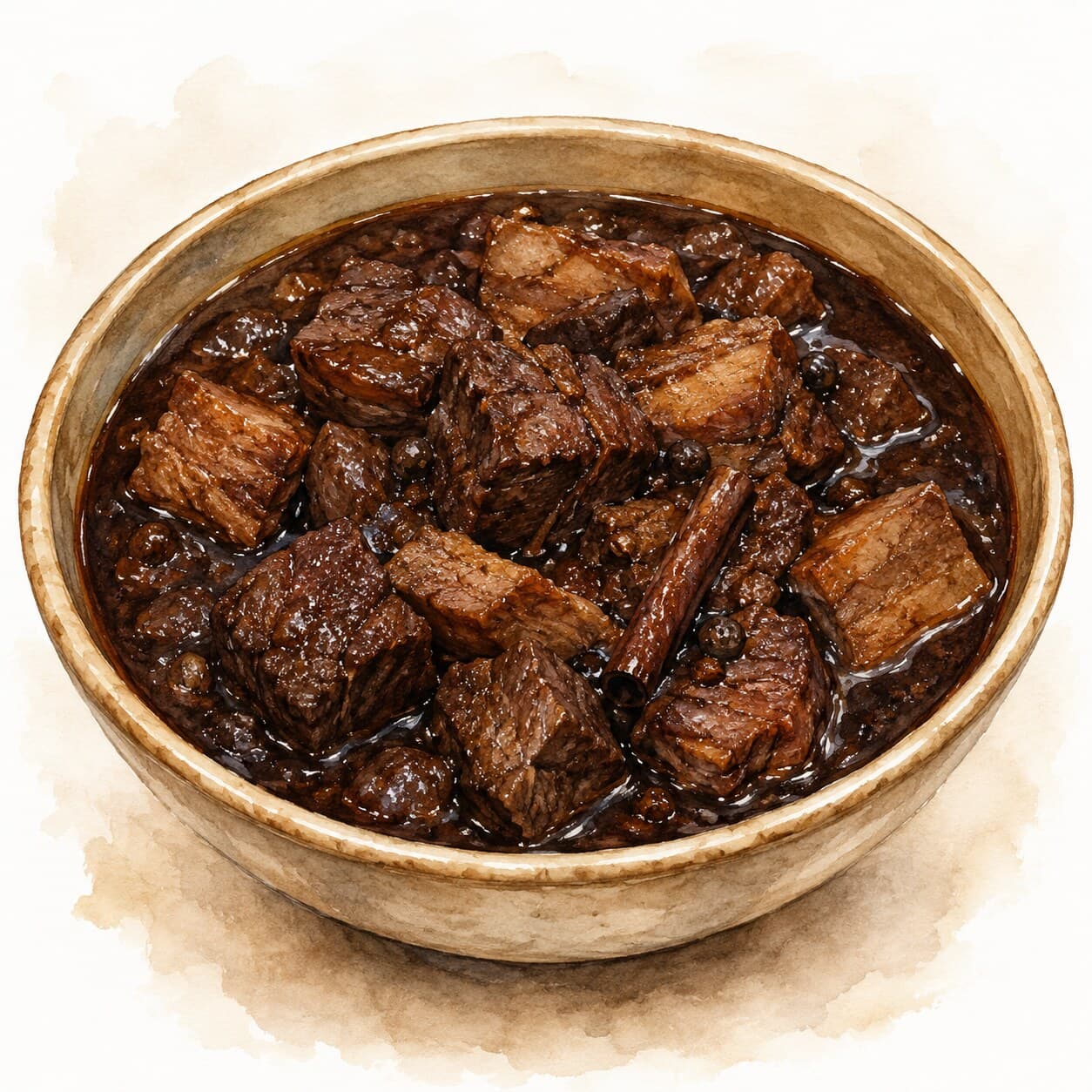
Ingredients
- 500 g beef, cut into cubes
- 500 g pork, cut into cubes
- 250 ml cassareep (commercial bitter-cassava syrup)
- 1 stick cinnamon
- 5 cloves
- 1 scotch bonnet pepper, whole
- 2 tbsp brown sugar
- 1 onion, chopped
- 4 garlic cloves, minced
- 1 tsp salt
- water, as needed
Steps
In a large pot, heat a small amount of oil over medium heat and sauté the chopped onion and minced garlic until fragrant, about 5 minutes.
Add the beef and pork cubes to the pot, browning them on all sides for about 10 minutes to enhance flavor.
Stir in the cassareep, cinnamon stick, cloves, brown sugar, and salt. Add enough water to cover the meat, approximately 500 ml.
Bring the mixture to a boil, then reduce the heat to low and cover the pot. Allow it to simmer gently for 3-4 hours, stirring occasionally.
During the last 30 minutes of cooking, add the whole scotch bonnet pepper for heat, ensuring it remains intact for a milder flavor.
Check the meat for tenderness; it should be fork-tender. Adjust seasoning if necessary.
Serve hot. The flavour deepens if made a day ahead — cool it quickly, refrigerate overnight, and reheat to a full simmer before serving.
Why this works
Pepperpot's richness comes from the combination of long-braised meats and the unique flavors of cassareep, a syrup that adds depth and, in the days before refrigeration, historically helped the dish keep. This dish is traditionally made well ahead of special occasions, allowing the flavors to meld and improve over time. The low and slow cooking method ensures that the tough cuts of meat become incredibly tender, while the spices infuse into the dish. If the sauce seems too thick during cooking, simply add a bit more water to maintain the desired consistency. Alternatively, if it becomes too watery, simmer uncovered for a short time to reduce it. The inclusion of the scotch bonnet pepper adds an authentic heat that can be controlled by leaving it whole, allowing just a hint of spiciness to permeate the dish without overwhelming it. This makes pepperpot a versatile centerpiece for festive gatherings, and it is even better reheated over the following days — keep it refrigerated between servings and bring it back to a full simmer each time, rather than leaving the pot out at room temperature.
Common mistakes
Piercing or chopping the scotch bonnet instead of leaving it whole.
Target: Add the pepper whole and uncut, keep it intact throughout cooking, and lift it out whole (or warn diners it's in there) before serving.
Why it matters: A scotch bonnet's fire lives mainly in the membrane and seeds inside it; left whole, only a slow trickle of heat and fruity aroma escapes through the skin. Nick or stir it too roughly and it bursts, dumping its full capsaicin (the compound that makes chili peppers taste hot) load into the pot — turning a warmly spiced stew into one few people can eat.
What to do: Drop the pepper in whole for the last 30 minutes as directed, keep the pot at a gentle simmer so it doesn't knock around and split, and lift it out whole before serving.
Rushing the browning step or crowding the pot.
Target: Brown the beef and pork cubes in a single layer, in batches if needed, until deeply colored on at least two sides.
Why it matters: Pepperpot's dark color comes mostly from cassareep, but the meat's own browning — the Maillard reaction (the browning reaction that builds savory flavor in seared meat) — still supplies a savory backbone that cassareep alone can't provide. Piling wet, cold cubes into the pot steams them grey instead of browning them.
What to do: Pat the meat dry, brown it in two batches over medium heat, and resist the urge to stir constantly — let each side sit until it releases easily and looks deeply colored.
Treating cassareep as an optional or swappable sweetener.
Target: Use the full amount of true cassareep (bottled bitter-cassava syrup) the recipe calls for; don't substitute molasses or soy sauce for it.
Why it matters: Cassareep is not just a coloring agent — it's a thick, dark syrup boiled down from bitter cassava root, with its own bittersweet, tangy depth that defines pepperpot's identity (and, before refrigeration, part of what helped the stew keep). Molasses or soy sauce will darken the pot but taste like a different dish entirely.
What to do: Buy bottled cassareep (sold in Caribbean grocers) rather than improvising a substitute, and measure it in rather than eyeballing "enough color."
Simmering hard instead of low and slow, or pulling the meat before it's fork-tender.
Target: Keep the pot at a gentle simmer for the full 3-4 hours; the meat should be cooked through and yield easily to a fork, with no raw or pink color remaining.
Why it matters: The beef and pork cubes here are tough, well-worked cuts; a hard boil toughens their fibers before the connective tissue has time to soften, and stopping early leaves both undercooked meat and an underdeveloped sauce.
What to do: Keep the heat low enough that the surface only shows the occasional lazy bubble, and test a piece near the 3-hour mark — it should yield easily under light pressure with no pink remaining before you call it done.
What to look for
- A near-black, glossy sauce that coats a spoon. That deep, almost molasses-dark color is cassareep doing its job; a pale reddish-brown pot means it needs more cassareep or more time to reduce.
- Meat that shreds easily with a fork and shows no pink or raw color at the center. Fork-tender with fully cooked color throughout is the target for both the beef and the pork.
- A gentle, rounded heat from the pepper, not a sharp burn. If the scotch bonnet stayed whole and unbroken, the stew should carry a warm background heat; a sudden intense burn on the tongue means the pepper split open in the pot.
A note on history
Pepperpot is Guyana's national dish, and its defining ingredient — cassareep (a thick, dark syrup boiled down from the juice of bitter cassava root) — is credited to the Indigenous Amerindian peoples of Guyana, with many accounts pointing specifically to Arawak communities. Raw bitter cassava contains toxic cyanogenic compounds, so learning to boil the juice down into a safe, richly flavored, naturally keeping syrup was a genuine piece of food technology developed long before refrigeration existed. Because cassareep helps preserve the stew, a pot of pepperpot could traditionally be kept going for days, topped up with fresh meat and reboiled rather than started over — a practice still echoed in the dish's place at Guyanese Christmas tables. That was a pre-refrigeration method, not a modern food-safety practice: today, refrigerate leftovers promptly and reheat only what you will eat, to a rolling boil, rather than holding the pot at room temperature for days.
As Guyana's population grew more diverse through colonization, indentured labor, and immigration, pepperpot was adopted and reshaped by African, Indian, Portuguese, and other communities, each adding their own touches — part of why recipes vary from household to household today (Wikipedia).
Get the essays in your inbox — free
Weekly notes on flavor, fermentation, and food history — the writing behind the Atlas of Flavor. No spam; unsubscribe anytime.