
Pav Bhaji
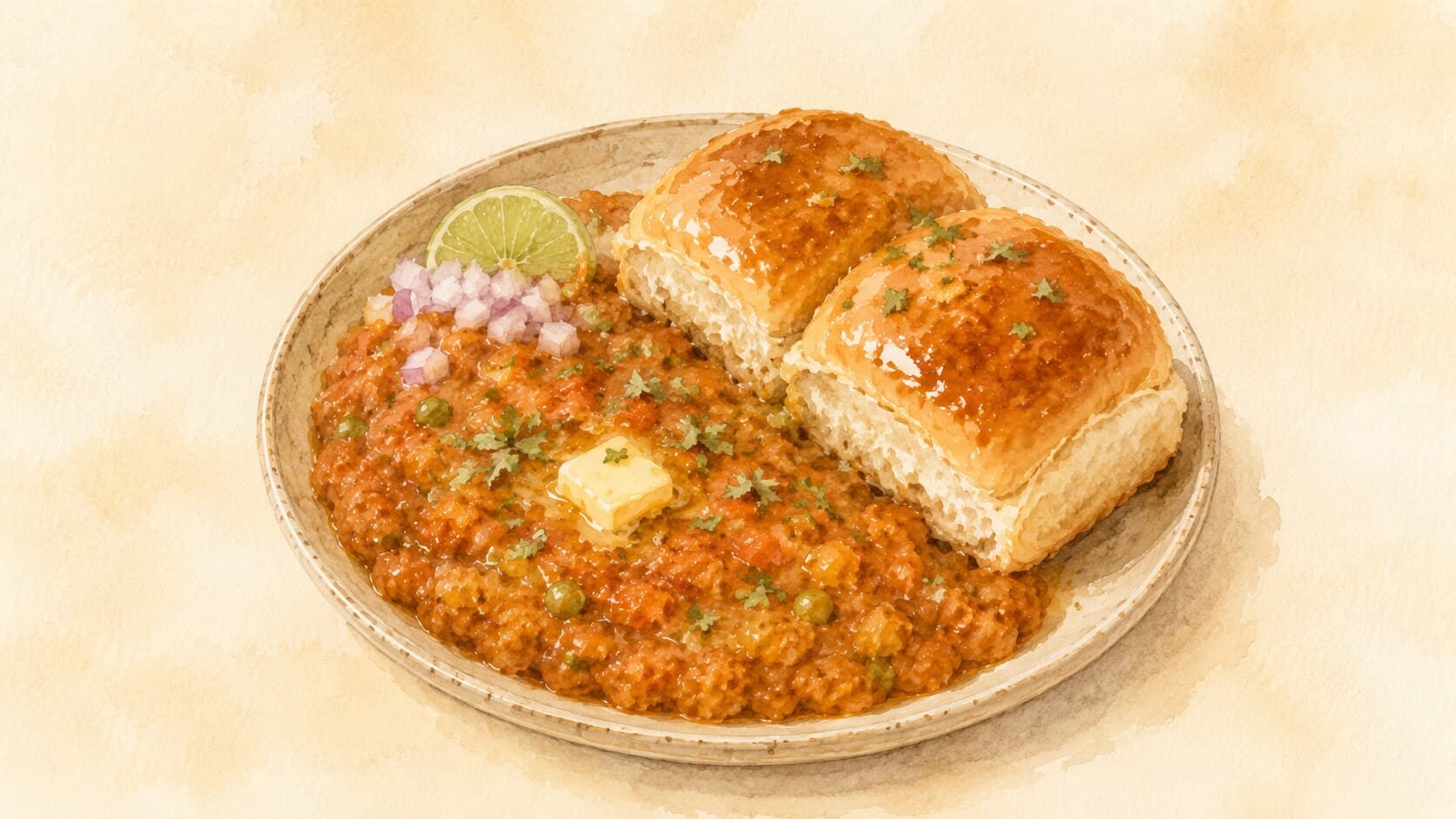
Pav Bhaji is a Mumbai street food consisting of a spiced vegetable mash served with toasted buttered bread rolls.
Contents (5 sections)▾
Ingredients
- 500 g mixed vegetables (potatoes, carrots, peas, bell peppers)
- 2 tbsp oil
- 1 tsp cumin seeds
- 1 onion, finely chopped
- 2 tomatoes, pureed
- 2 tbsp Pav Bhaji masala
- 1/2 tsp red chili powder
- Salt to taste
- 2 tbsp butter
- 4 Pav (bread rolls)
- Fresh coriander leaves for garnish
- Lemon wedges for serving
Steps
Boil the mixed vegetables in salted water for about 10 minutes until tender, then mash them together using a potato masher.
In a large pan, heat the oil over medium heat and add the cumin seeds, allowing them to sizzle for 30 seconds.
Add the chopped onion and sauté for 5-7 minutes until translucent. This builds the base flavor.
Stir in the pureed tomatoes, Pav Bhaji masala, and red chili powder, cooking for an additional 5 minutes until the oil separates.
Mix in the mashed vegetables and season with salt, cooking for another 5 minutes to blend the flavors.
In a separate pan, toast the Pav rolls with butter until golden brown on both sides.
Why this works
The combination of boiling and mashing vegetables creates a smooth texture and allows the flavors from the spices to meld beautifully. The technique of sautéing the onions first develops a rich flavor base, while the addition of tomatoes adds acidity that balances the dish. If the Bhaji seems too thick, you can add a bit of water to reach your desired consistency. It’s essential to let the flavors cook together for at least 5 minutes after adding the vegetables, allowing the spices to permeate. The buttered Pav enhances the overall richness, making it a comforting meal. This dish is quick to prepare, making it perfect for a weekday dinner yet complex enough to impress guests on special occasions.
Common mistakes
- Hard, undercooked vegetable chunks (food-safety BLOCK). Pav bhaji (literally "bread and vegetable curry" in Marathi — "pav" = soft bun, "bhaji" = spiced vegetable mash) is supposed to be a smooth, deeply soft mash. Chunks of barely-cooked potato or carrot still showing tooth resistance mean both the texture and the cooking weren't pushed far enough. Target: every vegetable — potato, carrot, peas, bell pepper — fully tender enough to mash with a wooden spoon. No tooth resistance anywhere. Why it matters: the spice masala only fully infuses when the vegetables are soft enough to break down and absorb. Undercooked starchy vegetables (especially potato) also taste raw and feel grainy. Boiling them all the way through is the safe and correct first step. What to do: boil the vegetables in salted water until they crush under gentle fork pressure — usually 12–15 minutes for diced potato and carrot, less for peas. Don't trust the package time; trust the fork.
- Burning the pav bhaji masala. Masala (the spice blend) burns easily in a hot dry pan, especially if added before the tomato has hit. Once it's scorched, the whole bhaji tastes bitter. Target: spices bloomed in fat and tomato until the oil "separates" (a small ring of red-orange oil pools at the edge of the pan). Why it matters: the technique called "bhuna" — frying the masala in fat with the tomato base — releases fat-soluble flavour compounds (carotenoids, capsaicinoids, terpenes) without burning them. Burned spice = bitterness you can't lift. What to do: keep heat at medium; add masala AFTER the tomato has broken down, give it 4–5 minutes stirring until you see the oil separate at the edges, then add the mashed vegetables.
- Skipping the butter — or burning it. Pav bhaji is butter-rich by design; that's the texture and luxury of the dish. Two extremes are both wrong: cooking the bhaji "lighter" by omitting butter loses the dish's identity, but burning butter on the griddle is the most common pav mistake. Target: generous, glossy butter melting into the bhaji and finished butter griddled into the pav, all golden — not blackened. Why it matters: butter has a relatively low smoke point (~150°C / 300°F). At high heat, the milk solids brown then burn, leaving a bitter, acrid griddle. Properly griddled pav is golden, buttery, slightly crisp. What to do: melt butter on a moderately hot griddle (not screaming hot), toast the pav cut-side down for 60–90 seconds until evenly golden, and add more butter if needed. If smoke rises immediately, the heat is too high.
- Serving the bhaji lukewarm. Pav bhaji is meant to be eaten piping hot. Lukewarm bhaji has dull spices and congealed butter — the texture goes from velvety to pasty. Target: bhaji served bubbling hot, with butter just melted on top. Why it matters: the volatile aromatic compounds in fresh pav bhaji masala (cumin, cinnamon, clove, fennel, dried mango/amchoor — a tangy powder ground from sun-dried green mangoes, used in Indian cooking for a sour note without added moisture) carry better in hot food. Lukewarm food smells flat. What to do: plate at the moment of serving. If you're feeding a crowd, keep the bhaji on a very low simmer with a top knob of butter, and griddle the pav to order so the bread is always warm.
What to look for
- A glossy red-orange bhaji, not a dull khaki — the colour comes from tomato and masala emulsified into the fat. Dull khaki means under-fried masala or insufficient tomato.
- Oil "separation" at the edge of the pan — a small ring of clear or red-tinted fat at the perimeter signals the bhuna is properly done. This is the cue Indian home cooks use.
- Soft, mashable vegetables — when you press into the bhaji with a spoon, it should give without resistance, not bounce back. Lumps are fine; raw lumps are not.
- Pav with deep golden, butter-shiny faces — the cut side of the bun should look almost translucent with butter, with even golden colour across, never dark brown or black.
A note on history
Pav bhaji originated in mid-19th-century Bombay (now Mumbai) as a quick, cheap, calorie-dense meal for textile mill workers. The most widely cited origin links it to the American Civil War period (1861–1865), when global cotton demand surged and Bombay's mills ran 24/7; night-shift workers needed a fast, filling, one-handed meal during short breaks, and street vendors innovated by mashing leftover vegetables together with spices and serving the mix with pav — soft Portuguese-style rolls brought to India by Portuguese traders (The Better India, Swiggy Diaries). From its working-class roots, the dish climbed the social ladder over the 20th century to become an icon of Mumbai street food and is now eaten across all of India and the diaspora (Wikipedia).
Get the essays in your inbox — free
Weekly notes on flavor, fermentation, and food history — the writing behind the Atlas of Flavor. No spam; unsubscribe anytime.