
Pasta alla Norma
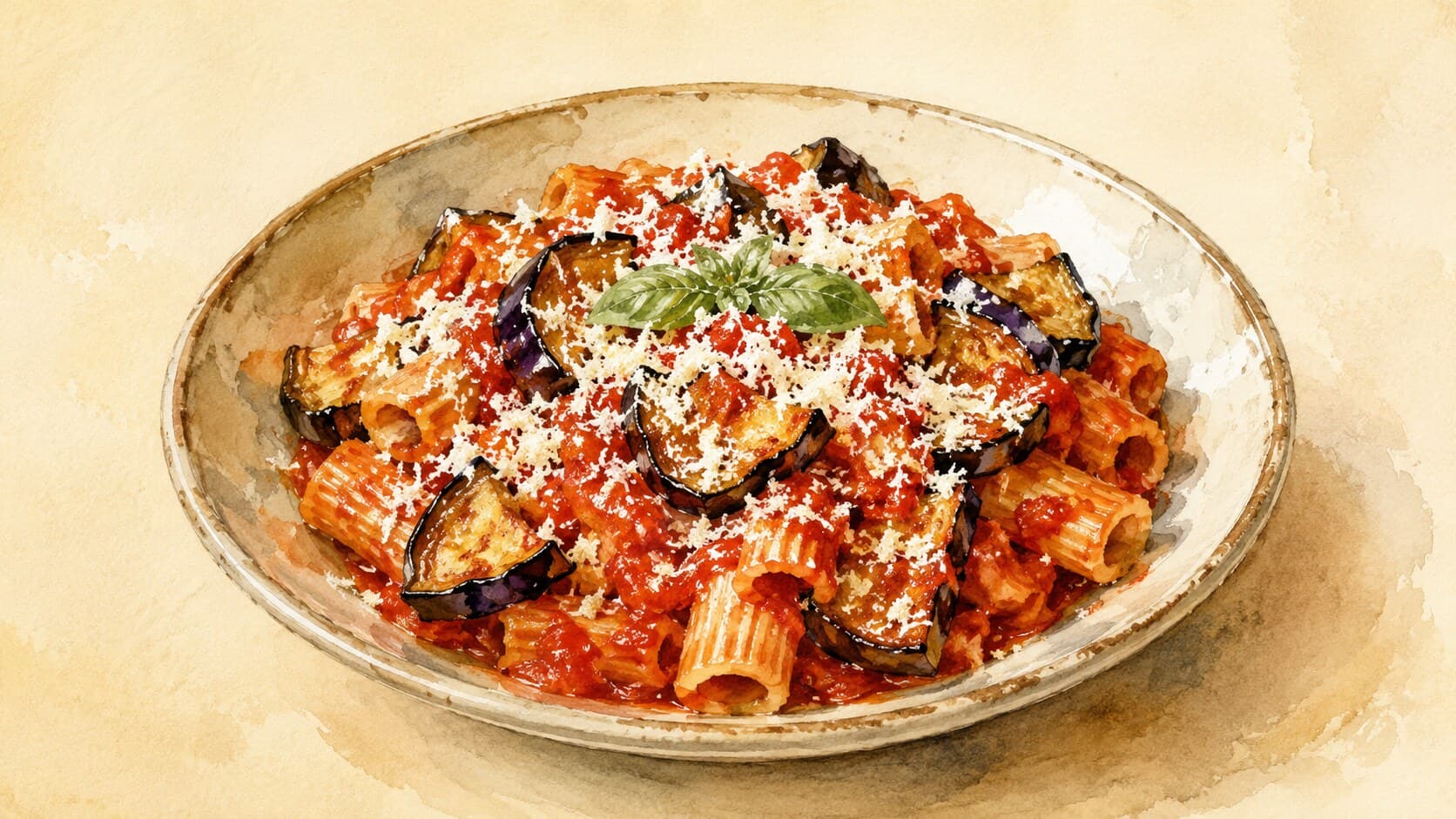
Pasta alla Norma is a rich Sicilian dish featuring rigatoni, eggplant, and a savory tomato sauce topped with grated ricotta salata.
Contents (5 sections)▾
Ingredients
- 400 g rigatoni
- 2 medium eggplants, diced
- 600 g canned crushed tomatoes
- 4 cloves garlic, minced
- 60 ml olive oil
- 1 tsp salt
- 1/2 tsp black pepper
- 1 tsp dried oregano
- 1/4 tsp red pepper flakes
- 100 g ricotta salata, grated
- fresh basil leaves, for garnish
Steps
Heat 30 ml of olive oil in a large skillet over medium heat. Add the diced eggplant and sauté for about 8-10 minutes until golden brown and tender, stirring occasionally.
While the eggplant cooks, bring a large pot of salted water to a boil. Add the rigatoni and cook according to package instructions until al dente, usually about 10-12 minutes.
Once the eggplant is cooked, add the minced garlic to the skillet and cook for 1-2 minutes until fragrant. Then, stir in the crushed tomatoes, salt, black pepper, oregano, and red pepper flakes. Simmer for 5-7 minutes.
Drain the rigatoni, reserving a cup of pasta water. Add the pasta directly to the skillet with the sauce, tossing to combine. If the sauce is too thick, add reserved pasta water a little at a time until desired consistency is reached.
Serve the pasta hot, garnished with grated ricotta salata and fresh basil leaves.
Why this works
The key to a successful Pasta alla Norma lies in the preparation of the eggplant and the balance of flavors in the sauce. Sautéing the eggplant until golden brown enhances its natural sweetness and adds a rich, savory depth to the dish. If the eggplant seems too oily, you can sprinkle it with salt and let it sit for about 15 minutes before cooking to draw out excess moisture. This technique helps avoid a greasy texture. The crushed tomatoes provide acidity and freshness, while ricotta salata adds a creamy, salty finish that complements the dish beautifully. The use of red pepper flakes offers a gentle heat that rounds out the flavors. Timing is crucial; ensure that the pasta is added to the sauce immediately after draining for optimal flavor absorption. If the sauce thickens too much, the reserved pasta water can be added gradually to adjust the consistency, ensuring each bite remains delightful and cohesive.
Common mistakes
- Eggplant that's browned on the outside but raw at the centre (food-safety BLOCK). Diced eggplant can look beautifully golden after 8 minutes while the inner pieces are still pale and squeaky. Raw eggplant flesh is bitter, spongy and unpleasant. Target: every dice fully tender — a piece should crush easily under a fork. Why it matters: eggplant cell walls are reinforced with sturdy fibres and the flesh contains small amounts of nasunin and other compounds that taste bitter when undercooked. Surface colour means heat reached the surface; it doesn't mean it reached the centre. What to do: cook in a wide pan so the dice are in a single layer, give them 8–10 minutes over medium heat with only occasional stirring, and taste a piece before you trust it. If it still has a raw squeak, give it another 2–3 minutes covered.
- Drowning the pan with oil and ending up with greasy eggplant. Eggplant acts like a sponge for fat in the first 30 seconds of cooking; if there's a puddle of oil, it disappears straight in. Target: glossy, golden dice — not oily, not dry. Why it matters: once eggplant is overloaded with oil it can't brown properly, and the finished pasta carries an unpleasant greasy mouthfeel that no amount of ricotta salata fixes. What to do: use a moderate film of oil, give the eggplant time to release some of the absorbed oil back (it really does, around minute 5), and only add more if the pan looks completely dry. Salting and resting the eggplant beforehand also reduces oil uptake.
- Adding raw garlic into screaming-hot oil with the eggplant. Garlic dropped in too early scorches before the tomato hits, giving the sauce that telltale acrid undertone. Target: garlic that smells fragrant and just turns translucent — never brown. Why it matters: burnt garlic releases bitter sulfur compounds that travel through the whole pan; you can't extract them later. What to do: add garlic AFTER the eggplant is cooked and the heat is reduced, give it 60–90 seconds, and pour in the tomato the moment the smell sweetens.
- Cooking the pasta to the package time and then leaving it sitting. The sauce is meant to finish cooking the pasta; if the pasta is already fully cooked when it meets the sauce, the texture goes mushy in seconds. Target: drain pasta a minute or two BEFORE the package's al dente time (Italian for "to the tooth" — pasta cooked just to firm-tender, with a slight bite at the centre), then finish in the sauce. Why it matters: pasta surface starch and the sauce need a brief shared simmer to bind — the technique Italians call "mantecatura" (combining starch, fat and water into a glossy emulsion). Pre-cooked pasta doesn't release enough starch at the right moment. What to do: lift the pasta out a touch early, reserve a cup of starchy water, finish pasta in the sauce for 1–2 minutes, and loosen with the reserved water if it tightens.
What to look for
- Eggplant that yields under gentle pressure — press a piece against the spoon; it should crush into the sauce, not bounce.
- A glossy, clinging sauce — the tomato should hug each rigatoni tube, not pool at the bottom of the bowl. That gloss is the starch-fat-water emulsion ("mantecatura") doing its job.
- Ricotta salata still distinct on top, not melted in — the salty, dry sheep cheese (aged, pressed ricotta firm enough to grate, unlike the soft fresh ricotta used in cheesecakes) is meant to be grated over at service, providing a sharp contrast. Its bright pinpricks of salt are part of the dish's identity.
- A bright, not muddy, red colour — over-reducing the tomato turns the sauce brick-brown. You want it tomato-red, lifted with fresh basil right at the end.
A note on history
Pasta alla Norma is firmly rooted in Catania, Sicily, the birthplace of composer Vincenzo Bellini, whose opera Norma premiered in 1831. The most widely cited origin story attributes the name to early-20th-century Catanese playwright Nino Martoglio, who upon tasting the dish exclaimed "Chista è 'na vera Norma!" — comparing it to Bellini's masterpiece (Wikipedia, Times of Sicily). The canonical form pairs maccheroni (or rigatoni), tomato sauce, fried eggplant, fresh basil and grated ricotta salata — a Sicilian sheep's milk cheese, salted and pressed, that finishes the dish at the table (Sicilian Post).
Get the essays in your inbox — free
Weekly notes on flavor, fermentation, and food history — the writing behind the Atlas of Flavor. No spam; unsubscribe anytime.