
Parmigiana di Melanzane
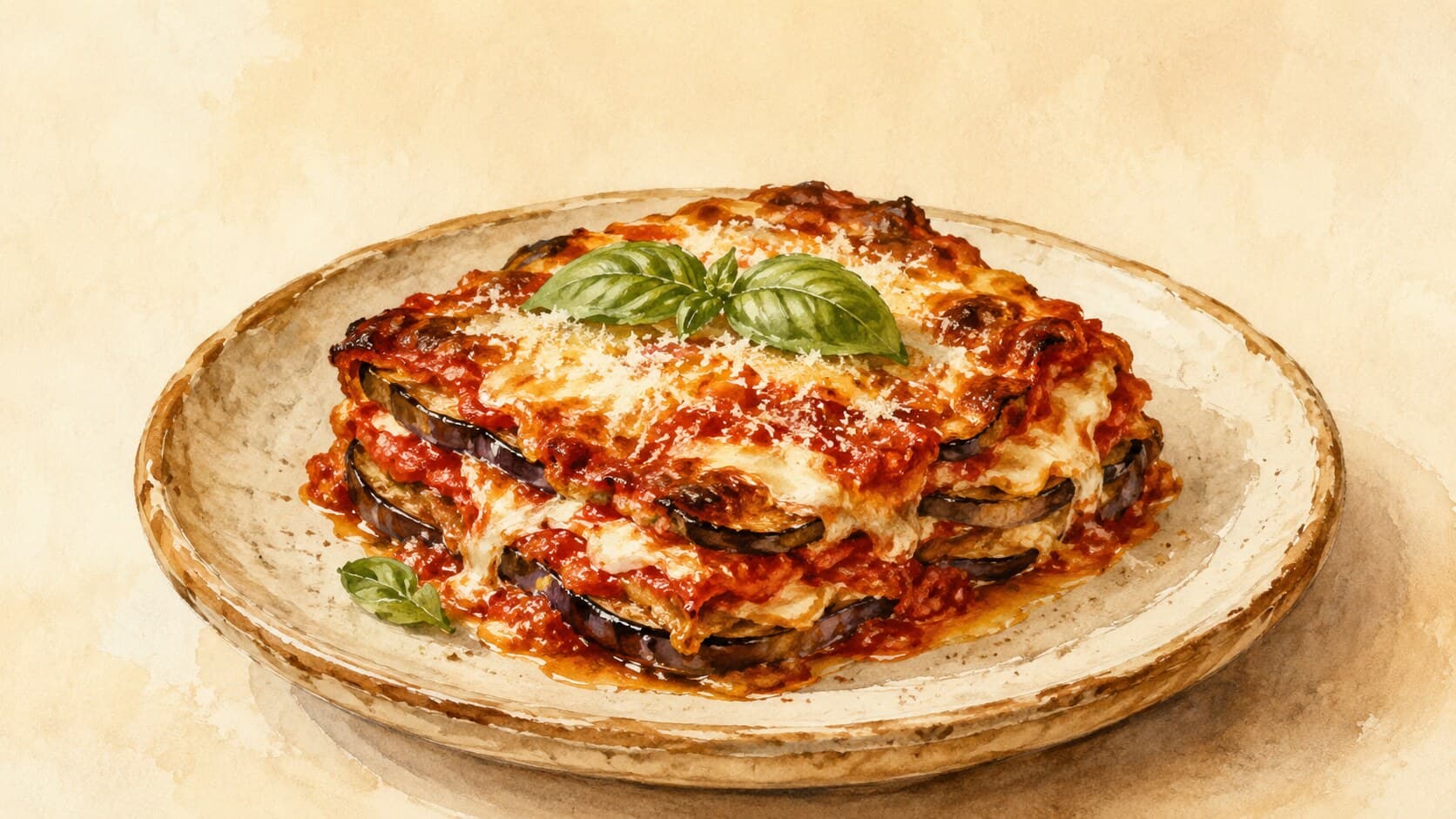
A classic Italian dish featuring layers of fried eggplant, rich tomato sauce, and melted mozzarella.
Contents (5 sections)▾
Ingredients
- 3 medium eggplants, sliced into 1 cm rounds
- 500 g tomato sauce
- 300 g fresh mozzarella, sliced
- 100 g grated Parmesan cheese
- 2 tbsp olive oil
- 2 cloves garlic, minced
- 1 tsp salt
- 1/2 tsp black pepper
- Fresh basil leaves, for garnish
Steps
Preheat your oven to 180°C (350°F). This temperature will ensure that the dish cooks evenly and the cheese melts beautifully.
Sprinkle salt over the eggplant slices and let them sit for about 15 minutes to draw out excess moisture. This process helps to reduce bitterness and prevent sogginess.
Rinse the salted eggplant slices under cold water and pat them dry with a towel. Heat olive oil in a skillet over medium heat, then fry the eggplant slices for about 3-4 minutes on each side until golden brown.
In a baking dish, spread a thin layer of tomato sauce, then layer fried eggplant, mozzarella slices, and a sprinkle of Parmesan. Repeat the layers until all ingredients are used, finishing with a layer of sauce and cheese on top.
Bake in the preheated oven for 30 minutes or until the top is golden and bubbling. Allow it to rest for 10 minutes before serving, which helps the layers set.
Why this works
The key to a successful Parmigiana di Melanzane lies in the preparation and layering of its ingredients. Salting the eggplant draws out water and bitterness, allowing for a firmer texture when fried. Frying the eggplant enhances its flavor and helps create a barrier that prevents the dish from becoming too watery during baking. The layering technique combines the rich tomato sauce, creamy mozzarella, and nutty Parmesan to achieve a harmonious blend of flavors. If the dish seems too watery after baking, let it rest longer to let excess moisture evaporate. Conversely, if the top is not browning as expected, consider broiling for a few minutes, keeping a close watch to avoid burning.
Common mistakes
- Undercooked eggplant in the centre slices. Eggplant slices that go into the bake still slightly raw stay spongy and bitter under the cheese, and the dish never feels finished. Target: every slice fully tender — a fork should slide through with no resistance — before it ever meets the sauce. Why it matters: eggplant flesh contains tough cell walls and small amounts of solanine-family compounds (the "bitter" notes); both soften only with sustained heat. Frying that's too brief just browns the surface while the inside stays raw. What to do: fry over moderate, not screaming, heat for 3–4 minutes per side until the slice is golden AND yielding when pressed. If unsure, press a slice gently — if it springs back hard, give it another minute.
- Wet, watery mozzarella turning the bake into soup. Fresh mozzarella (高水分の生モッツァレラ) carries a lot of moisture; if you slice it straight from the brine (the salty water in which fresh mozzarella balls are packaged to keep them moist) and stack it raw between layers, that water leaches into the bake. Target: mozzarella that's been drained and patted dry, so the layers set rather than swim. Why it matters: excess water dilutes the tomato passata (the reduced tomato base that gives the dish its body), prevents the top from browning, and leaves you with a loose, weeping bake instead of distinct layers. What to do: slice the mozzarella 30 minutes ahead, lay the pieces on paper towels, and pat them dry. If a slice is dripping, blot again before layering.
- Pulling the bake out before it's hot all the way through (food-safety BLOCK). A parmigiana with a hot top but a barely-warm centre is the worst of both worlds — the cheese isn't fully melted and the eggplant + dairy stack hasn't reached a safe serving temperature. Target: centre piping hot, cheese fully molten and slack, surface visibly bubbling at the edges. Why it matters: baked eggplant, mozzarella and tomato together create a dense moist matrix that heats slowly. Stopping early leaves cool pockets where dairy hasn't reached safe service temperature and where the eggplant stays watery. What to do: bake at 180°C until you can see active bubbling around the rim, not just the centre, and the top is properly golden. If in doubt, give it another 5–10 minutes covered with foil so the surface doesn't over-brown.
- Slicing the parmigiana straight from the oven. Cutting immediately collapses the layers into a puddle and the heat keeps cooking the eggplant past the point you wanted. Target: a 10-minute rest so the layers set and the moisture reabsorbs. Why it matters: as the bake cools slightly, starch and protein in the cheese-and-tomato matrix tighten, holding the layers in place. Hot-out-of-oven, that matrix is still molten. What to do: let it sit on the stovetop, undisturbed, for a full 10 minutes before serving. The slice will hold its shape and the flavour reads cleaner.
What to look for
- Golden, slack, bubbling cheese — not just melted but actively bubbling around the rim, with darker caramelised patches on top from Maillard browning (the dry-heat reaction between protein and sugar that creates roast-meat-style colour and savoury aroma).
- Eggplant slices that yield to a spoon — when you cut in, the eggplant should give cleanly, almost spreadably, never spongy or rubbery.
- Visible layers in the cut piece — a clean cross-section should reveal distinct strata of eggplant, sauce and cheese, not a uniform mush. That's your signal the moisture was controlled.
- A clear, glossy tomato sauce around the edges — not a thin watery pool. Glossy means the passata reduced properly and emulsified with the olive oil and rendered cheese fat.
A note on history
Parmigiana di melanzane's origin is genuinely contested between Sicily, Naples and Emilia-Romagna, despite the name "parmigiana" sounding Parma-related (La Cucina Italiana, Wikipedia). Eggplant itself reached Sicily via the Arabs during their 9th–11th-century rule, which is why the earliest layered eggplant traditions appear there. The name most plausibly derives from the Sicilian word "parmiciana" (pronounced roughly "par-mi-CHAH-na"), the slatted wooden structure of window shutters, whose overlapping pattern resembles the layered build of the dish. The version most modern home cooks know — eggplant + tomato + mozzarella + Parmigiano — was codified by Neapolitan gastronomes in the 18th–19th centuries (Italy Villas).
Get the essays in your inbox — free
Weekly notes on flavor, fermentation, and food history — the writing behind the Atlas of Flavor. No spam; unsubscribe anytime.