
Palak Paneer
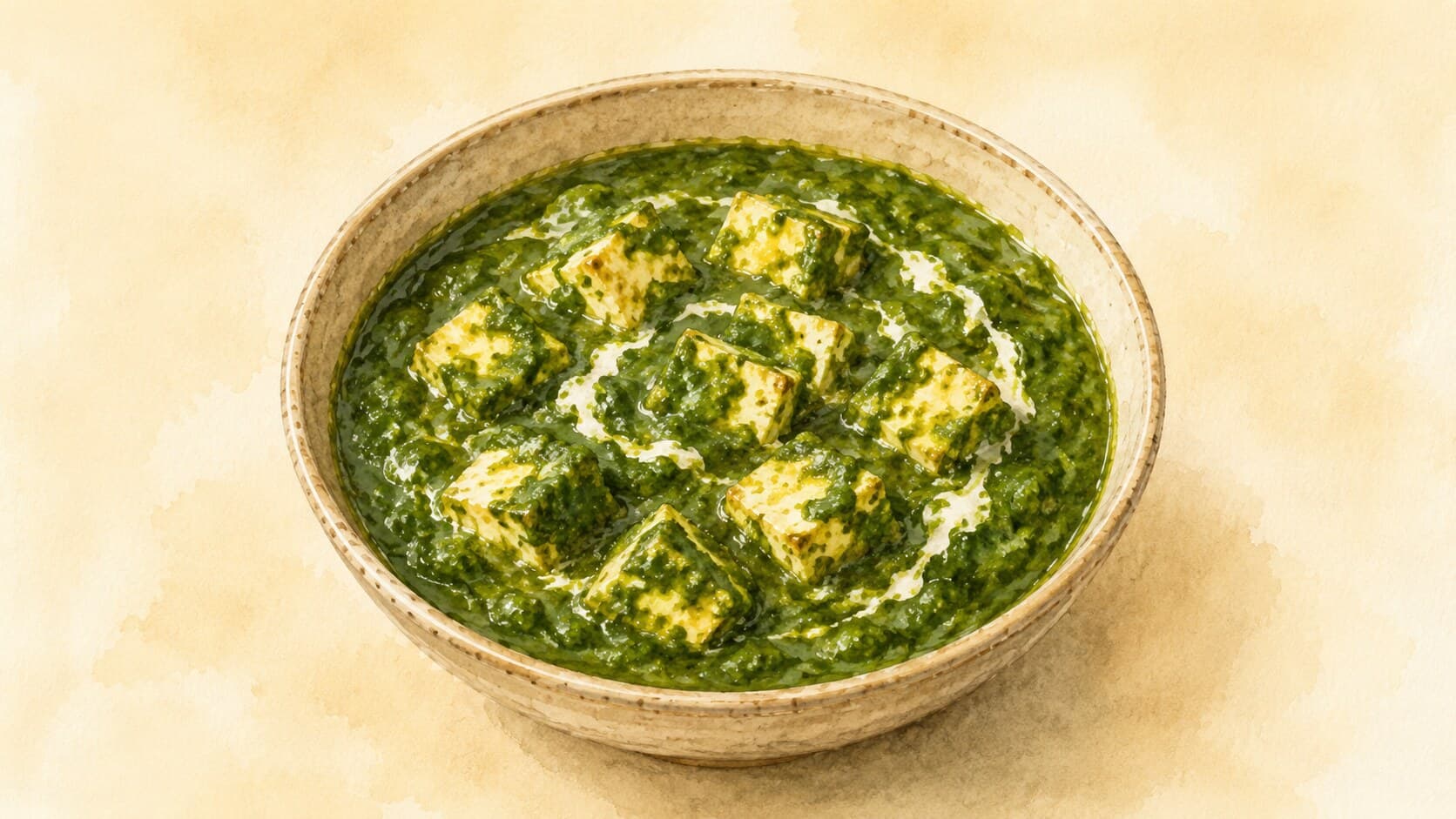
Palak Paneer is a creamy spinach curry paired with soft paneer, making it a perfect vegetarian main dish.
Contents (5 sections)▾
Ingredients
- 500 g fresh spinach
- 200 g paneer, cubed
- 1 onion, finely chopped
- 2 tomatoes, pureed
- 2 green chilies, slit
- 1 tsp ginger-garlic paste
- 1 tsp cumin seeds
- 1/2 tsp turmeric powder
- 1 tsp garam masala
- 100 ml cream
- 2 tbsp oil
- Salt to taste
Steps
Blanch the spinach in boiling water for 2 minutes to retain its vibrant color and nutrients, then transfer it to ice water to stop cooking.
In a pan, heat oil over medium heat and add cumin seeds; let them sizzle for 30 seconds to release their flavor.
Add chopped onions and sauté until golden brown, about 5-7 minutes. This enhances the overall flavor of the dish.
Stir in the ginger-garlic paste and green chilies, cooking for another 2 minutes until aromatic.
Add the tomato puree, turmeric powder, and salt; cook for 5-7 minutes until the oil separates from the mixture.
Blend the blanched spinach into a smooth paste and add it to the pan, followed by the paneer cubes.
Cook for 5 minutes on low heat, then stir in the cream and garam masala; cook for another 2-3 minutes.
Serve hot with naan or rice.
Why this works
The technique of blanching spinach locks in its vibrant color and nutrients, creating a visually appealing dish. The sautéing of onions until golden enhances sweetness and depth, which balances the earthy spinach and creamy paneer. Cooking the spices with oil allows their essential oils to release, making the curry aromatic. If the mixture seems too thick after adding the spinach, add a splash of water to achieve the desired consistency. This dish is versatile; adjusting the cream amount allows you to control the richness, making it suitable for various palates. Always taste and adjust seasoning before serving, ensuring a balanced flavor that complements the spices and greens.
Common mistakes
Skipping the blanch and going straight from raw to puree. Target: A quick 2-minute blanch in salted boiling water, then a plunge into ice water (this is the shock) to stop the cooking. Why it matters: Raw spinach blended into a hot pan rapidly turns olive-brown — the chlorophyll loses magnesium when exposed to heat plus the acidity of tomato. A short blanch (a brief dip in boiling water, just long enough to soften and brighten without fully cooking) sets the chlorophyll-set (the way leafy greens hold their bright green when they are briefly cooked and then cooled), and the shock locks it in. What to do: Blanch in heavily salted water; shock in ice water immediately; squeeze gently before blending. Blend at the end, never at the start.
Letting paneer turn rubbery in a long simmer. Target: Paneer enters in the last 3–4 minutes only, just long enough to warm through; soak it in warm water first if it is straight from the fridge. Why it matters: Paneer (a mild, firm Indian fresh cheese made by curdling milk with an acid like lemon juice) is a fresh, unaged cheese; long heat tightens its protein network and squeezes out moisture, so the cubes go from cushiony to squeaky and dry. (Paneer is also a pre-cooked cheese — make sure your block was kept refrigerated and is still within date.) What to do: Add paneer at the end. If pan-frying for colour first, do it briefly in a separate pan and slide it in for the last minute.
Underbrowning the onion. Target: Onions cooked low and slow until deep golden, about 8–10 minutes, before garlic and ginger go in. Why it matters: Sweet, brown onion is the umami floor of this curry; pale, watery onion leaves the dish smelling raw and tasting one-note. The browning is the Maillard reaction (the sugars and amino acids combining under heat to make hundreds of new flavour compounds), and you cannot fake it with extra spice later. What to do: Spread the onion across the pan, salt lightly to draw out water, and stir only occasionally. Wait for the colour to set before moving on.
Adding cream over high heat and watching it split. Target: Drop the heat to low, stir cream in off the boil, and never let the curry boil after it goes in. Why it matters: Cream is a dairy emulsion (fat held in water by milk proteins); a rolling boil destabilises it, and acidity from tomato pushes it further toward splitting into greasy droplets. A split curry tastes the same but looks broken. If you are using full-fat cream, refrigerate any leftovers within two hours. What to do: Take the pan off the heat, stir cream in, then return to the lowest possible heat to warm through.
What to look for
- A deep, bright-jewel green puree, not olive or grey. That colour says the blanch and shock worked; olive means the spinach overcooked or sat hot before blending.
- Onion the colour of polished caramel, faintly sweet on the nose. Pale, raw onion smell at this stage means more time on the heat.
- Paneer cubes that yield gently when pressed with a spoon — still cushiony. Squeaky, dense paneer has been simmered too long.
- A glossy, slightly thickened sauce that coats the back of a spoon. If it is thin and weepy at the edges, the cream has split and the heat was too high.
A note on history
Palak paneer is a North Indian dish rooted in the Punjab region — fertile land that has long produced both leafy greens and dairy in abundance. Spinach in South Asia goes back at least to the Mauryan period (322–185 BCE), where it appears in early Ayurvedic texts; paneer, the fresh acid-set cheese, is most often traced to the influence of Persian and Afghan cooking that reached the subcontinent from the 16th century onward. The pairing of the two — palak (spinach) with paneer in a creamy spiced curry — is a comparatively modern composition, most often dated to Mughal-era kitchens and the regional cooking of Punjab (TasteAtlas, Wikipedia: Palak paneer).
Get the essays in your inbox — free
Weekly notes on flavor, fermentation, and food history — the writing behind the Atlas of Flavor. No spam; unsubscribe anytime.