
Orecchiette con Cime di Rapa
Orecchiette con Cime di Rapa is a traditional Apulian dish made with orecchiette pasta and sautéed broccoli rabe, balancing its bitterness.
Contents (5 sections)▾
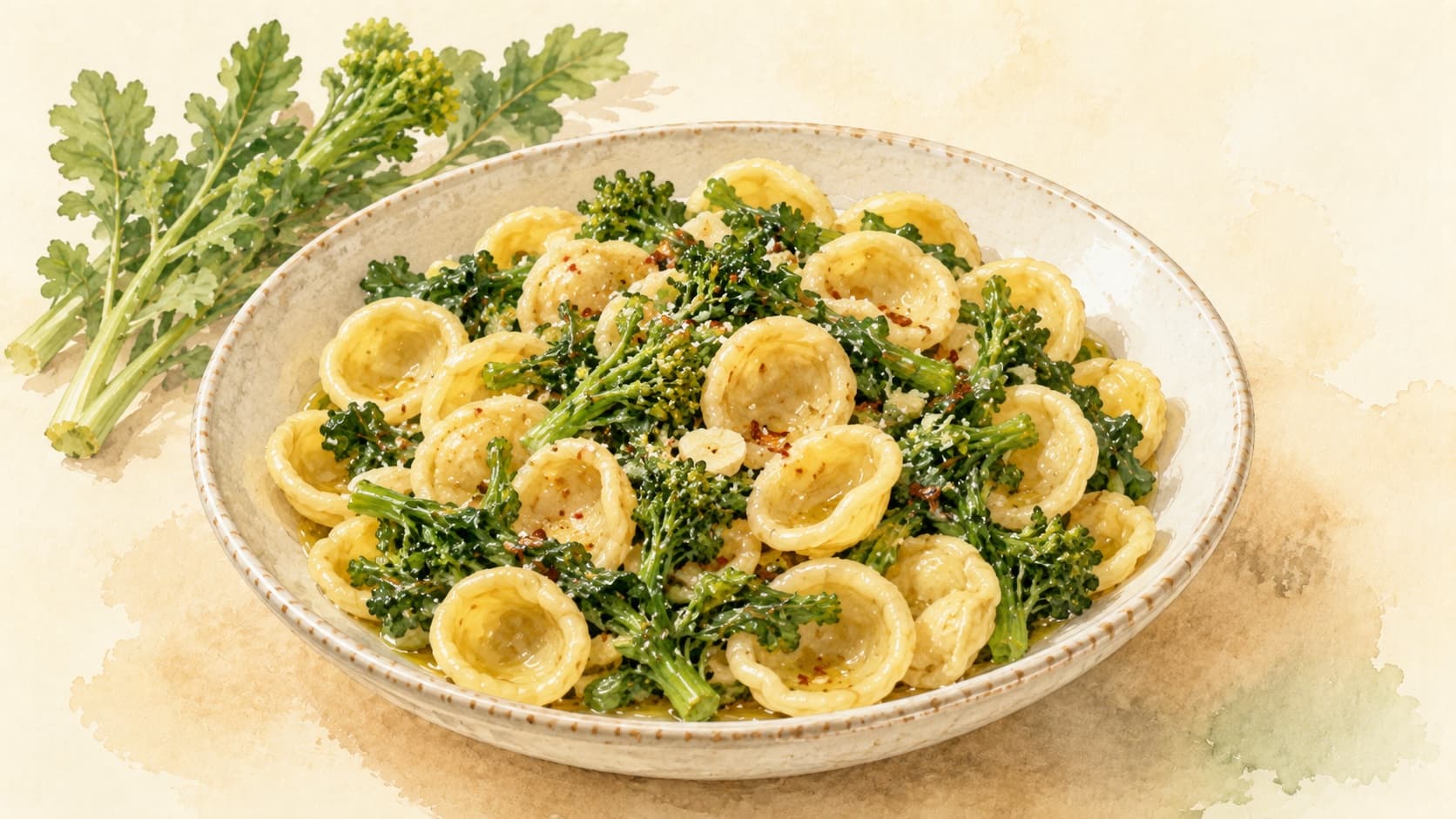
Ingredients
- 400 g orecchiette pasta
- 300 g cime di rapa (broccoli rabe), trimmed and chopped
- 4 tbsp extra virgin olive oil
- 3 clove(s) garlic, thinly sliced
- 1 tsp red pepper flakes, or to taste
- Salt, to taste
- Parmesan cheese, grated, for serving
Steps
Bring a large pot of salted water to a boil. This will ensure the pasta is seasoned well.
Add the orecchiette and cook according to package instructions, usually about 10-12 minutes until al dente.
In the last 3 minutes of cooking the pasta, add the chopped cime di rapa to the pot to blanch them.
Meanwhile, heat olive oil in a large pan over medium heat. Add sliced garlic and red pepper flakes, sauté until garlic is golden, about 2 minutes.
Once the pasta and cime di rapa are cooked, reserve 1 cup of pasta water, then drain the rest.
Add the drained pasta and cime di rapa to the pan with garlic oil. Toss to combine, adding reserved pasta water as needed to create a light sauce.
Season with salt to taste and serve hot, topped with grated Parmesan cheese.
Why this works
Orecchiette con cime di rapa is a dish from Apulia that showcases the region's spring produce. The orecchiette, which means 'little ears,' provides the perfect texture to hold onto the flavorful garlic and olive oil sauce. Cooking the cime di rapa (broccoli rabe — a slightly bitter leafy green with small broccoli-like florets) in the same pot as the pasta maximizes efficiency and ensures the greens absorb some of the starchy pasta water, which enhances the dish's flavor. If the sauce seems too dry, adding reserved pasta water will help create a silky texture without overcooking the ingredients. Additionally, sautéing garlic until golden infuses the oil with a rich, aromatic flavor that complements the slight bitterness of the greens. This balance of flavors is crucial; if the garlic burns, it can impart a bitter taste, so keep an eye on it. By incorporating these techniques, you'll create a harmonious dish that celebrates the essence of Apulian cuisine.
Common mistakes
Burning the garlic before the rapa goes in. Target: Garlic should turn pale gold and smell sweet — not brown, not black. Pull the pan off the heat the moment it gets there. Why it matters: Past gold, garlic shifts from sweet sulfur compounds to harsh, acrid ones that no amount of pasta water can cover. This is the single most common reason a simple oil-based pasta tastes "off." What to do: Start garlic in cool oil over medium heat so it warms gradually. If you see brown edges, lift the pan from the burner immediately and add the rapa or a splash of pasta water to drop the temperature.
Undersalting the pasta water. Target: The water should taste distinctly of the sea — roughly 10 g of salt per litre once it boils. Why it matters: Pasta is the largest weight on the plate and absorbs seasoning only through the water it cooks in; a bland boil leaves no surface to build on, and you cannot fix it later with salt at the end. The same water doubles as the emulsifying liquid for the sauce, so its salt level travels into every bite. What to do: Salt after the water boils (so you can see what is dissolving), taste a drop on the back of your hand, and adjust.
Overcooking the cime di rapa into a grey mush. Target: Stems just tender to a knife tip, leaves still distinctly green, in about 3 minutes of contact with boiling water. Why it matters: Chlorophyll (the green pigment) breaks down quickly in long, hot, slightly acidic conditions, turning olive-brown and bitter. The bitterness you want from rapa is bright and herbal; long-cooked rapa is dull and grassy. What to do: Add the rapa to the pasta pot only in the last 2–3 minutes, then drain the moment the pasta hits al dente — do not let it sit in standing hot water.
Draining everything dry and tossing in a cold pan. Target: Reserve at least a full cup (240 ml) of starchy pasta water before draining, and finish tossing the pasta in the pan over low heat. Why it matters: The starch suspended in pasta water lets olive oil emulsify (oil and water held together by starch molecules) into a glossy sauce instead of pooling at the bottom of the bowl. Without it, the dish reads as "oily pasta" rather than "sauced pasta." What to do: Move drained pasta and rapa straight into the garlic oil pan, add a small ladle of pasta water, and toss vigorously for 30–60 seconds until the surface looks glossy.
What to look for
- Garlic slices the color of pale honey, just curling at the edges. That is the window for adding chili and rapa — past honey colour, restart.
- Cime di rapa stems that bend in a U without snapping, leaves still vivid green. Stems that feel string-like or look khaki have gone too long; pull the pan now.
- A sauce that coats the orecchiette in a thin, glossy film, not a puddle in the bowl. This is the visual sign that oil and starchy water have emulsified properly.
- A first bite that tastes of olive oil, then garlic, then a quiet green bitterness. If bitterness arrives first, the rapa was overcooked; if oil is missing, the pan was not tossed long enough.
A note on history
Orecchiette ("little ears") and cime di rapa (the seasonal turnip-top greens central to Apulian cooking) are bound to Puglia, and most accounts place the pairing in the Bari area between the 12th and 13th centuries, during the Norman-Swabian period; some scholars also point to Angevin influence in the 13th century when the name as we know it today became fixed. Either way, the dish is rooted in a region where durum wheat and turnip-top greens grew well together, and the shape itself — small enough to catch the leaves and the oil — was traditionally part of a daughter's dowry, passed mother to daughter (Italian Food Spot, Wikipedia: Orecchiette).
Get the essays in your inbox — free
Weekly notes on flavor, fermentation, and food history — the writing behind the Atlas of Flavor. No spam; unsubscribe anytime.