
Okayu (Japanese Rice Porridge)
Okayu is a Japanese rice porridge made by simmering rice in water until soft. It can be seasoned with soy sauce or served with toppings.
Contents (5 sections)▾
Ingredients
- 100 g short-grain rice
- 800 ml water
- 1 umeboshi (pickled plum), for garnish
- 1 green onion, finely sliced, for garnish
- salt, to taste
Steps
Rinse the rice under cold water until the water runs clear, about 3-4 times. This removes excess starch, preventing the porridge from becoming too sticky.
In a pot, combine the rinsed rice and 4 cups of water. Bring to a boil over medium-high heat (around 200°F or 93°C), then reduce to a low simmer (around 180°F or 82°C). This slow-simmer technique allows the rice to gradually release its starch, creating a creamy texture.
Cover the pot and simmer for 25-30 minutes, stirring occasionally. If the porridge seems too thick, add a bit more water to reach the desired consistency.
Once the rice is soft and has absorbed most of the water, remove from heat. Season with salt to taste.
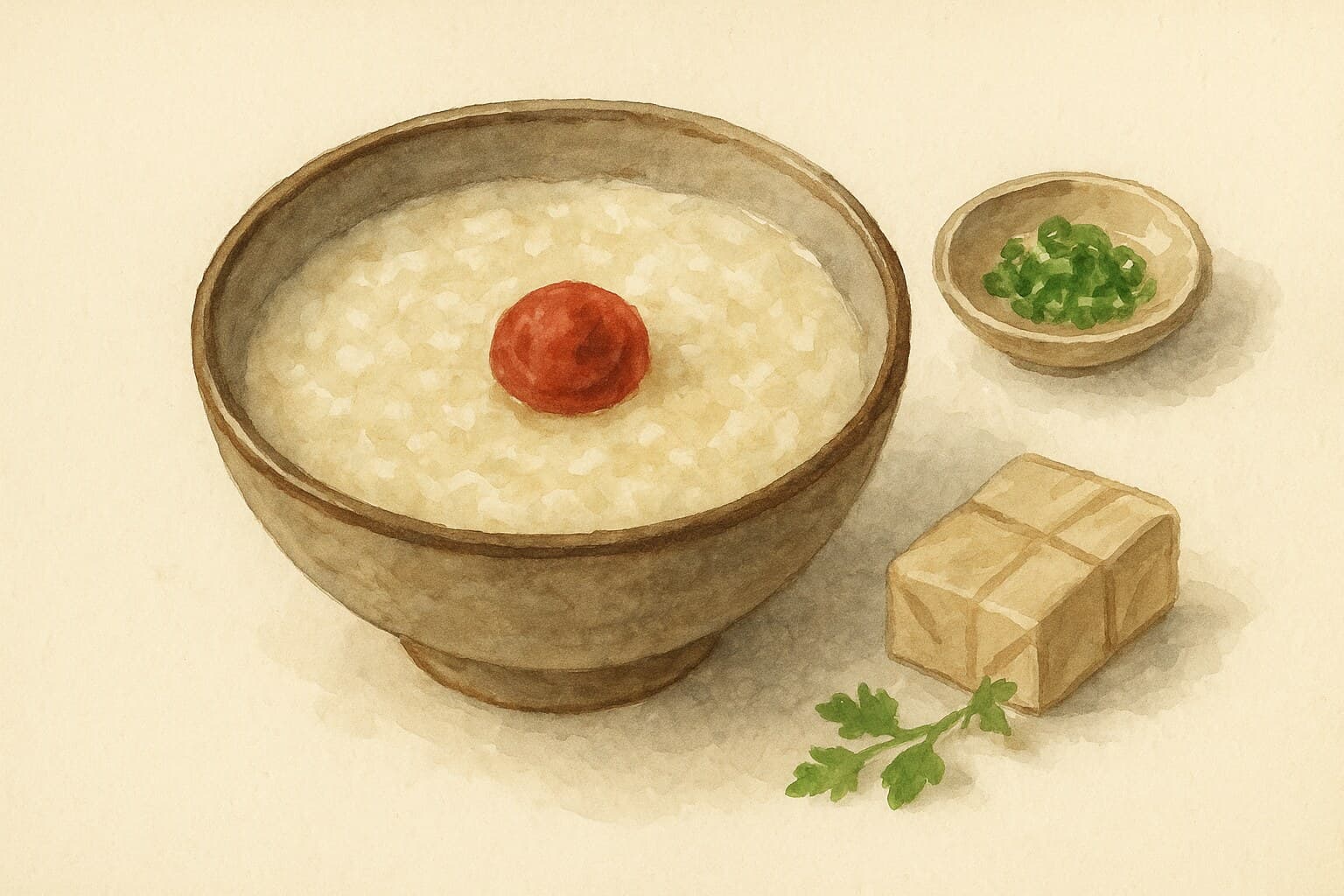
Serve the okayu in bowls, topped with a umeboshi and a scattering of finely sliced green onion for added flavor and visual appeal.
Why this works
Okayu's charm lies in its simplicity and the technique of slow-simmering (cooking very gently below a true boil, so the rice swells without being torn apart) rice with water. This method gently hydrates the rice grains, allowing them to expand and release starch, which creates a rich, creamy texture without needing excess ingredients. The use of short-grain rice is essential, as its higher starch content contributes to the desired consistency. If the porridge seems too thick, simply add more water and stir to adjust the texture. Conversely, if it breaks or becomes too watery, allow it to simmer uncovered for an additional 5 minutes to reduce the excess liquid. The garnishes, umeboshi (a small, intensely salty-sour Japanese pickled plum) and green onion, provide contrast in flavor and enhance the dish's presentation, making it comforting and visually appealing, even when one is under the weather. This dish embodies both nourishment and tradition, offering warmth and solace in times of need, while also showcasing the elegance of Japanese culinary practices.
Common mistakes
Boiling instead of simmering. Target: Bubbles should rise lazily at the edges, never a rolling boil. Pot kept just barely covered with the lid cracked. Why it matters: A rolling boil shears the grains and forces water out the top as steam, so the porridge thins and breaks rather than thickening (starch needs gentle heat and time to swell and release amylose). What to do: Once the water boils, drop to the lowest stable simmer. If the grains crash against the lid, the heat is still too high.
Storing leftovers loosely covered at room temperature. Target: Cool quickly, refrigerate the same day in a covered container; reheat to a full simmer with a splash of water before serving. Why it matters: Cooked rice can carry Bacillus cereus spores that survive cooking and produce toxins when the rice sits warm for hours. Okayu is mostly water, which makes the warm-zone hazard greater than for plain steamed rice. What to do: Refrigerate within an hour or two of cooking; do not leave a pot on the stove overnight.
Stirring constantly "to make it creamy." Target: Stir gently every 5 minutes or so, mostly to lift any grains stuck to the bottom. Why it matters: Aggressive stirring breaks the grains and pushes the porridge toward a paste; what you want is intact grains in a silken liquid (this is the difference between okayu and rice paste). What to do: Treat the spoon like a check-in, not a beater. Drag it across the bottom, lift, and leave the rice mostly alone.
Salting at the start. Target: Season at the end with a small pinch, then taste; the umeboshi will add more salt and acid. Why it matters: Salt added early concentrates as water evaporates, and you cannot easily walk it back. Okayu wants almost no seasoning of its own so the topping can speak. What to do: Season at the very end, tasting first, and let the umeboshi do most of the work.
What to look for
- A pale, slightly opaque liquid that just coats the back of a spoon. If it streams off thinly, simmer a few more minutes uncovered; if it sits on the spoon like glue, add a splash of hot water and stir gently.
- Grains that hold their shape but yield without resistance when pressed with the tongue. Whole, soft grains in a silken pool are the texture; mush is overcooked.
- A clean, faintly sweet rice smell — no scorched note. A burnt smell means heat has been too high or stirring too rare; switch to a fresh pot if the bottom has caught.
- Surface that smooths almost immediately after you set the spoon down. This means the starch has dissolved enough to act as a light sauce around the grains.
A note on history
Okayu has been eaten in Japan for roughly a thousand years; records show rice porridge already on the table at the Heian court (794–1185), when rice was costly enough that cooking it long and thin made small amounts feed many. The semi-liquid form most people picture today is closer to an Edo-period (1603–1868) refinement, and there is even a vocabulary for the water-to-rice ratio — zen-gayu at 5:1, the thinner sanbu-gayu at 20:1. The 7 January custom of nanakusa-gayu (seven-herb porridge), eaten to settle the body after New Year, still anchors okayu in the calendar as much as in the sickroom (The Japan Times, Kyoto Foodie).
Get the essays in your inbox — free
Weekly notes on flavor, fermentation, and food history — the writing behind the Atlas of Flavor. No spam; unsubscribe anytime.