
Nira Tamago (Chinese-Chive Egg Stir-fry)
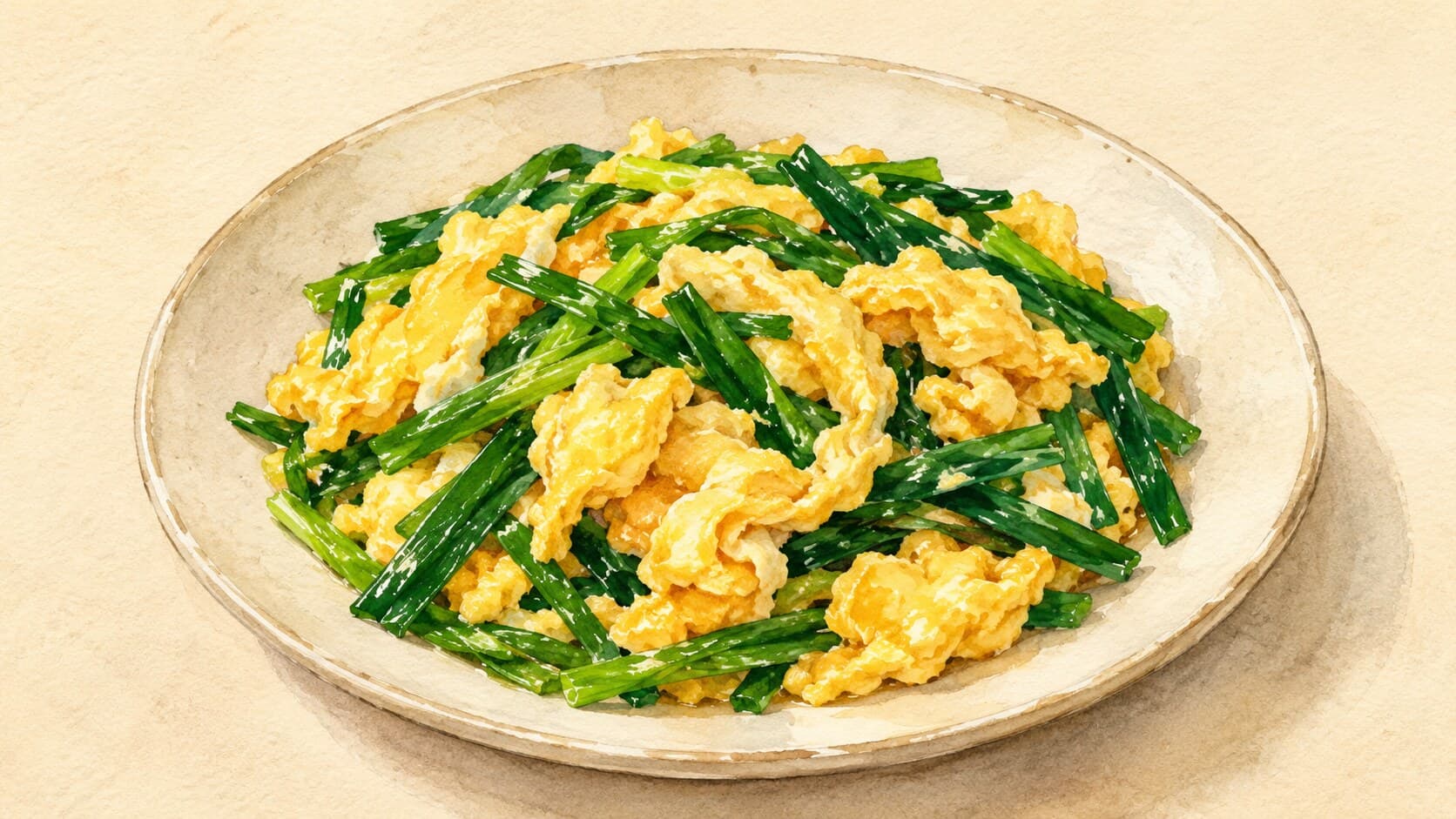
Nira Tamago is a Japanese stir-fry of Chinese chives and eggs. It involves stir-frying, layering flavors, and emulsifying eggs.
Contents (6 sections)▾
Ingredients
- 100 g Chinese chives (nira), chopped
- 4 large eggs
- 1 tbsp soy sauce
- 1 tbsp vegetable oil
- Salt to taste
- Pepper to taste
Steps
In a bowl, beat the eggs with soy sauce, salt, and pepper until well combined. This will ensure even seasoning throughout the dish.
Heat a non-stick skillet over medium heat and add the vegetable oil. Swirl the oil to coat the pan evenly.
Once the oil is hot, add the chopped Chinese chives and stir-fry for about 1 minute until they are bright green and fragrant.
Pour the beaten egg mixture into the skillet, allowing it to spread evenly over the chives. Cook for about 2-3 minutes, or until the edges start to set.
Using a spatula, gently stir the eggs, bringing the cooked edges to the center while allowing the uncooked eggs to flow to the edges. This technique helps achieve a soft, fluffy texture.
Cook the eggs until set through — no longer runny in the centre — then remove from heat. For a softer set, use eggs pasteurized in the shell; residual heat helps texture, not safety.
Why this works
Nira Tamago is a perfect example of how simple ingredients can combine to create a flavorful dish. The key to this recipe is the technique of gentle cooking, which preserves the delicate texture of the eggs. Stir-frying here means cooking quickly over high heat while tossing the ingredients, so the chives and eggs set in seconds rather than steam. By beating the eggs with soy sauce beforehand, you ensure a consistent flavor throughout, instead of just at the surface. Stir-frying the chives briefly allows their vibrant color and flavor to infuse the eggs without losing their crispness. If the eggs seem too runny when you remove them from the heat, simply cover the pan for a minute; the residual heat will finish cooking them. Conversely, if they seem too firm, they may have been overcooked. Adjust your heat and cooking time slightly next time to perfect your technique.
Common mistakes
-
Pulling the eggs off the heat while there's still a glossy raw center. Target: Whites fully opaque throughout, no glassy raw streaks; if there's any liquid pooling on the surface, it's not finished. Aim for the entire egg mass at 71°C / 160°F or above before serving. Why it matters: Soft, glossy half-cooked egg can carry Salmonella, especially in a fast home stir-fry where the cook time is short. The Japanese home version of nira tamago is meant as cooked, just-soft curds folded with chives — not a French-style soft scramble. Brief carry-over cooking (residual heat finishing the eggs after the pan comes off) is fine and traditional, but only if it lands the eggs in the fully-cooked window. What to do: Lift the pan off the burner when the eggs are mostly set but still slightly soft, cover for 30-60 seconds, then check — any remaining wet sheen means a few more seconds back on low heat. Cook through. If unsure, err on the side of done.
-
Adding cold egg straight from the fridge to the hot pan. Target: Eggs at room temperature, beaten with the soy and pepper at least a minute before the chives go in. Why it matters: Cold egg dropped into a hot pan seizes unevenly — the bottom sets in seconds while the top still tastes raw, and the dish ends up with weeping liquid (water released as the proteins compress too fast). Pre-seasoning with soy also distributes the salt throughout (protein coagulation works better when the salt is mixed evenly in advance), so each bite is consistent rather than spiky. What to do: Take the eggs out before you cut the nira. Beat with soy, salt, and pepper. Let them rest while you start the pan.
-
Cooking the nira too long and turning it from bright to dull. Target: About 60 seconds in the hot pan, just until the leaves flop and turn deep glossy green, before the egg goes in. Why it matters: Chinese chives (nira) have a delicate aromatic compound (an allium sulfur compound similar to garlic but milder) that evaporates quickly and turns sulfurous if overcooked. The dish's hook is that fresh garlicky-grass aroma — overcook the nira and you lose it entirely. What to do: Have the eggs ready in a bowl before the nira goes in. Hit the pan with the chives, count to 60, pour the egg.
-
Using a pan that's too cool to set the egg quickly. Target: Medium-to-medium-high heat, oil shimmering before the chives drop in. Why it matters: A cool pan lets the egg ooze flat and overcook by the time it sets, producing a tough, rubbery base instead of soft curds. A hot pan sets the bottom in seconds so you can fold quickly. What to do: Heat the pan dry first, then add oil. The chives should sizzle on contact.
What to look for
- Nira ribbons that have flopped and turned a deep glossy green, but haven't shrunk to a fraction of their volume — the cook window where the aroma and color are both still in the pan.
- Egg curds that are uniformly yellow and soft, with no clear liquid pooling around them — the safe doneness sign; pooled liquid means there's still raw egg in there.
- A pillowy, just-set look — no leathery brown edges, no transparent shine — overcook makes the eggs tough and gray; undercook leaves a wet film.
- A clean smell of warm garlic-chive and toasted sesame oil when the pan comes off heat — sharp sulfur smell means the nira went too long; a flat smell means it didn't get long enough.
A note on history
Niratama literally means "nira (Chinese chives) plus tama(go) (egg)." The dish has Chinese-origin roots — chive-and-egg stir-fries are a long-standing Chinese repertoire — but the Japanese version evolved into a quick home-cooking staple (a dish you can throw together on a weekday evening with no special prep), eaten across the day. Nira itself reached Japan from East Asia roughly 1,500 years ago, though it only became common in Japanese home cooking over roughly the last century (No Recipes, Just One Cookbook). Today nira tamago is treated as a Japanese five-minute go-to — the kind of dish a family makes when there's nothing else to make.
Safety — the egg
Softly-set, runny or barely-cooked egg carries a Salmonella risk that freshness, a trusted or premium source, a clean shell, a hot pan and residual (carryover) heat do not remove. To keep the egg soft, use eggs pasteurized in the shell (heat-treated through to the contents) or a pasteurized egg product; otherwise cook the egg through until set. For children, pregnant people, older adults and anyone immunocompromised, use pasteurized egg or cook it fully.
<!-- beginner-glossed v1 -->Get the essays in your inbox — free
Weekly notes on flavor, fermentation, and food history — the writing behind the Atlas of Flavor. No spam; unsubscribe anytime.