
Stir-fried Pork and Vegetables (Niku Yasai Itame)
Prepare a quick and satisfying stir-fried pork and vegetable dish in just 15 minutes.
Contents (5 sections)▾
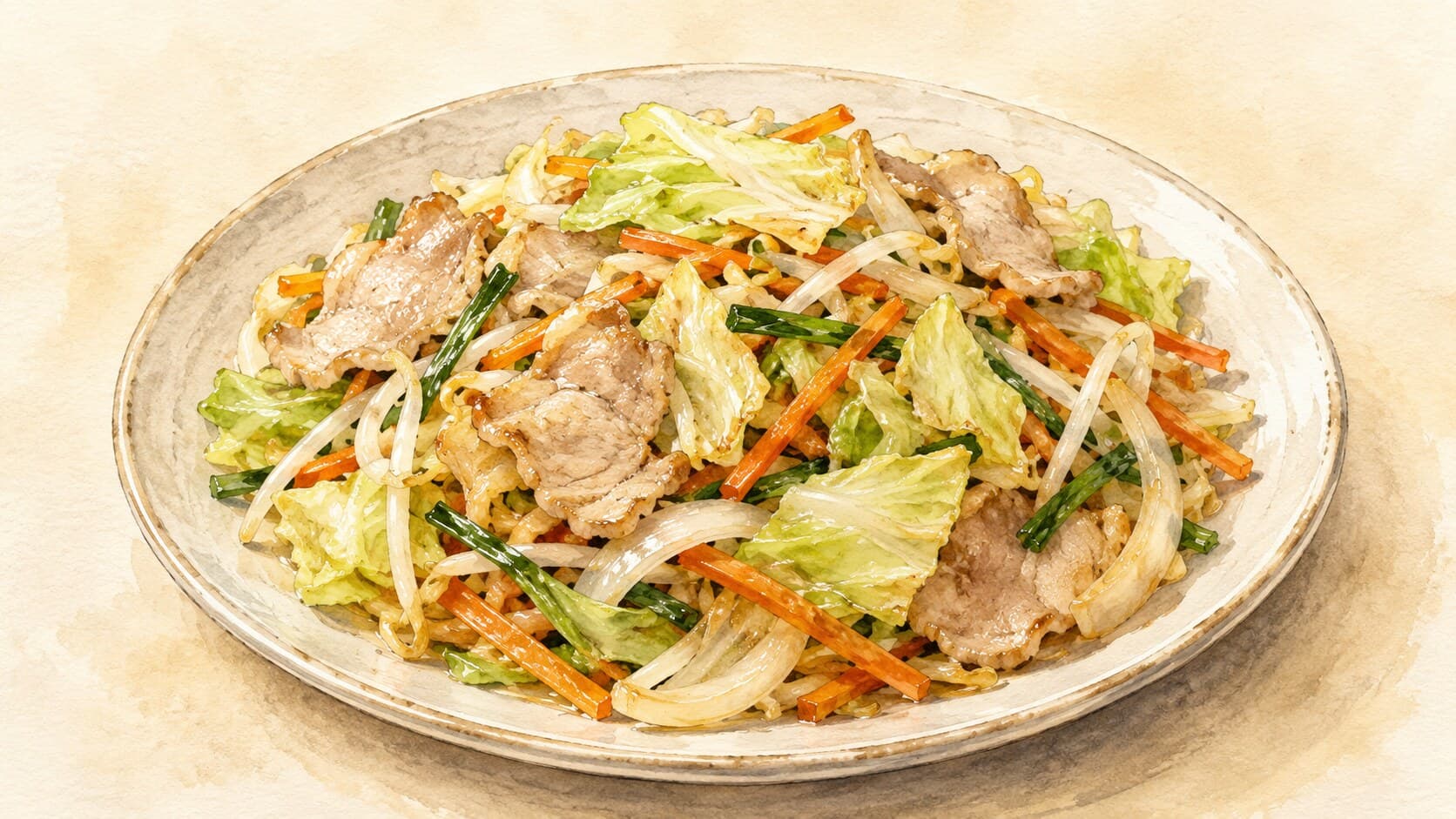
Ingredients
- 200 g pork loin, thinly sliced
- 100 g cabbage, chopped
- 50 g carrot, julienned
- 50 g bell pepper, sliced
- 50 g onion, sliced
- 2 tbsp soy sauce
- 1 tbsp sake
- 1 tbsp vegetable oil
- 1 tsp sugar
- Salt and pepper to taste
Steps
1. Heat a wok over medium-high heat (around 200°C) and add 1 tablespoon of vegetable oil. This helps achieve the desired 'wok-hei' or breath of the wok.
2. Add the sliced pork to the hot wok and stir-fry for exactly 3 minutes until it is no longer pink. This ensures even cooking and a nice sear.
3. Add the sliced onions, carrots, and bell peppers, and stir-fry for another 2 minutes until they start to soften.
4. Stir in the cabbage and continue to stir-fry for an additional 2 minutes until all the vegetables are tender-crisp. Timing is key to keep the vegetables vibrant.
5. Pour in the soy sauce, sake, and sugar, then season with salt and pepper to taste. Stir well for 1 minute to combine all flavors.
Why this works
This stir-fry exemplifies how quick cooking methods enhance flavor and texture. The high heat (around 200°C) used in the wok (a round-bottomed Chinese pan designed for fast cooking over very high heat) allows for rapid cooking, browning the pork while giving the vegetables a tender-crisp texture that retains their color and nutrients. The addition of soy sauce and sugar balances the savory and sweet elements and adds to the dish's flavor. If the vegetables seem too soft, quickly remove them from the heat to prevent overcooking; this will help maintain their vibrant color and crunch. The variety of textures—from the tender pork to the crisp vegetables—creates a satisfying eating experience. Stir-frying also promotes even cooking and browning, which adds to the overall taste profile of the meal. To keep the dish from becoming greasy, ensure your wok is hot enough before adding the oil and ingredients, ideally waiting until the oil shimmers before proceeding. This meticulous attention to time and temperature ensures a balanced and delicious dish that showcases the essence of Japanese home cooking.
Common mistakes
-
Pulling the pork while it's still pink at the center of any slice. Target: Every slice of pork fully cooked through — no pink anywhere — internal temperature 63°C / 145°F or above for whole-muscle slices, 71 °C / 160 °F for ground or finely-chopped pork. Why it matters: Pork carries pathogens (Salmonella, Yersinia, and historically Trichinella) that are only killed by proper cooking. Sliced pork in a stir-fry looks done fast because the surface browns, but the very center can stay underdone in a crowded pan. Stir-frying's high heat is more than enough — the failure is rushing the meat off the heat before each slice has turned uniformly opaque. What to do: Cook the pork in a single layer first, in batches if needed, until no pink shows. Then push to the side and add vegetables. Don't overcrowd — crowding drops the pan temperature and steams instead of sears.
-
Adding everything to the wok at once. Target: Stage by cook time — pork first to brown, then onion + carrot (long-cooking), then bell pepper, then cabbage last. Each stage 1-2 minutes. Why it matters: Different vegetables hit their tender-crisp (cooked through but still with a slight bite) window at different times. Dumped together, the carrots go raw while the cabbage goes limp. The Maillard reaction (the browning chemistry that creates roasted, savory flavor) also needs dry surface contact with hot metal — wet, crowded vegetables steam instead. What to do: Cut everything before you turn on the heat. Add in order of cook time, hardest to softest. Keep the pan moving.
-
Cooking the pan cold and chasing it hot later. Target: Wok or heavy skillet preheated until a drop of water bounces and instantly evaporates (around 200°C / 392°F) before the oil goes in. Why it matters: Stir-frying lives or dies on heat. A cold pan releases starch and water from the vegetables and they end up boiling in their own juice, going soggy and grey. The classic Chinese term wok hei — "the breath of the wok," the slightly smoky, just-charred aroma of true high-heat stir-frying — only develops on a screaming-hot surface. What to do: Heat the empty pan first, add oil only when the pan is genuinely hot, and let the oil shimmer for a second before the pork hits. Have everything within arm's reach.
-
Pouring soy sauce in early and watching it burn into bitter blackness. Target: Soy + sake + sugar go in at the very end, drizzled around the rim of the hot pan, then tossed for 30-60 seconds. Why it matters: Soy sauce contains sugars and amino acids that scorch quickly at stir-fry temperatures. Added early, they coat the food in burnt residue and the dish tastes bitter rather than savory. Late addition lets the sauce vaporize against the hot rim, caramelizing gently and coating the food in a glaze. What to do: Premix the sauce in a small bowl. Pour it down the side of the hot pan in a circle, then toss fast.
What to look for
- Pork slices that have turned a uniform light brown, with crisp golden edges where they touched the metal — that's safely cooked-through plus the Maillard browning the dish needs for flavor depth.
- Vegetables that have softened just enough to bend without snapping, but still hold their color and a faint crunch — the tender-crisp window: cabbage glossy bright green, carrots bright orange, peppers glossy and not weeping water.
- A thin, glossy coat of sauce — not a puddle in the bottom of the pan — if there's liquid pooling, the heat dropped and the sauce never glazed. If the pan is dry, you over-reduced.
- A clean, slightly smoky wok aroma when you lift the pan off heat — that's the breath-of-the-wok signature. A heavy, oily smell or a burnt-soy smell means the heat was wrong somewhere along the way.
A note on history
Itamemono (stir-frying) is not native to Japan — the technique was borrowed from Chinese wok cooking. Yasai itame (and its meat-inclusive form niku yasai itame) is a Japanese adaptation of that imported technique, and it became a fixture of Japanese home kitchens and cafeteria-style teishoku (set-meal) menus in the postwar period — most accounts place its popularization in Japanese households and canteens around the 1950s (Sudachi, Just One Cookbook). The dish's identity is the cross-cultural meeting itself: Chinese fast-cooking method, Japanese soy-sake-mirin seasoning logic, whatever vegetables happen to be in the fridge.
Get the essays in your inbox — free
Weekly notes on flavor, fermentation, and food history — the writing behind the Atlas of Flavor. No spam; unsubscribe anytime.