
Nasi Tumpeng
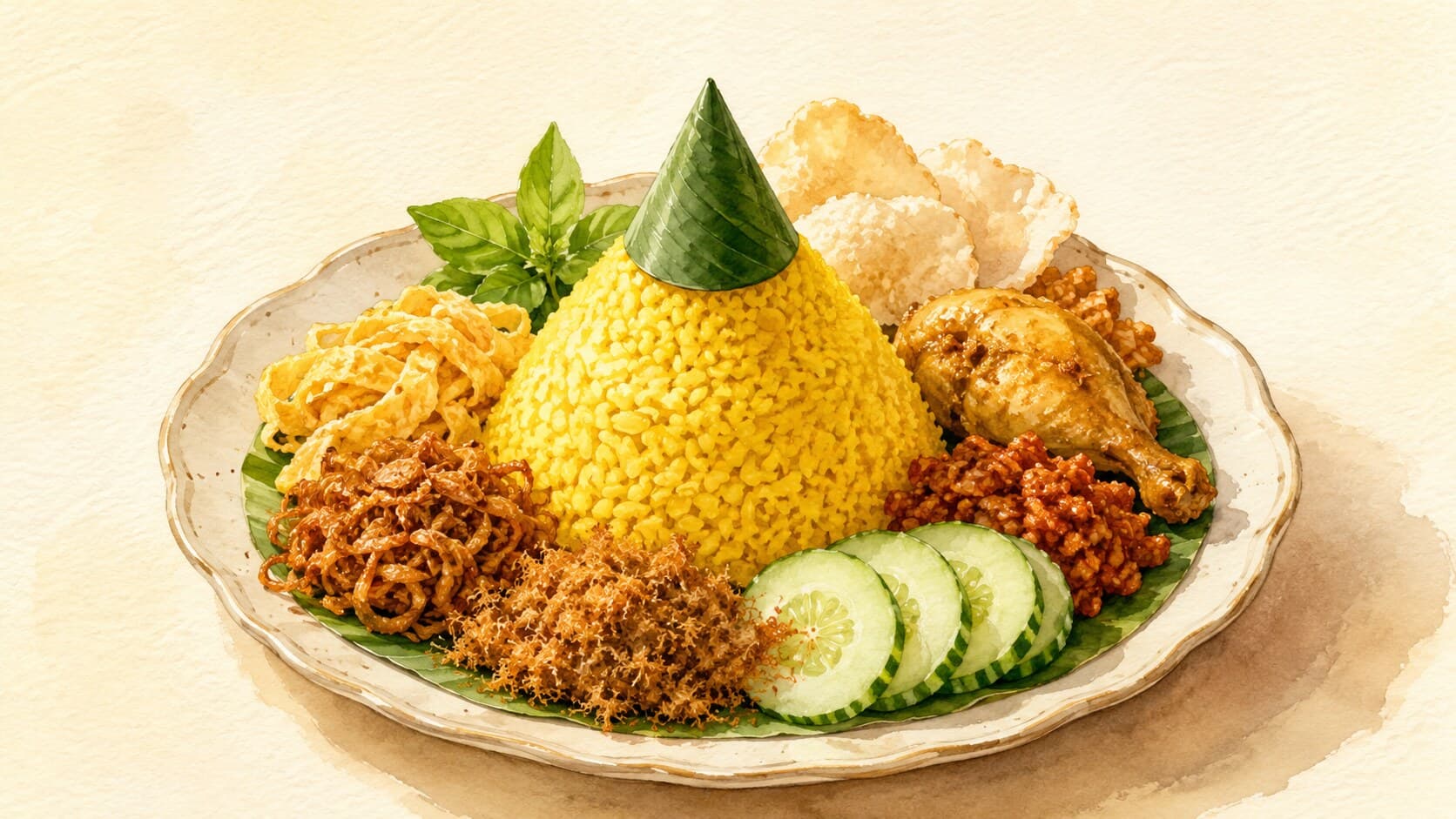
Nasi Tumpeng features turmeric-coconut rice shaped into a cone, accompanied by various side dishes, often served during celebrations.
Contents (5 sections)▾
Ingredients
- 300 g jasmine rice
- 1 tsp turmeric powder
- 400 ml coconut milk
- 1 tsp salt
- 1 tbsp vegetable oil
- 250 g fried chicken
- 2 large eggs, beaten
- 100 g tempeh, sliced and fried
- 50 g roasted peanuts
- 100 g sambal, to taste
- 1 banana leaf, for serving
Steps
Rinse 300 g of jasmine rice under cold water until the water runs clear to remove excess starch, which helps achieve a fluffy texture.
In a pot, combine the rinsed rice, 400 ml of coconut milk, 1 tsp turmeric powder, and 1 tsp salt. Bring to a boil over medium heat for approximately 5-7 minutes.
Once boiling, reduce the heat to low, cover, and simmer for 15-20 minutes or until the rice is cooked and all liquid is absorbed.
While the rice cooks, heat 1 tbsp of vegetable oil in a pan over medium heat for about 2-3 minutes and scramble the beaten eggs until fully cooked, then set aside.
When the rice is done, fluff it with a fork and let it cool for about 5 minutes before molding it into a cone shape.
On a banana leaf, place the rice cone at the center and artfully arrange the fried chicken, scrambled eggs, fried tempeh, roasted peanuts, and sambal around it.
Why this works
Jasmine rice (a long-grain rice from Southeast Asia with a naturally sweet, popcorn-like aroma) combined with coconut milk and turmeric (the bright-yellow Asian rhizome related to ginger — earthy, faintly bitter, used both as colour and as a gentle spice) creates a yellow color and adds moisture. Rinsing the rice removes excess starch to prevent stickiness. If the rice is dry, add more coconut milk and steam for an additional 5 minutes. The presentation involves surrounding the rice cone with diverse side dishes, enhancing visual appeal. The technique ensures the rice is fluffy, reflecting Indonesia's culinary traditions.
Common mistakes
Skipping the soak so the rice cooks unevenly under the turmeric and coconut milk. Target: rinse the rice 3–4 times, then soak 20–30 minutes before draining and cooking. Why it matters: turmeric and coconut milk both reduce how readily rice absorbs water — turmeric for its tannin-like compounds, coconut milk for its fat coating the grains. Skipping the soak leaves the grains drier on the inside than they need to be; you get a cone that holds shape but with a chalky core, especially at the tip where heat reaches last. What to do: soak the rinsed rice in plain water, drain, then add to the coconut milk and turmeric mixture to cook. The grains start partly hydrated, so the dry-tasting interior never happens.
Cooking the proteins (chicken, egg, tempeh) without verifying doneness. Target: chicken with no pink at the bone and an internal temperature of 74 °C (165 °F); scrambled eggs fully set with no glossy wet streaks; tempeh fried until golden and crisp at the edges. Why it matters: a tumpeng plate is a composed dish — every component should reach safe doneness on its own, because nothing finishes cooking in the assembly. Chicken, eggs, and tempeh each have a different safe-cook target, and underdone poultry on a celebration plate is a high-risk combination. What to do: cook proteins individually, check each: chicken cut at the thickest point should show no pink; eggs should be firm not glassy; tempeh should be golden and crisp. Hold hot or assemble within 1 hour. For vulnerable diners (pregnancy, immunocompromised, very young or elderly), make sure egg yolks are fully cooked.
Letting coconut-rice plus cooked sides sit at room temperature for the whole party. Target: assemble close to serving, or hold hot above 60 °C / 140 °F; refrigerate leftovers within 2 hours. Why it matters: cooked starchy mixtures (rice, especially with coconut) sitting between roughly 5–60 °C are a known growth window for Bacillus cereus and other spore-forming bacteria — a real concern for a celebration plate that may sit out for hours. The cone presentation is dramatic; the food-safety clock is real. What to do: assemble within an hour of serving. If the plate sits out, keep it covered and rotate. Refrigerate leftovers in shallow containers and reheat fully to steaming through; do not reheat more than once.
Pressing the cone hard enough to bruise the grains, hoping it will hold. Target: lightly compress the rice into the mould while still warm and steamy; release gently. Why it matters: warm rice grains are slightly sticky from surface starch — that natural stickiness is what holds the cone together. Press too hard and the grains crush, releasing their inner starch and turning the cone gluey instead of fluffy. The cone then slumps anyway, just with worse texture. What to do: line the cone mould (or a small bowl) with cling film for clean release. Spoon the rice in, give it a gentle press with the back of a spoon, and unmould while warm. If a side wall sags, support it with a banana-leaf collar.
What to look for
- Rice grains that hold the cone shape but separate cleanly when fluffed at the base — the texture cue. A glassy, sticky cone means too much pressure or undercooked starch; a slumping cone means the rice was too dry or too cold when shaped.
- A bright golden-yellow colour through the entire grain, not just on the surface — turmeric infused during cooking, not sprinkled on. Pale or uneven colour means turmeric was added too late or wasn't dissolved into the coconut milk well.
- Chicken with juices that run clear at the thickest cut, no rose or pink shadow — a cue, not the safe-cook test. Confirm safety with a food thermometer (74°C / 165°F at the thickest part); pink near the bone means more time on lower heat.
- Tempeh edges crisp and bronze, soybeans visible through a golden crust — properly fried tempeh. Greasy or pale tempeh means the oil was too cool; dark and acrid means too hot.
A note on history
Tumpeng predates the introduction of Islam to Java and reaches back into ancient Javanese animist tradition. Mountains in Java were revered as the abode of ancestors and gods, and the conical rice was made to imitate Mount Mahameru in East Java — the sacred dwelling of deities in the local Hindu-influenced cosmology. After Hinduism entered Java around the 6th century, the cone form was reinforced as a religious symbol, and the dish became a centrepiece of thanksgiving and life-cycle ceremonies. The Javanese folk etymology reads tumpeng as an acronym of "yen metu kudu mempeng" — "if you want to go out, you must do it sincerely" — making the dish a statement of intent as much as a meal (Wikipedia: Tumpeng; The Jakarta Post: The philosophical significance of Indonesia's 'tumpeng').
Get the essays in your inbox — free
Weekly notes on flavor, fermentation, and food history — the writing behind the Atlas of Flavor. No spam; unsubscribe anytime.