
Mujadara
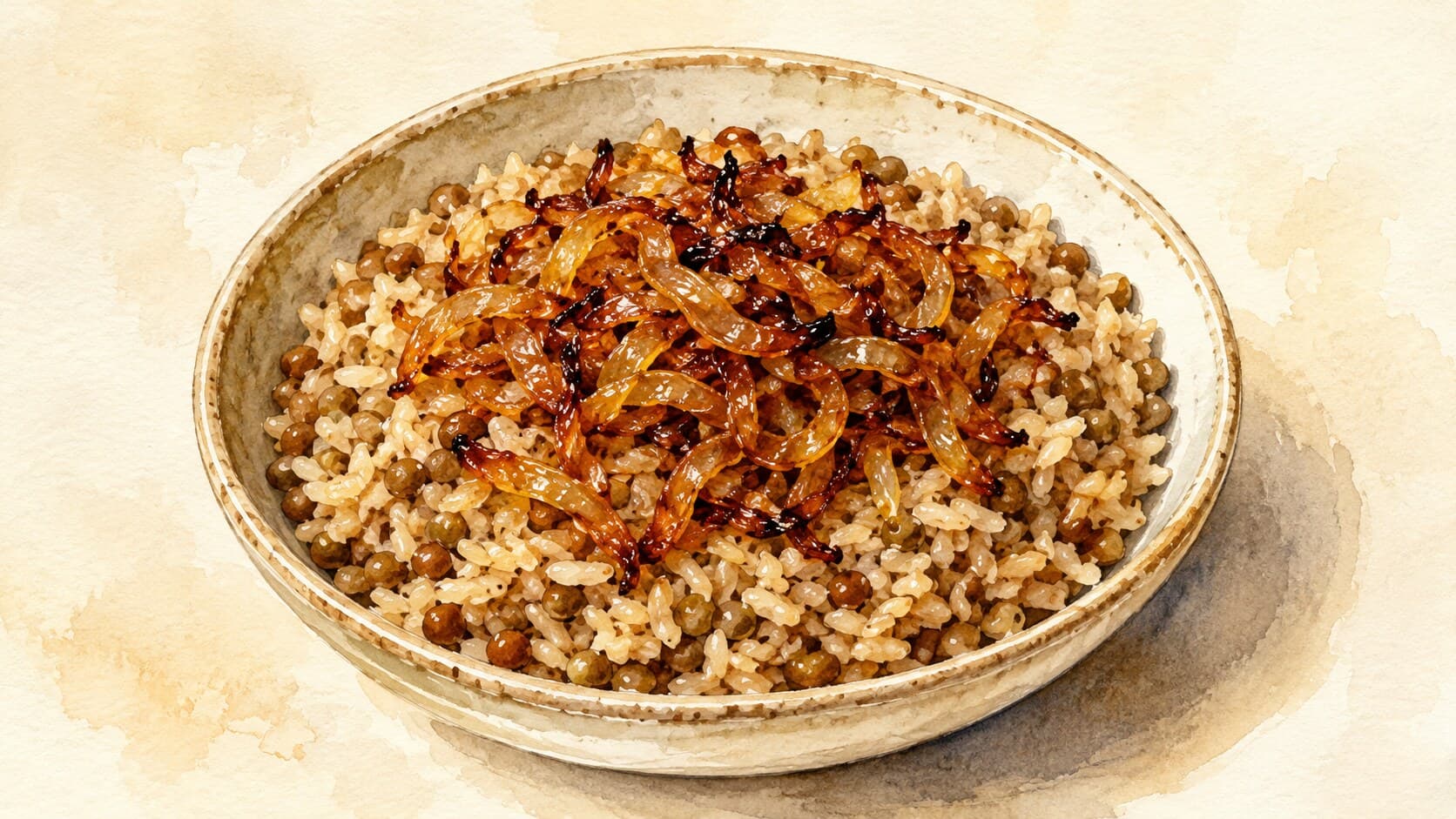
Mujadara is a Middle Eastern dish made with cooked lentils and rice, topped with caramelized onions.
Contents (5 sections)▾
Ingredients
- 200 g lentils, rinsed
- 150 g long-grain rice, rinsed
- 1 liter water
- 3 medium onions, thinly sliced
- 60 ml olive oil
- 1 tsp ground cumin
- Salt to taste
- Black pepper to taste
- Yogurt, for serving
- Lemon wedges, for serving
Steps
In a pot, combine rinsed lentils and 1 liter of water. Bring to a boil over medium-high heat, then reduce to a simmer for 10 minutes.
Add the rinsed rice and cumin to the pot, stir gently, and season with salt and pepper. Cover and cook on low heat for 15 minutes, or until the rice and lentils are tender and water is absorbed.
While the lentil-rice is cooking, heat olive oil in a skillet over medium heat. Add sliced onions and cook, stirring occasionally, until they are golden brown and caramelized, about 15 minutes.
Once the onions are caramelized, remove from heat and set aside. Fluff the lentil-rice mixture with a fork and serve topped with caramelized onions, accompanied by yogurt and lemon wedges.
Why this works
The balance of lentils and rice in Mujadara creates a complete protein, making it a satisfying vegetarian dish. Cooking the lentils first allows them to soften adequately before adding the rice, which requires a shorter cooking time; this ensures both components achieve the right texture. The key to deeply caramelized onions (cooked slowly until the natural sugars turn deep brown and sweet) lies in patience—cooking them slowly at medium heat allows their natural sugars to develop without burning. If the onions seem too dry or start to stick, add a splash of water to deglaze the pan (pouring a little liquid into a hot pan to lift the browned bits stuck to the bottom) and prevent burning. The dish's flavor is enhanced with cumin, a traditional spice adding warmth and earthiness. Serving with yogurt and lemon introduces freshness, complementing the rich flavors. This one-pot meal is ideal for weeknights, providing both nourishment and comfort.
Common mistakes
Pulling the lentils off the heat while they still have a bite. Target: lentils fully tender — they should crush easily between thumb and forefinger, no chalky core. Why it matters: lentils are a legume; their starchy interior needs time and water to gelatinise (the starch granules swelling and softening). An undercooked lentil is not just unpleasant — it is genuinely hard to digest, and older or drier lentils can take 5–10 minutes longer than the bag suggests. Mujadara that crunches has been pulled off too early. What to do: taste-test two or three lentils before adding the rice. If any still have a hard centre, give them another 5 minutes alone with the water before the rice goes in. Old lentils (over a year on the shelf) may need 30+ minutes total.
Rushing the onions to "dark" instead of caramelising them. Target: onions deep mahogany — sweet, soft, almost jam-like — not blackened crisps. Why it matters: caramelisation is sugar slowly browning at around 110–160 °C (230–320 °F); the onion's natural fructose breaks down and develops the smoky-sweet base that defines mujadara. Push the pan too hot and the sugars burn before they sweeten — the dark colour now comes from bitter compounds, not Maillard sweetness, and they will taste acrid against the mild lentils. What to do: start medium and drop to medium-low after the onions wilt. Plan on 25–30 minutes for real depth. A pinch of salt early helps draw out water; if they catch, a splash of water deglazes the pan and resets the temperature without giving up colour.
Lifting the lid (or stirring vigorously) while the rice steams. Target: lid on, undisturbed, for the full simmer plus a 10-minute rest off the heat. Why it matters: rice cooks by steam more than by boiling water. Every lift of the lid releases steam, and aggressive stirring breaks the surface starch, which makes the dish gluey instead of separating into fluffy grains. What to do: trust the timer. After the simmer, leave the lid on for 10 more minutes off the heat — the residual steam evens out the moisture. Only then lift, and fluff gently with a fork, not a spoon.
Treating mujadara as a "leave it on the warmer" dish all evening. Target: serve hot soon after the rest, or cool quickly and refrigerate; reheat once. Why it matters: cooked starchy mixes (rice + lentils) at room temperature are a known growth window for spore-forming bacteria such as Bacillus cereus, especially if held warm for hours. The dish is food-safe when cooked and eaten in the same window; less so when left at "warm" between meals. What to do: if not eating within an hour, cool the pot in a shallow tray and refrigerate within 2 hours. Reheat fully hot (steaming through) before serving — and reheat only once.
What to look for
- A lentil that crushes between your fingers with no grainy resistance — the test for "done." If a few still feel chalky, the rest aren't ready either.
- Onions the colour of dark caramel, smelling sweet and almost smoky, not sharp — that is the sugar developing through Maillard browning. A sharp, eye-watering oniony smell means they need more time and gentler heat.
- Rice grains that separate cleanly when fluffed, with no visible pool of liquid at the bottom — the broth has finished absorbing. If there is still standing liquid, give it another 5 minutes covered off the heat.
- A warm, faintly toasty smell of cumin rising as you lift the lid — cumin's essential oils volatilise (turn into aroma in the air) when warmed in fat or simmered. If you smell nothing, the spice was added too late or got buried; stir in a fresh pinch at the table.
A note on history
The first written recipe for mujadara appears in Kitāb al-Ṭabīkh, an Arabic cookbook compiled in 1226 in Abbasid Baghdad — making the dish nearly 800 years old in documented form, and likely older in practice. In its earliest version it included meat and was served at celebrations; as meat became a luxury for ordinary households, the dish shed it and settled into the form known across the Eastern Mediterranean today — lentils, rice, and slowly browned onions (Wikipedia: Mujaddara; Wikipedia: Kitab al-Tabikh). The Arabic name mujaddara literally means "pockmarked," after the way dark lentils dot the pale rice.
Get the essays in your inbox — free
Weekly notes on flavor, fermentation, and food history — the writing behind the Atlas of Flavor. No spam; unsubscribe anytime.