
Menchi Katsu
Menchi Katsu is a Japanese dish featuring a breaded and fried meat cutlet, often made with a mixture of pork and beef.
Contents (5 sections)▾
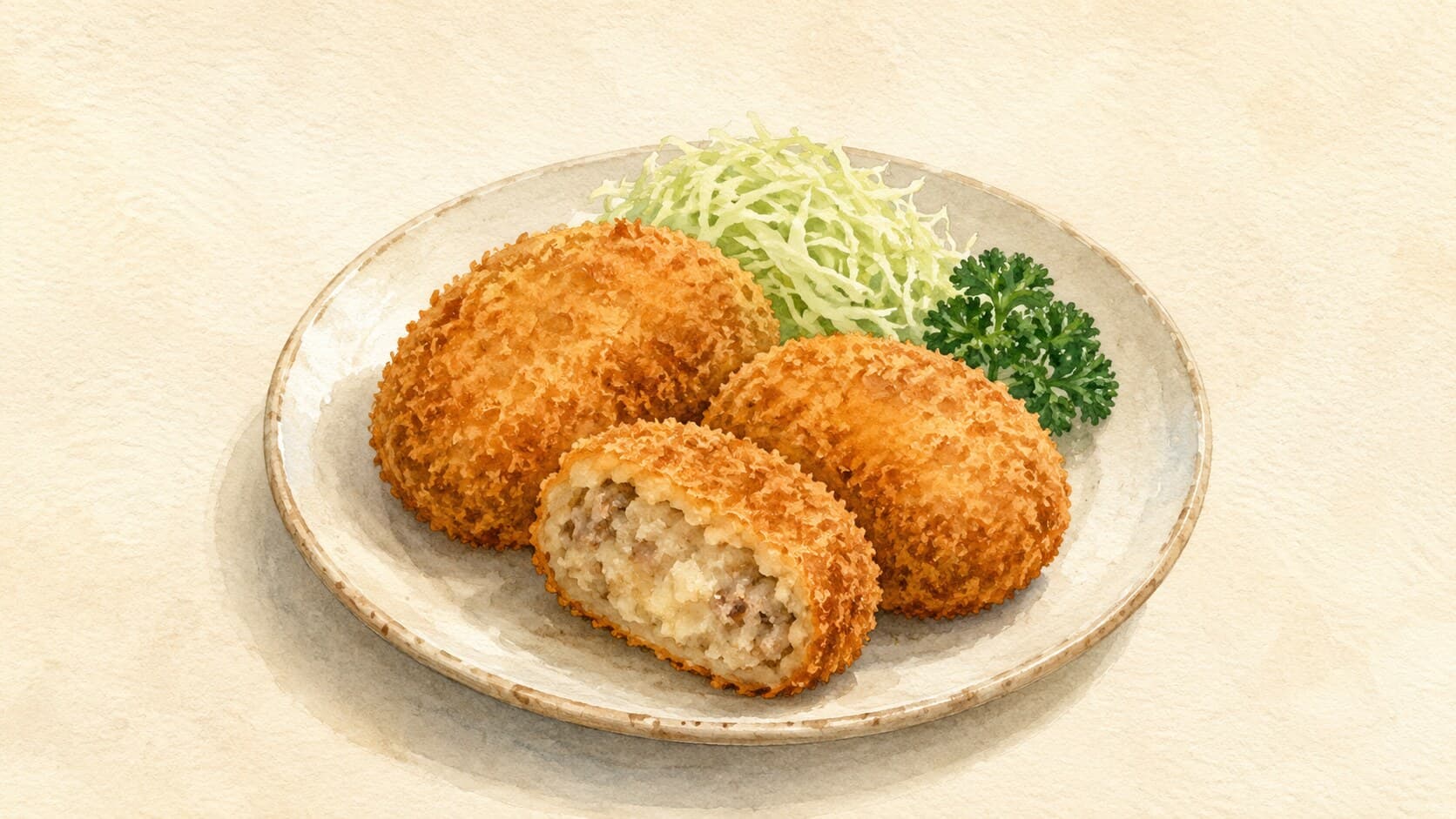
Ingredients
- 500 g ground pork
- 100 g ground beef
- 1 small onion, finely chopped
- 1 clove garlic, minced
- 1 carrot, grated
- 1 egg
- 100 g panko breadcrumbs
- 60 g all-purpose flour
- salt, to taste
- pepper, to taste
- oil for deep-frying
Steps
In a bowl, combine ground pork, ground beef, chopped onion, minced garlic, grated carrot, egg, salt, and pepper. Mix until well combined.
Shape the mixture into flat cutlets, approximately 1.5 cm thick. This helps them cook evenly and remain juicy.
Dredge each cutlet in flour, then dip into beaten egg, and finally coat with panko breadcrumbs for that signature crunch.
Heat oil in a deep frying pan to 170°C. Fry the cutlets for about 5-6 minutes on each side until golden brown. The 170 °C is the oil temperature, not the doneness test: before removing a cutlet, insert an instant-read thermometer into its centre and confirm it has reached 71 °C / 160 °F (this mix contains ground pork and beef) — colour and time are guides; if the centre is short, keep frying.
Remove the cutlets from the oil and let them drain on paper towels to absorb excess oil. Serve hot with lemon wedges.
Tools you'll want
Why this works
The combination of ground pork and beef yields a flavorful filling, while the finely chopped vegetables add moisture and sweetness. The panko (Japanese-style coarse, flaky breadcrumbs that fry up extra-crisp) breadcrumbs create a super crispy exterior, which is essential for texture contrast. Maintaining the oil at 170°C is critical; too hot will burn the coating before the inside is cooked, while too cool will make the cutlets greasy. If the cutlets seem too thick, flatten them more before frying to ensure they cook through without burning. This method ensures a delicious, juicy Menchi Katsu that is both kid-friendly and satisfying for the whole family.
Common mistakes
Undercooking the center — leaving any pink in a ground-meat cutlet is unsafe. Target: the inside must reach 71°C / 160°F and show no pink. The juice that runs out when pressed should be clear, not red or rosy. Why it matters: ground meat is mixed surface-to-center during grinding, so any surface bacteria are now distributed throughout the patty. Unlike a whole steak, you cannot leave the inside underdone. A thicker cutlet that looks browned on the outside but cool inside is the classic failure mode. What to do: keep cutlets to 1.5 cm thick and check with an instant-read thermometer at the center if you have one. If not, slice the thickest cutlet from the first batch in half and confirm the color before serving any.
Frying with a wet exterior, or dropping cutlets in roughly. Target: pat the breaded cutlets dry, lower them gently with tongs, away from your body. Why it matters: water on the panko hits 170°C oil and flashes to steam — that's what splatters out and burns. Dropping from height also throws a wave of oil up. Both are common kitchen burns. What to do: rest the breaded cutlets on a rack for 1–2 minutes so any surface moisture evaporates, then lower them slowly along the side of the pan with tongs, away from you.
Letting the oil temperature swing. Target: hold 170°C steadily through the fry; don't crowd the pan more than half full. Why it matters: oil temperature drops sharply when cold cutlets go in. Below ~155°C the panko absorbs oil instead of crisping (greasy), above ~180°C the surface darkens before the interior cooks (burnt outside, raw center). What to do: use a thermometer or test with a panko crumb — it should sizzle steadily and rise to the surface in about 5 seconds. Fry no more than 2–3 cutlets at a time in a medium pan.
Skipping the salting-and-mixing of the meat mixture. Target: salt the meat, then mix until it turns sticky and slightly pale. Why it matters: salt extracts myosin (a binding protein in meat); the mixture becomes tacky and holds together when fried. Without that step, the cutlet falls apart in the oil and juice leaks out instead of staying inside. What to do: add salt first, mix with a wooden spoon or gloved hand for 60–90 seconds until the texture turns sticky, then fold in onion, egg, and seasoning.
What to look for
- A panko surface that crackles softly when you press it with chopsticks at the end of the fry — moisture has cooked out and the coating has set.
- Bubbles around the cutlet thinning out into smaller, faster bubbles — early on, large lazy bubbles mean water is still steaming out of the meat; small fast bubbles mean the interior is mostly cooked.
- A clean cut at the center showing uniform brown-gray meat, no pink streaks — the temperature has reached 71°C. Even a single pink streak means more time.
- Clear juices, not red, when you press the cooked cutlet gently with chopsticks — confirms the inside is fully done.
A note on history
Menchi katsu was invented at Rengatei (煉瓦亭), a Western-style yōshoku (the genre of Japanese-Western fusion home cooking born in the Meiji period) restaurant in Tokyo's Ginza district, in 1899 — four years after the restaurant opened in 1895. The chefs adapted the tonkatsu (the breaded-and-deep-fried pork cutlet that is yōshoku's most famous member) template using minced meat, and the name itself comes from a misheard English word: when the owner asked how to say "hikiniku" (挽肉, minced meat) in English, the response "minced meat" was reportedly heard and recorded as "menchi meat." Menchi katsu is now one of the cornerstones of yōshoku — Japanese cuisine that absorbed and reshaped Western dishes during the Meiji period. Sources: Wikipedia: Menchi-katsu, The Japan Times: Recipe — Deep-fried minced meat cutlets.
Get the essays in your inbox — free
Weekly notes on flavor, fermentation, and food history — the writing behind the Atlas of Flavor. No spam; unsubscribe anytime.