
Mejillones a la Marinera
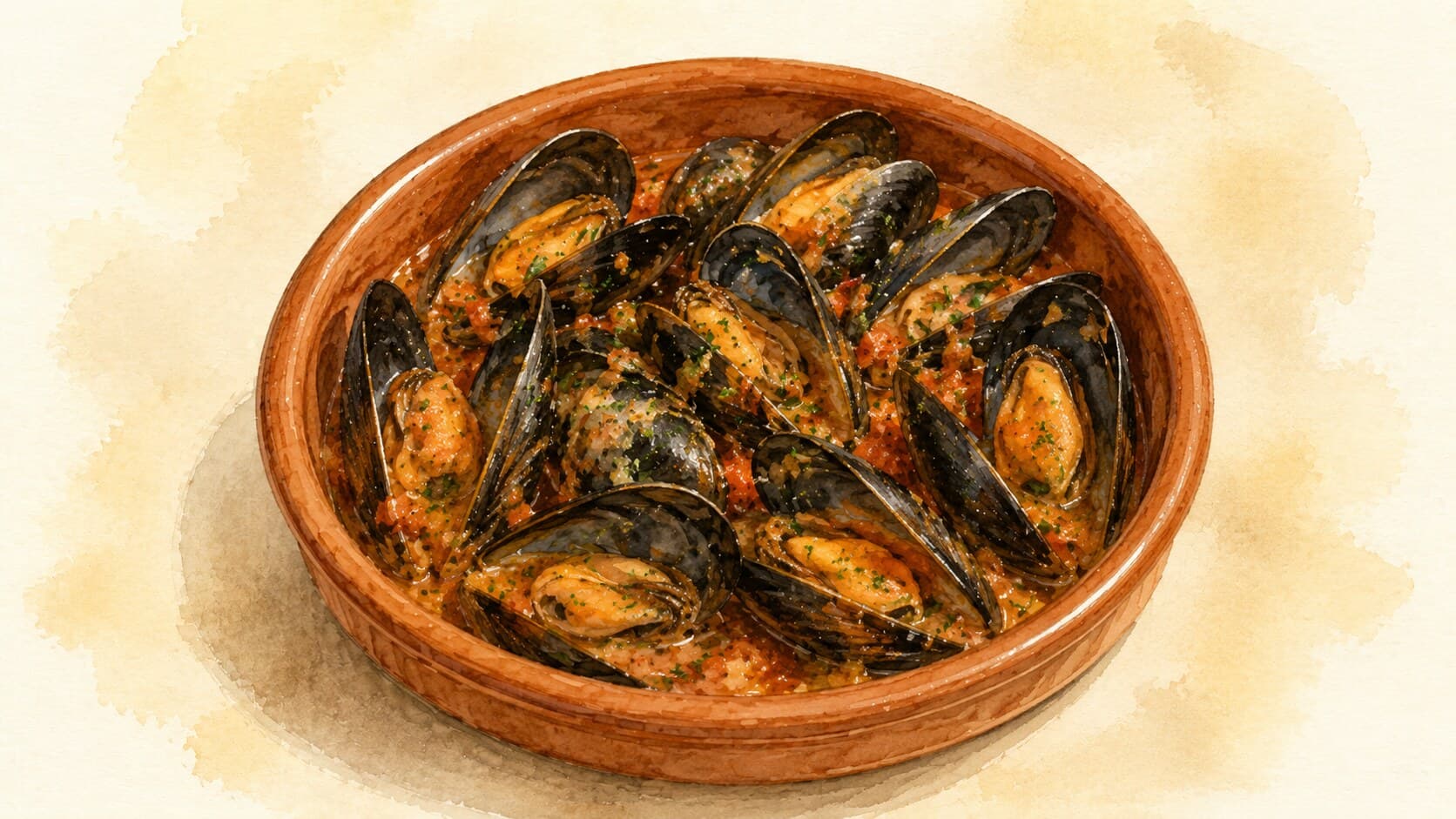
Experience the flavors of Spain with these steamed mussels in a savory sofrito and white wine sauce.
Contents (5 sections)▾
Ingredients
- 1 kg live mussels
- 4 tbsp olive oil
- 1 medium onion, diced
- 4 cloves garlic, minced
- 1 tsp smoked paprika
- 2 medium tomatoes, diced
- 150 ml white wine
- 1/4 cup fresh parsley, chopped
- Salt to taste
- Black pepper to taste
Steps
Rinse the mussels under cold water, scrubbing the shells to remove any debris. Discard any that are open and do not close when tapped.
In a large pan, heat the olive oil over medium heat. Add the diced onion and sauté for about 5 minutes until translucent.
Stir in the minced garlic and smoked paprika. Cook for an additional minute until fragrant.
Add the diced tomatoes to the pan and cook for 3-4 minutes until they soften and release their juices.
Pour in the white wine, and season with salt and black pepper. Bring to a simmer for about 2 minutes to let the alcohol evaporate.
Add the cleaned mussels to the pan, cover it with a lid, and steam for about 5-7 minutes or until the mussels have opened.
Remove from heat, sprinkle with fresh parsley, and serve mussels in their shells with the cooking broth.
Why this works
The technique of steaming live mussels in a sofrito (a slow-cooked Spanish base of onion, garlic, and tomato in olive oil) base combines flavor depth with the natural brininess of the mussels. The sofrito, a mixture of sautéed (gently cooked in a small amount of fat over moderate heat) onions, garlic, and tomatoes, adds complexity and richness to the dish, while the white wine contributes acidity that balances the overall flavor. As the mussels steam, they release their own juices, enriching the broth. If the mussels seem to be taking too long to open, ensure the heat is high enough and the lid is tightly closed; this traps steam and facilitates cooking. It's crucial to discard any mussels that do not open after cooking, as they may not be safe to eat.
Common mistakes
Using mussels that aren't truly live, or eating any that don't open after cooking. Target: every mussel that goes into the pot should be alive — shells either tightly closed, or closing within a few seconds when you tap them. Any mussel that stays open and refuses to close before cooking is dead and must be discarded. After steaming, any shell that did not open also gets discarded — it was likely already dead going in. Why it matters: mussels are filter feeders that quickly host bacteria and biotoxins after death. Cooking does not make a pre-dead mussel safe; the protein degrades and the steam-pressure won't pry the muscle apart, which is why a stubbornly closed shell is a warning sign, not a stubborn one. What to do: sniff the bag at the shop — fresh mussels smell of clean seawater, never fishy or sulfurous. Refrigerate them cold (4°C, on ice or in a colander over a bowl, never submerged in fresh water), cover with a damp cloth, and cook the same day. Discard any that fail the tap-and-close test before the pot, and any that haven't opened after the full steam.
Sofrito built too fast on high heat. Target: onions sweated gently for 8–10 minutes until translucent and soft, well before the garlic enters. Why it matters: the depth of a marinera broth comes from the slow breakdown of onion sugars, not from raw onion drowned in tomato. Browning the onion early gives a bitter, acrid base that the wine and tomato can't recover from. What to do: medium heat, plenty of olive oil, and a pinch of salt to draw moisture out. Watch for a sweet smell and a slight golden edge — not full caramelization.
Dumping the wine on top of tomato that hasn't cooked out. Target: tomato sautéed until it darkens and starts to stick (3–4 minutes), then deglaze with wine. Why it matters: raw tomato is mostly water and acid; if you add wine before the tomato concentrates, the broth stays thin and tastes "of the can." Letting the tomato dry-fry briefly drives off water and develops jammy notes. What to do: stir the tomato actively until you see a darker, slightly sticky film on the pan. Pour the wine all at once and scrape the fond up into the broth.
Crowding the pot or leaving the lid loose. Target: mussels in a single layer if possible, lid fully sealed, high heat. Why it matters: mussels open by steam pressure on a fast cycle; a loose lid lets the steam escape and the slowest mussels overcook before they pop. Two layers means the bottom layer is dry by the time the top opens. What to do: use the widest pan you have, work in batches if needed, and weight the lid if it doesn't seat well.
What to look for
- A closed shell that snaps shut at a tap when you check freshness — the muscle is still working; the mussel is alive.
- A clean, briny smell from the live mussels — never fishy or sulfurous — fresh shellfish should smell of seawater. Fishiness is the first sign of spoilage.
- A glossy, deep brick-red sofrito that coats the back of the spoon before the wine goes in — water has cooked out and the sugars have concentrated.
- Every shell open and the orange mussel meat plump and detached from the hinge after the lid comes off — fully cooked. Any shell still closed at the end goes straight in the bin.
A note on history
Mejillones a la marinera ("sailor-style mussels") comes from Spain's Atlantic northwest, especially Galicia, where the Rías Baixas inlets produce one of the largest mussel harvests in Europe. The marinera template — onion-and-tomato sofrito loosened with white wine, sometimes paprika — turned an abundant, cheap shellfish into a tapas-bar staple and a frequent first course in coastal homes. The exact dish varies by household and region (Galician versions often skip the tomato; Cantabrian versions lean heavily on paprika), but the sailor-style framing is national. Sources: El Spanish Chef: Mejillones a la marinera, Sabor España: Mejillones a la Marinera.
Get the essays in your inbox — free
Weekly notes on flavor, fermentation, and food history — the writing behind the Atlas of Flavor. No spam; unsubscribe anytime.