
Matcha Cheesecake
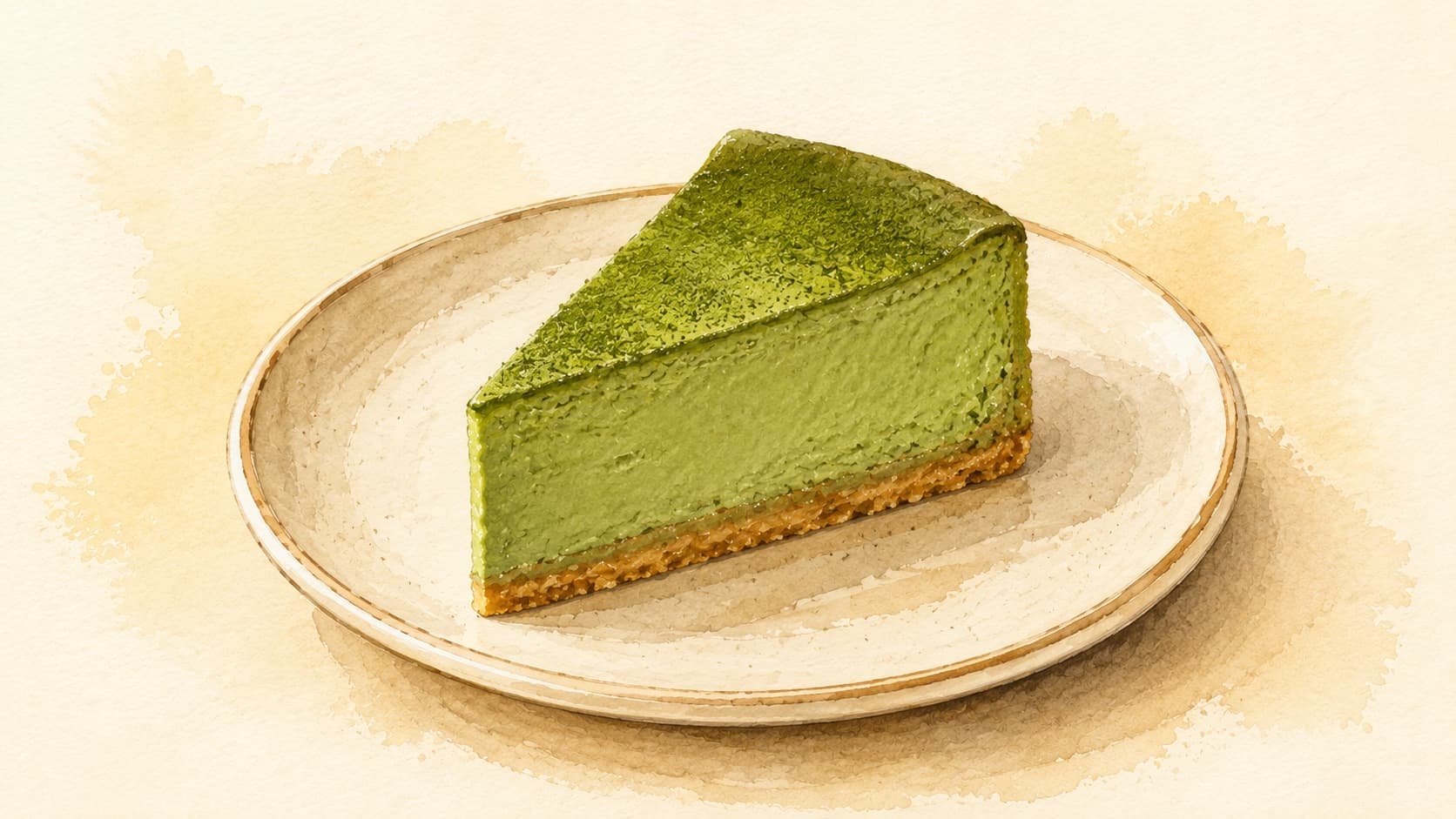
Matcha Cheesecake combines cream cheese and matcha, utilizing emulsification and layering techniques to achieve balanced flavors and creamy texture.
Contents (5 sections)▾
Ingredients
- 250 g cream cheese, softened
- 100 g granulated sugar
- 1 tsp vanilla extract
- 2 large eggs
- 200 g sour cream
- 2 tbsp matcha powder
- 100 g digestive biscuits, crushed
- 50 g unsalted butter, melted
- a pinch of salt
Steps
Preheat your oven to 160°C (320°F). This lower temperature helps in preventing cracks in the cheesecake.
Mix the crushed digestive biscuits with melted butter and a pinch of salt in a bowl until combined. Press this mixture into the bottom of a 9-inch springform pan to form the crust.
In a large mixing bowl, beat the softened cream cheese with granulated sugar and vanilla extract until smooth and creamy, about 3-4 minutes.
Add the eggs one at a time, mixing well after each addition. This incorporates air for a fluffier texture.
Blend in the sour cream and matcha powder until fully integrated and the mixture is uniform in color.
Pour the cream cheese mixture over the prepared crust in the springform pan.
Bake in the preheated oven for 15 minutes. After baking, turn off the oven and leave the cheesecake inside for 1 hour to cool gradually, which helps prevent cracking.
Remove the cheesecake from the oven and let it cool to room temperature before refrigerating for at least 2 hours, or overnight for best flavor.
Why this works
The unique fusion of matcha (stone-ground Japanese green tea powder) and cream cheese creates a harmonious balance of earthy and creamy flavors, resulting in a decadent dessert that appeals to both Japanese and Western palates. Using room temperature cream cheese is crucial for a smooth texture, allowing it to blend easily with other ingredients. The gradual cooling process post-baking is essential to avoid cracks, which can occur due to rapid temperature changes. If the cheesecake seems overly dense after baking, consider checking your mixing technique; overmixing can incorporate too much air, leading to a heavy texture. Additionally, using quality matcha enhances flavor and contributes to the striking green color, making it visually appealing. This matcha cheesecake is a treat for the taste buds and a feast for the eyes, perfect for any dessert table.
Common mistakes
Mixing cream cheese straight from the fridge. Target: cream cheese at room temperature (20–22°C) — soft enough to dent with a fingertip. Why it matters: cold cream cheese stays in lumps no matter how long you beat it, and once you add liquid eggs and sour cream, the lumps lock in and never smooth out. A grainy cheesecake almost always traces back here. What to do: unwrap the block and leave it out for 30–45 minutes before starting. Test by pressing — your finger should leave a clean mark.
Whipping air into the batter once eggs are added. Target: mix on low after the eggs go in, just until the streaks disappear. Why it matters: cheesecake sets through gentle protein coagulation, not by trapped air. Air bubbles inflate during baking and collapse during cooling — that's where the surface crack and the dense, soufflé-like top come from. What to do: switch from a whisk to a spatula after the eggs go in. Mix slowly; stop the moment the color is uniform.
Sifting matcha straight into a wet batter. Target: sift matcha first, then bloom it in a small portion of the warm batter before folding into the rest. Why it matters: matcha is fine clay-like powder; dropped into a cold liquid it forms tiny dry clumps that survive baking as green specks instead of dissolving into a uniform color. What to do: sift the matcha through a fine strainer onto a saucer, whisk it with two tablespoons of the warmed cream-cheese mix into a smooth paste, then fold that paste into the main bowl.
Pulling it from the oven and into the fridge immediately. Target: slow cooldown — oven off, door cracked open for an hour, then counter, then fridge. Why it matters: the proteins set in the heat and contract as they cool; a sudden temperature drop forces the contraction unevenly, which is exactly what cracks the surface. Refrigerate immediately and you'll also get condensation that dulls the matcha color. What to do: turn off the heat at the buzzer, prop the door open with a wooden spoon, leave for 60 minutes, finish at room temperature, then chill — keep it cold for serving and storage (standard food-safe dairy handling).
What to look for
- A smooth, lump-free batter that ribbons off the spatula in a single sheet — this means the cream cheese was soft enough and the eggs were folded in gently.
- A soft, slightly jiggly center when you tap the pan at the buzzer — like firm jelly, not liquid. The residual heat will finish it during the slow cooldown.
- A matte, uniform green surface — no darker speckles (those would be undissolved matcha clumps) and no shine (a glossy top means there's still raw egg sitting on the surface).
- A clean knife cut after a full chill — the slice should show one even green layer above the crust, no cracks running through, no liquid pooling at the base.
A note on history
Japanese cheesecake — the light, airy variant — took shape in Japan during the 1970s as an adaptation of Western cream-cheese cakes, popularized through women's magazines and bakeries like Osaka's Rikuro Ojisan. The matcha version is a more recent fusion: it pairs the post-war Japanese taste for Western dairy desserts with matcha, which has been cultivated and ground for tea-ceremony use since the 12th century. The combination is reliably crowd-pleasing because it sits exactly between two well-loved traditions — the creamy richness of cream cheese and the subtle bitterness and aroma of stone-ground green tea. Sources: Sakura.co: Japanese Parfait and Dessert Classics, Savoring Moments: The Story Behind Matcha Japanese Cheesecake.
Get the essays in your inbox — free
Weekly notes on flavor, fermentation, and food history — the writing behind the Atlas of Flavor. No spam; unsubscribe anytime.