
Maqluba
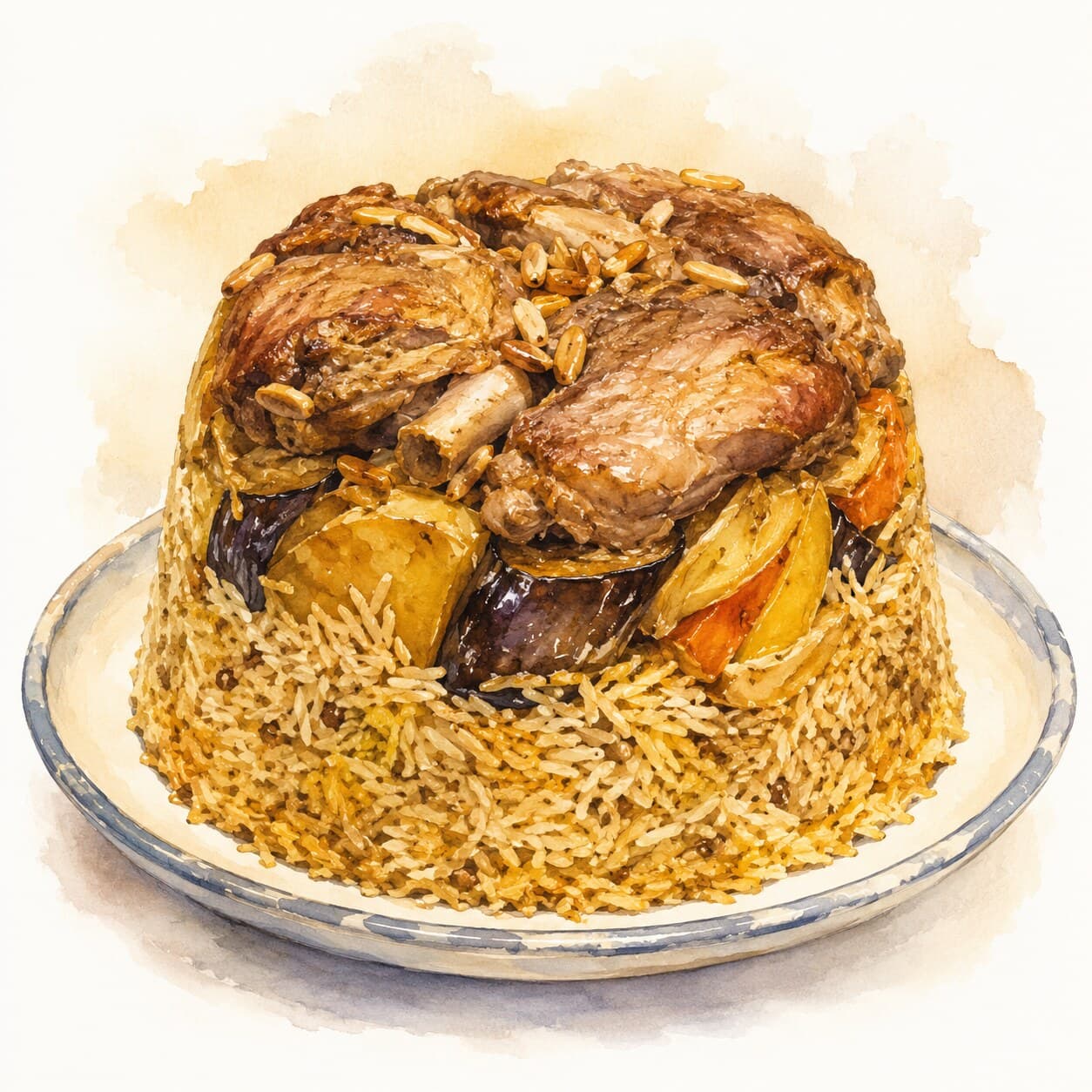
Maqluba is a Palestinian upside-down rice dish layered with meat and vegetables, creating a stunning presentation.
Contents (5 sections)▾
Ingredients
- 2 cups basmati rice
- 500 g chicken pieces or lamb
- 1 medium eggplant, sliced
- 1 medium cauliflower, cut into florets
- 2 medium tomatoes, diced
- 3 tbsp baharat spice mix
- 4 cups chicken or vegetable broth
- 3 tbsp olive oil
- Salt to taste
- Black pepper to taste
Steps
Rinse the basmati rice under cold water until the water runs clear, then soak it in water for 30 minutes to achieve better texture.
In a large pot, heat olive oil over medium heat and brown the chicken or lamb pieces on all sides for about 10 minutes.
Add the sliced eggplant, cauliflower, and diced tomatoes to the pot, seasoning with baharat, salt, and pepper. Cook for another 5 minutes to soften the vegetables.
Drain the soaked rice and layer it evenly over the meat and vegetables in the pot without stirring.
Pour the broth over the rice, ensuring it is fully submerged. Bring to a boil, then reduce the heat to low, cover, and simmer for 25–30 minutes until the rice is cooked and liquid is absorbed.
Once cooked, let the pot sit off the heat for about 10 minutes. To serve, carefully invert the pot onto a large serving platter, allowing the Maqluba to fall out in a beautifully layered presentation.
Why this works
The technique of layering rice, meat, and vegetables in one pot allows for the flavors to meld beautifully while cooking. The rice absorbs the meaty broth and the seasonings, enhancing its taste. The key is to avoid stirring after layering, which ensures that the rice cooks evenly and retains its structure. If the dish seems too dry at the end of cooking, you can add a little more broth or water, cover, and let it steam for a few minutes. Should the Maqluba break apart upon flipping, do not worry; simply serve it in layers. This dish is as much about the presentation as it is about the flavor, making the inverted reveal a delightful centerpiece that highlights the vibrant colors and textures of the ingredients used.
Common mistakes
Skipping or rushing the rice soak.
Target: Rinse the basmati rice until the water runs clear, then soak it for the full 30 minutes before draining.
Why it matters: Rinsing removes excess surface starch and soaking hydrates the grains evenly; skip either step and the rice releases too much starch during cooking, turning gluey and clumped instead of light and separate, which also makes the finished dish harder to slice cleanly.
What to do: Rinse in a few changes of water until it's no longer cloudy, then let it soak the full time before layering.
Layering loosely or unevenly.
Target: Press the meat, vegetables, and rice into even, compact layers as you build the pot, avoiding large air pockets or lopsided piles.
Why it matters: Maqluba (Arabic for "upside-down") depends on its layers holding together once flipped; loose or uneven layers are far more likely to slump or fall apart on the platter, even when the flavor is fine.
What to do: Press each layer down gently and evenly with the back of a spoon before adding the next, keeping the surface roughly level.
Flipping the pot immediately after cooking, without a rest.
Target: Let the pot sit off the heat for the full 10 minutes the recipe specifies before inverting it.
Why it matters: Resting lets the rice firm up and the layers settle; flipping straight off the heat, while everything is still loose and steaming, makes it much more likely the layers will slide apart when unmolded.
What to do: Let the covered pot rest undisturbed, then run a thin knife around the edge to loosen it before turning it out in one confident motion.
Judging the meat's doneness by the rice instead of checking it directly.
Target: Make sure chicken reaches full doneness with no pink at the bone or center — an instant-read thermometer should read about 74°C/165°F — and that lamb is fully cooked through and tender, not underdone.
Why it matters: Because the meat sits underneath the rice and vegetables, it's easy to assume it's done once the rice on top looks ready; poultry with any pink near the bone is not safe to eat.
What to do: Check the thickest piece of chicken near the bone before serving — the juices should run clear and the meat should look opaque throughout; for lamb, confirm it pulls apart easily with no raw color left.
What to look for
- The pot releasing cleanly, with the layers holding their shape on the platter. A proper rest before flipping and firmly packed layers are what let the rice, vegetables, and meat come out together instead of sliding apart.
- Rice grains that are separate and tender, not gluey or mushy. Well-rinsed, well-soaked rice looks fluffy on the cut layers rather than pasted together.
- Chicken with no pink near the bone, or lamb that pulls apart easily. This is the clearest doneness check once the pot is unmolded and cut into.
- A golden, slightly crisped layer where the rice met the bottom of the pot. This forms naturally closest to the heat; it's a textural bonus if you get it, not a requirement — just make sure it's golden rather than dark brown or black, which would mean the heat ran too high.
A note on history
Maqluba — from an Arabic word meaning "upside-down" — is cooked across the Levant, in Palestine, Jordan, Syria, and Lebanon, and its exact roots are hard to pin to one place or moment. Layered, single-pot rice dishes turned out onto a platter have long been part of the region's home cooking, and many families treat maqluba as a marker of Palestinian identity in particular, even as it's also cooked and claimed as a shared dish elsewhere in the Levant. As with several dishes common to the wider region, whose tradition it belongs to is sometimes debated rather than settled, and the more honest account is that it likely developed and spread gradually across neighboring communities rather than being invented in a single place.
However it began, the dramatic flip at the table — the layers hidden until the pot is turned out — has made maqluba a dish strongly associated with gathering and hospitality, traditionally served for guests and family occasions rather than as an everyday meal.
Get the essays in your inbox — free
Weekly notes on flavor, fermentation, and food history — the writing behind the Atlas of Flavor. No spam; unsubscribe anytime.