
Lagman
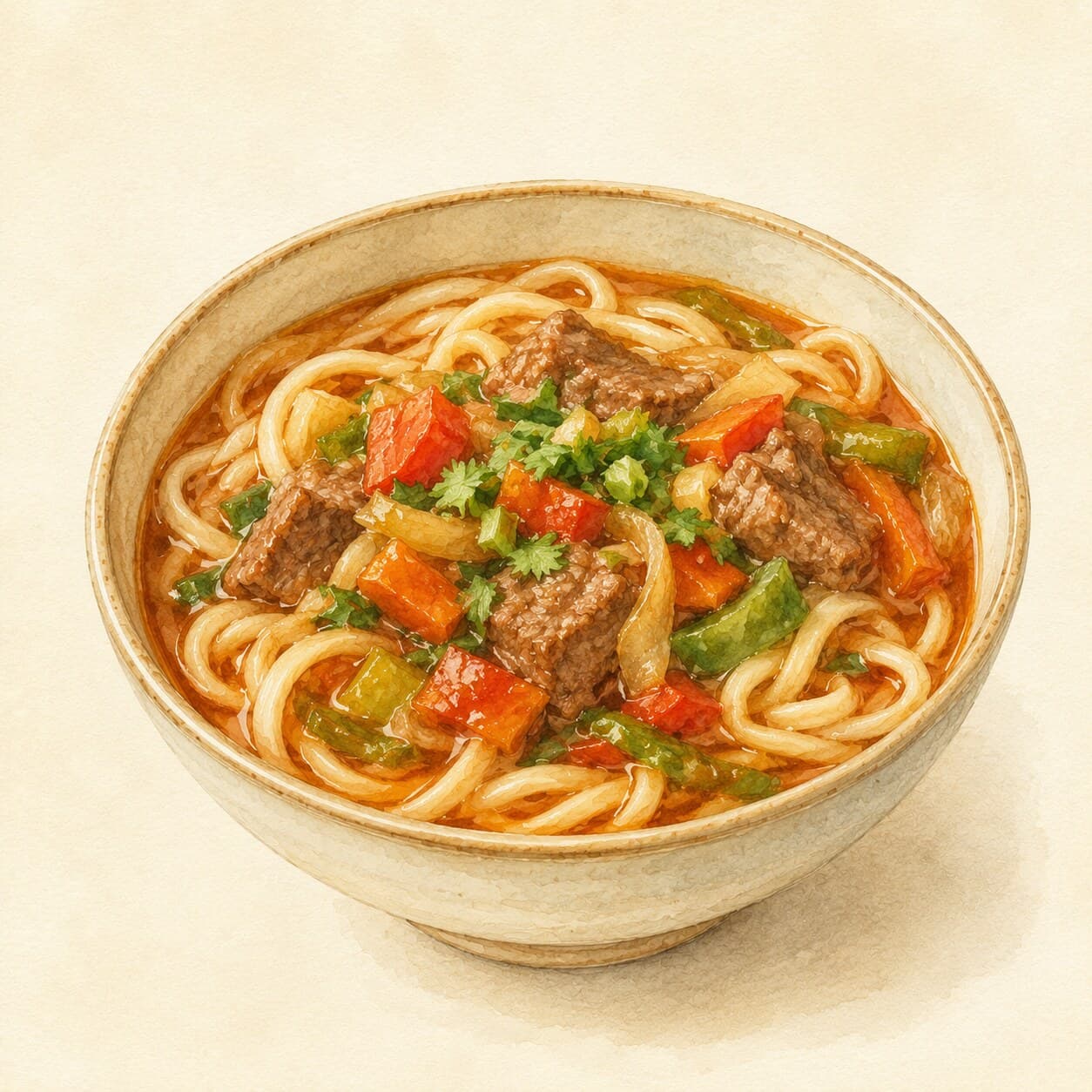
Lagman is a delightful Uyghur dish featuring hand-pulled noodles served with a vibrant stir-fried meat and vegetable sauce.
Contents (5 sections)▾
Ingredients
- 500 g wheat flour
- 200 ml water
- 1 tsp salt
- 300 g beef or lamb, sliced thinly
- 2 tbsp lazi sauce
- 1 large bell pepper, sliced
- 2 medium tomatoes, diced
- 1 tsp cumin
- 2 tbsp vegetable oil
- 1 clove garlic, minced
- to taste black pepper
Steps
In a bowl, mix 500 g of wheat flour with 1 tsp of salt and gradually add 200 ml of water while kneading until you achieve a smooth dough. Let it rest for 20 minutes.
After resting, divide the dough into equal pieces and roll them into thin ropes. Pull each rope gently to lengthen and thin them out, creating hand-pulled noodles.
In a large pan, heat 2 tbsp of vegetable oil over medium-high heat and add the sliced beef or lamb. Stir-fry for about 5 minutes until browned.
Add the minced garlic, sliced bell pepper, diced tomatoes, and 1 tsp of cumin to the meat. Stir-fry for an additional 5-7 minutes until the vegetables are tender.
In a separate pot, bring water to a boil and add the hand-pulled noodles. Cook for about 3-4 minutes until they float to the surface, indicating they are done.
Drain the noodles and add them to the stir-fried meat and vegetable sauce, mixing well. Season with 2 tbsp of lazi sauce and black pepper to taste, and serve immediately.
Why this works
The hand-pulling technique for the noodles creates a unique texture that enhances the eating experience, allowing the noodles to absorb the sauce beautifully. The process of letting the dough rest is crucial as it relaxes the gluten, making it easier to stretch and pull. When preparing the stir-fry, the high heat ensures that the beef or lamb gets a nice sear, building browned flavor while keeping the meat tender. If the noodles seem too thick or tough after cooking, simply return them to boiling water for an additional minute to soften. This method balances the flavors of the sauce with the chewy noodles, embodying the essence of Silk Road culinary fusion.
Common mistakes
Not resting the dough long enough (or at all).
Target: A full 20-minute rest, covered so the surface doesn't dry out.
Why it matters: Kneading builds gluten (the stretchy protein network in wheat dough) into a tight, springy web. Straight after kneading, that web is wound up like a coiled spring and fights back the moment you pull — the rope snaps instead of stretching. Resting lets the gluten relax so the strands slide past each other and lengthen smoothly.
What to do: Knead until smooth, cover the bowl with a damp cloth or plate, and walk away for 20 minutes. If a rope still fights you when you pull, give it another 10 minutes — it is not ready, not broken.
Dough that is too dry and stiff to pull.
Target: A soft, supple dough that just barely tacks to a clean finger, not one that cracks at the edges.
Why it matters: Hand-pulled noodles need enough water for the gluten to stretch thin without tearing. A dry, firm dough has no give — you will feel it resist and split. This is the single most common reason a first batch of pulled noodles fails.
What to do: Add the 200 ml of water gradually while kneading and stop when the dough comes together soft. If it feels tight and floury, wet your hands and knead the moisture in a little at a time until it turns pliable.
Crowding the pan so the meat steams instead of sears.
Target: A hot pan, meat spread in a single layer, a loud sizzle the moment it lands.
Why it matters: A browned, savory crust forms only when the surface of the meat gets hot enough to dry and brown (the Maillard reaction — the flavor-building browning that happens to seared meat). Pile too much cold meat into the pan at once and it releases water, the temperature drops, and the meat greys and boils in its own juices — pale, not tasty.
What to do: Get the oil shimmering-hot first, then add the meat in one layer. If your pan is small, brown the meat in two batches rather than dumping it all in.
Overcooking the noodles into mush.
Target: Just-tender noodles with a little chew left, pulled from the water as soon as they float.
Why it matters: Fresh hand-pulled noodles cook far faster than dried pasta — often 2–4 minutes. Left too long, the surface starch swells and turns slippery and soft, and the noodles fall apart when tossed with the sauce.
What to do: Watch the pot. When the noodles rise and float, taste one — it should be cooked through but still springy. Drain immediately.
Adding the lazi sauce too early and scorching it.
Target: Lazi sauce (a Central Asian chili-and-oil condiment) stirred in near the end, off the fiercest heat.
Why it matters: Chili and its oils burn quickly on high heat, turning sharp and bitter. Adding lazi at the searing stage means it cooks far longer than it should.
What to do: Build the stir-fry first, then fold the noodles and lazi sauce together at the end just to warm through and coat, as the steps direct.
What to look for
- Dough after kneading: smooth and satiny, springs back slowly when you press a finger in. A ragged, lumpy surface means it needs more kneading.
- Dough that is ready to pull: a rope stretches and thins without snapping when you pull gently. If it fights back and tears, it needs more resting time, not more force.
- Meat that is properly seared: a deep brown surface and a steady, loud sizzle — not a quiet, watery simmer. Silence and pale grey meat mean the pan is too cool or too crowded.
- Vegetables ready: bell pepper softened but still with a little bite, tomatoes broken down into a glossy, saucy coat around the meat.
- Noodles done: they rise and float to the surface, and a bite is tender through with a gentle spring. Sinking, doughy-centered noodles need another moment.
A note on history
Laghman is a hand-pulled noodle dish of the Uyghur people of Xinjiang in northwestern China, and its name traces to a Turkic and Dungan rendering of the Chinese lāmiàn ("pulled noodles") — the "stretched dough" root that gives the noodles their character. From Xinjiang the dish traveled the Silk Road westward and became a fixture across Central Asia, eaten today in Uzbekistan, Kazakhstan, and Kyrgyzstan. (Source: Laghman (food) — Wikipedia.)
Get the essays in your inbox — free
Weekly notes on flavor, fermentation, and food history — the writing behind the Atlas of Flavor. No spam; unsubscribe anytime.