
Kuri Gohan
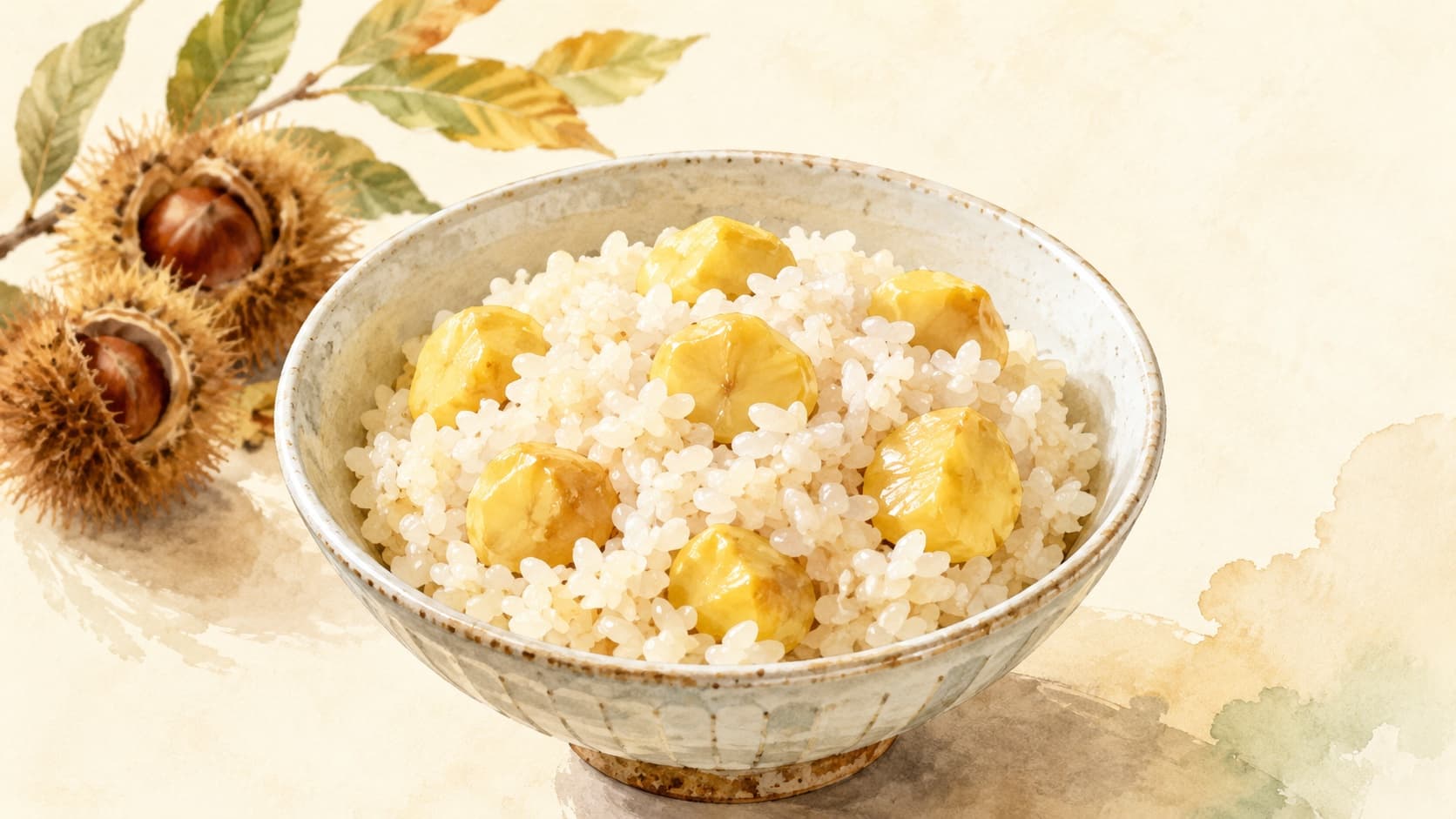
Kuri Gohan is a Japanese rice dish made with seasonal chestnuts, showcasing the technique of cooking rice with flavor-enhancing ingredients.
Contents (5 sections)▾
Ingredients
- 300 g rice, preferably short-grain
- 100 g chestnuts, peeled and chopped
- 600 ml dashi broth
- 1 tbsp soy sauce
- 1 tbsp mirin
- 1 tsp salt
- 1 tbsp sake
- 2 sprig(s) green onions, chopped (for garnish)
Steps
Rinse the rice under cold water until the water runs clear, then soak it in water for 30 minutes. This helps achieve a fluffy texture.
In a pot, combine the soaked rice, dashi broth, soy sauce, mirin, salt, and sake. Stir gently to distribute the ingredients.
Add the chopped chestnuts on top of the rice mixture and bring to a boil over medium heat. This will infuse the chestnut flavor into the rice.
Once boiling, reduce the heat to low, cover the pot, and simmer for 15 minutes. Avoid lifting the lid during cooking to maintain steam.
After 15 minutes, remove the pot from heat and let it rest, covered, for another 10 minutes. This step allows the flavors to meld.
Fluff the rice gently with a rice paddle and garnish with chopped green onions before serving. This adds a fresh contrast to the dish.
Tools you'll want
Why this works
Kuri Gohan showcases the technique of takikomi-gohan, where rice is cooked with various ingredients to absorb their flavors. The dashi broth provides umami depth, while the chestnuts offer a sweet, nutty contrast, making it a perfect autumn dish. Soaking the rice ensures that it cooks evenly and achieves the desired fluffy texture. If the rice seems too firm after cooking, add a small splash of water and simmer for an additional 2-3 minutes, covered, to allow it to steam further. This dish is a delightful representation of seasonal ingredients, embodying the essence of autumn in Japan, and is best enjoyed warm to fully appreciate the flavors.
Common mistakes
Skipping the rice rinse and soak.
Target: Rinse until water runs nearly clear (3-4 changes of water), then soak 30 minutes in measured cooking water before heat goes on.
Why it matters: Unrinsed short-grain rice keeps its surface starch dust, which gelatinizes on the grain's outside and produces sticky, clumpy cooked rice. Unsoaked rice cooks unevenly — the outside softens while the core stays firm, and the chestnuts (which sit on top and want full steam-through) finish before the rice does. Kuri gohan (Japanese chestnut rice — a takikomi-gohan, rice cooked with seasonings and toppings in one pot) lives or dies on the rice being fluffy and separate, not stuck together.
What to do: Rinse by gently swirling in a bowl, draining, repeating until water is mostly clear. Drain in a sieve 5 minutes. Then add the dashi-soy-mirin-sake liquid and let stand 30 minutes before heating.
Adding chestnuts under the rice.
Target: Chestnuts (pre-shelled, peeled, and cut to the same size) placed on top of the soaked rice, not stirred in, before bringing to a boil.
Why it matters: Stirred-in chestnuts release starch and color into the cooking water, turning the rice gray and pasty. On top, they steam through cleanly while the rice cooks beneath in the seasoned liquid; the flavor goes downward, the rice stays bright. This is the classic takikomi method. Safety also matters here — chestnuts must be fully pre-shelled, fully peeled (no inner skin), and fully cooked through; the inner brown skin (shibukawa) is bitter and the outer shell is hard.
What to do: Peel both shells off chestnuts. Cut large ones in half so all pieces are similar size. Scatter on top of the soaked rice. Do not stir. Cover. Bring to boil.
Lifting the lid during cooking or resting.
Target: Lid stays sealed from the moment heat goes on through the 15-minute cook and the 10-minute rest. No peeking.
Why it matters: Donabe (Japanese clay pots) and rice cookers both work by trapping steam at precise pressure and temperature. Each lift drops the temperature 20-30°C and lets steam escape — the rice on the surface goes dry, the bottom doesn't form the prized faint crust, and timing collapses. The 10-minute rest after heat-off is where the rice grains finish equalizing moisture and texture sets.
What to do: Set a timer. Trust it. Open only at the end of the rest period, then fluff gently with a wet rice paddle (shamoji) using a cutting motion, not stirring.
Too much soy sauce, dulled chestnut flavor.
Target: Seasoning kept light — a tablespoon of soy and a tablespoon of mirin per 2 cups of rice is the upper end. The chestnut should still taste like chestnut.
Why it matters: Kuri gohan's character is the marriage of subtle chestnut sweetness with delicate dashi umami. Heavy soy turns the rice dark and overpowers the chestnut entirely — you taste salt before nut. The traditional bowl is barely tinted, almost autumn-pale gold. Restraint is the dish.
What to do: Measure seasoning, don't pour by eye. Taste the cooking liquid before heat goes on — it should taste like a slightly under-seasoned dashi, not a dipping sauce.
What to look for
- After 30-minute soak: grains visibly whiter and slightly swollen, water has clouded faintly. If grains still look translucent, soak another 10 minutes — they didn't drink yet.
- Mid-cook (around 10 minutes in): quiet bubbling under the lid, faint chestnut-and-dashi smell escaping the rim. No sharp boiling-over sound — that means heat is too high.
- After 10-minute rest: no liquid pooled in the bottom when you tilt the pot, every grain glossy and standing apart. If wet at the bottom, rest 5 more minutes covered.
- Fluffed and served: chestnuts whole and golden against pale-amber rice, faint steam, smell of toasted nut and seaweed-broth. The whole bowl should smell like autumn, not soy sauce.
A note on history
Chestnuts have one of the deepest food histories in Japan — archaeological evidence suggests chestnut trees have been a food source on the archipelago for around 5,500 years, since the Jōmon period (Maido Ardmore). During the Nara and Heian eras, chestnuts were a high-status food served to nobles and at one point were valued more highly than rice; in the Sengoku era, dried chestnuts called kachi-guri — kachi meaning "victory" — were carried by samurai as a lucky charm before battle (Kikkoman Food Forum; Maido Ardmore). Kuri gohan itself belongs to the larger family of takikomi-gohan — rice cooked together with seasonal ingredients in one pot — and is one of the canonical autumn dishes of Japanese home cooking, marking the arrival of cooler weather (Just One Cookbook; Japan Ministry of Agriculture, MAFF).
Get the essays in your inbox — free
Weekly notes on flavor, fermentation, and food history — the writing behind the Atlas of Flavor. No spam; unsubscribe anytime.