
Konnyaku Shira-ae
Konnyaku Shira-ae consists of konnyaku and assorted vegetables, coated in a tofu-sesame dressing that highlights emulsification and flavor balance.
Contents (5 sections)▾
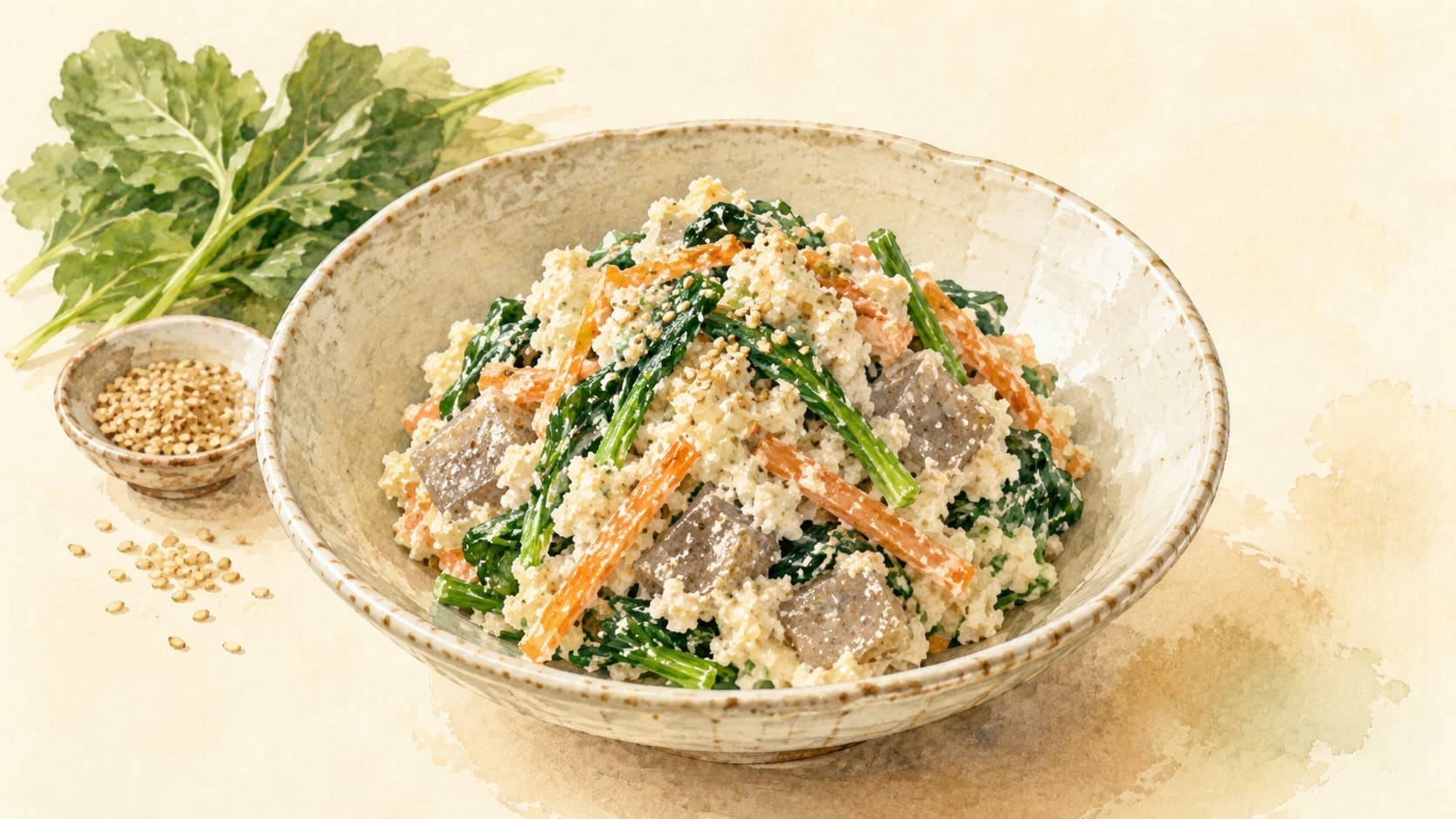
Ingredients
- 300 g konnyaku, sliced
- 200 g mixed seasonal vegetables (carrots, spinach, and bell peppers), cut into bite-sized pieces
- 150 g silken tofu
- 2 tbsp sesame paste (tahini)
- 2 tbsp soy sauce
- 1 tbsp sugar
- 1 tbsp rice vinegar
- 1 tsp sesame oil
- 1 tbsp toasted sesame seeds
- to taste salt
Steps
Prepare the konnyaku by boiling it in salted water for 3 minutes to remove any strong flavor and improve texture. This step is crucial for making the konnyaku more palatable.
In a separate pot, blanch the mixed vegetables in boiling water for 2-3 minutes until tender but still crisp. Drain and set aside to cool.
In a blender, combine the silken tofu, sesame paste, soy sauce, sugar, rice vinegar, and sesame oil. Blend until smooth to create a creamy dressing.
In a large bowl, combine the cooled konnyaku, blanched vegetables, and tofu-sesame dressing. Mix gently until all ingredients are well coated.
Sprinkle toasted sesame seeds over the dish for added flavor and texture. Serve chilled or at room temperature.
Tools you'll want
Why this works
The combination of konnyaku and a rich tofu-sesame dressing creates a satisfying dish that balances texture and flavor. Konnyaku, known for its unique chewy consistency, absorbs the savory dressing, enhancing its appeal. The silken tofu contributes to a creamy texture, while sesame paste adds depth and nuttiness. Blanching the vegetables ensures they retain their bright colors and crispness, resulting in an inviting visual presentation. If the tofu-sesame dressing seems too thick, add a tablespoon of water to thin it out. Conversely, if it breaks or separates, re-blend the mixture briefly to restore its creamy consistency. This dish highlights the umami of the ingredients and showcases the principle of balancing flavors and textures, making it an excellent example of shōjin ryōri (Buddhist vegetarian cuisine).
Common mistakes
Skipping the konnyaku blanch.
Target: 3 minutes in rapidly boiling salted water, then drained and cooled. The raw smell — slightly chalky and ammonia-adjacent — must be cooked off before dressing.
Why it matters: Untreated konnyaku (konjac yam jelly, sometimes scored or "scribbled" with a knife to grip sauce) carries a faint alkaline-mineral note from its calcium hydroxide setting agent. In a delicate tofu dressing, that note dominates and tastes raw. Blanching is also the safety step: konnyaku must be fully heated through, never served raw.
What to do: Slice or tear (torn edges grab dressing better), drop into boiling salted water, set a timer for 3 minutes, then drain and let air-dry on a cloth so it doesn't water down the dressing.
Watery tofu.
Target: Silken tofu pressed briefly between paper towels for 10-15 minutes, or briefly simmered for 1 minute and then drained. The block should have lost roughly 10-15% of its water.
Why it matters: Untreated silken tofu is around 88% water. Mash it straight into the bowl and the dressing breaks the moment it hits cool vegetables — you get a puddle, not a creamy coat. The whole point of shira-ae (a Japanese tofu-dressed salad, literally "white-dressed") is the cling.
What to do: Wrap in two layers of paper towel, set on a plate, weight with a second small plate, wait. Or simmer 1 minute in unsalted water, drain on a cloth, cool.
Adding hot vegetables to the dressing.
Target: All components — konnyaku, blanched vegetables, dressing — fully cooled to refrigerator-cool before mixing.
Why it matters: Heat thins the emulsion the sesame paste-tofu dressing creates; it also dulls colors and makes the dressing seep. Warm dressing on warm vegetables looks gray after 5 minutes. This dish belongs in the cold-prep family. Safety also matters here: cooked components must be chilled below 5°C/40°F if not eaten the same hour, and tofu-dressed shira-ae should be refrigerated, eaten fresh, and used within a day — the moist tofu coating is a fast-spoiling food.
What to do: Make dressing first, refrigerate. Blanch and cool components on a tray spread out (not heaped). Combine just before serving.
Under-grinding the sesame.
Target: Toasted sesame seeds ground to a paste with visible oil sheen before being added to the tofu — not whole, not coarse.
Why it matters: The flavor of sesame is locked inside the seed coat until that coat is broken. Whole or coarsely cracked seeds taste mostly of seed coat — bitter and one-dimensional. Grinding releases the oil and the nutty aroma that defines goma-ae's sibling, shira-ae. If using tahini, this work is already done — but freshly ground in a suribachi (a ridged Japanese grinding bowl) is incomparable.
What to do: Toast seeds dry in a small skillet until just fragrant, then grind in a suribachi or spice grinder until they release oil and form a paste.
What to look for
- Konnyaku after blanching: no chalky aroma, slightly translucent at the edges, surface feels matte not slippery. If still slippery and smelling raw, blanch another minute.
- Dressing before mixing: thick enough to hold a soft peak on a spoon, smooth, pale ivory with sesame fleck. If it pours like cream, press the tofu more.
- Right after mixing: every piece evenly coated, no pooling liquid at the bottom of the bowl. A bowl with liquid at the bottom means the tofu wasn't pressed, or something was still warm.
- On the plate: the dressing clings as a soft veil, the vegetable colors stay bright through the coating. Eat soon — this dish loses its character within an hour.
A note on history
Konnyaku is thought to have entered Japan from China around the 6th century, brought by Buddhist monks who valued it as a medicine and a fasting food; it stayed largely in temple kitchens until the Edo period (1603-1868), when it spread to common households (Sakuraco; Pac Pac Snacks). Because konnyaku is meatless, low-calorie, and easy to digest, it became a star ingredient of shōjin ryōri — the vegetarian cuisine of Buddhist temples (More Than Tokyo). The pairing with tofu in a shira-ae dressing is a regional dish of Fukushima Prefecture and other parts of northern Japan (Japan Ministry of Agriculture, MAFF; Fun! Japan) — the two soft, neutral whites sharing a bowl, made vivid by sesame and seasonal vegetables.
Get the essays in your inbox — free
Weekly notes on flavor, fermentation, and food history — the writing behind the Atlas of Flavor. No spam; unsubscribe anytime.