
Kiriboshi Daikon
Kiriboshi Daikon is a flavorful Japanese side dish featuring dried daikon, rehydrated and simmered with vegetables and seasonings.
Contents (5 sections)▾
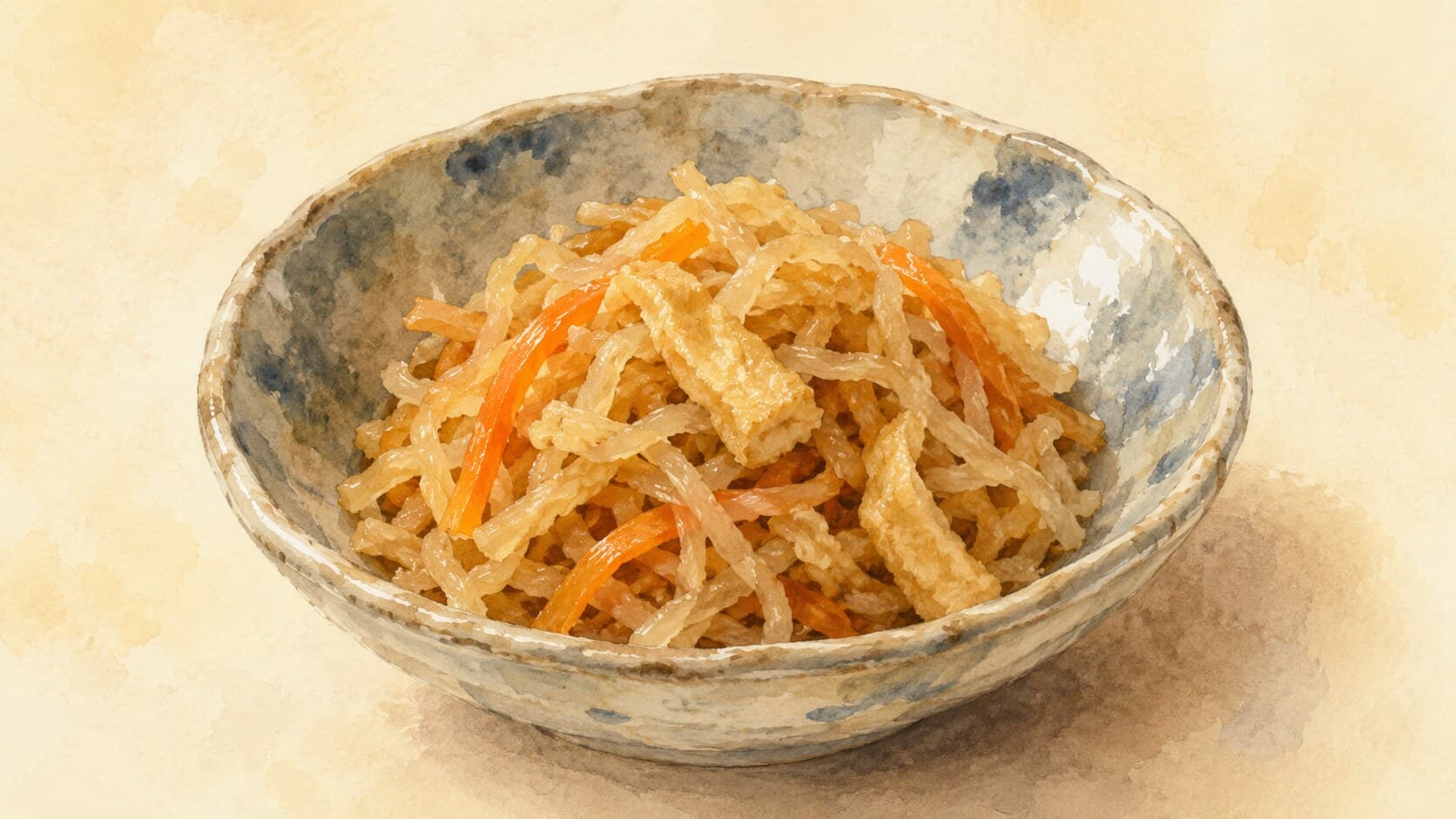
Ingredients
- 100 g dried daikon strips
- 1 medium carrot, julienned
- 2 pieces abura-age, sliced
- 2 tbsp soy sauce
- 2 tbsp mirin
- 1 tbsp sake
- 300 ml dashi broth
Steps
Soak the dried daikon strips in cold water for about 20 minutes to rehydrate them, which helps soften their texture and enhance their flavor.
Drain the rehydrated daikon and combine it in a pot with the julienned carrot, sliced abura-age, soy sauce, mirin, sake, and dashi broth.
Bring the mixture to a gentle simmer over medium heat. Cook for 10-15 minutes, allowing the liquid to reduce and absorb into the vegetables.
Once the liquid is mostly absorbed, remove the pot from heat and let it cool slightly before serving to allow the flavors to meld.
Why this works
The technique of rehydrating dried daikon strips is essential for achieving the right texture. By soaking them in cold water, you allow them to absorb moisture, making them tender and flavorful. This process enhances their taste and prepares them to better absorb the flavors of the accompanying ingredients during simmering. The combination of soy sauce, mirin, sake, and dashi creates a savory and slightly sweet balance that complements the natural flavors of the daikon and carrot. If the mixture seems too dry before the cooking time is up, add a splash of dashi to ensure the vegetables remain moist and flavorful. This dish is a delicious side and introduces the technique of dried-vegetable rehydration, making it a perfect learning experience for home cooks.
Common mistakes
Throwing away the soaking water.
Target: Save the cold-water soak from the kiriboshi daikon (Japanese sun-dried shredded daikon) and use part of it in the simmer.
Why it matters: The soak isn't waste water — it carries the concentrated sweetness and umami that came back out of the dried strips. Sun-drying drops the daikon's water content from about 95% to around 16%, concentrating sugars and amino acids; rehydration pulls a portion of those flavors back into the water. Dumping it down the drain throws away the most distinctive thing about this dish.
What to do: Soak in just enough cold water to cover (about 1 part dried strips to 3 parts water). Lift the daikon out, squeeze lightly, and use 100–150 ml of that soak as part of the simmering liquid in place of an equal amount of dashi.
Hot-water rehydration.
Target: Cold water, 15–20 minutes, just to cover. Daikon should feel tender enough to bend but still have a slight chew.
Why it matters: Hot water rehydrates fast but pulls too much of the concentrated sweetness out of the strips and into the water — the daikon goes soft and bland, the soak becomes oddly strong, and you've shifted the flavor balance without realizing it. Cold water rehydrates slowly and evenly, keeping more of the flavor inside the strip.
What to do: Use cold tap water. If the strips still feel tough at 15 minutes, give them 5 more, not heat.
Skipping the dry-stir-fry before adding liquid.
Target: After rehydrating and squeezing, stir-fry the daikon with the carrot and abura-age (deep-fried thin tofu) in a teaspoon of sesame oil for 1–2 minutes before adding dashi and seasonings.
Why it matters: The brief dry-stir-fry coats the daikon strips with oil, which carries soy sauce and mirin into the fibers as they simmer. Skipping this step lets the daikon sit in liquid and absorb water-soluble flavor only — the seasonings stay on the surface rather than penetrating. Most published Japanese recipes call for this oil step explicitly; weaker recipes drop it.
What to do: Heat a teaspoon of sesame or neutral oil in the pot. Add daikon, carrot, and abura-age. Stir 1–2 minutes until everything glistens, then pour in dashi, soy sauce, mirin, and sake.
Cooking the liquid completely dry.
Target: Stop when about 1–2 tablespoons of glossy liquid remain at the bottom of the pot. The dish should look glazed, not soupy and not bone-dry.
Why it matters: Cooking past dry concentrates salt to the point the dish tastes harsh, and the daikon's surface starts to scorch on the pot. Stopping at a glaze leaves the vegetables coated in seasoned liquid that thickens further as the dish cools — and Japanese simmered side dishes always deepen overnight in the fridge.
What to do: Watch the pot in the last 3–4 minutes. When you tilt it slightly and the liquid runs in a thin streak rather than pooling, turn off the heat. Let rest 10 minutes uncovered before serving, or refrigerate for next-day flavor.
What to look for
- Daikon after the cold soak: pale amber, bendy without snapping, slightly springy when squeezed. If still wiry, soak 5 more minutes. If mushy and pale, you over-soaked or used hot water.
- The dry stir-fry stage: strips glossy with oil, faint nutty sesame smell, no liquid in the pot yet. This is where the oil-soluble flavors will set up.
- Mid-simmer (around 10 minutes): liquid reduced by about half, color of the daikon deepens toward amber-tan, abura-age has plumped and softened. A gentle bubbling, not a hard boil.
- Finished and cooling: thin glossy liquid remaining, vegetables glazed not soaked, distinct umami-sweet aroma. The dish is ready warm but is traditionally better the next day after the seasoning has equalized.
A note on history
Kiriboshi daikon translates literally as "cut and dried daikon" — strips of daikon thinly sliced and sun-dried for preservation. The technique took hold during the Edo period (1603–1868), when farmers in places like Owari (now Aichi Prefecture) found that sun-drying not only extended the radish's shelf life through winter but concentrated its sweetness and umami in the process (OYAOYA: history of kiriboshi daikon, Food in Japan: Kiriboshi daikon). The dish became a staple of common-people cooking precisely because dried daikon kept for months and could carry a household through lean stretches. Today around 90% of Japan's kiriboshi daikon comes from Miyazaki Prefecture, where the technique was carried after the Meiji period.
Get the essays in your inbox — free
Weekly notes on flavor, fermentation, and food history — the writing behind the Atlas of Flavor. No spam; unsubscribe anytime.