
Kibbeh bil Sanieh
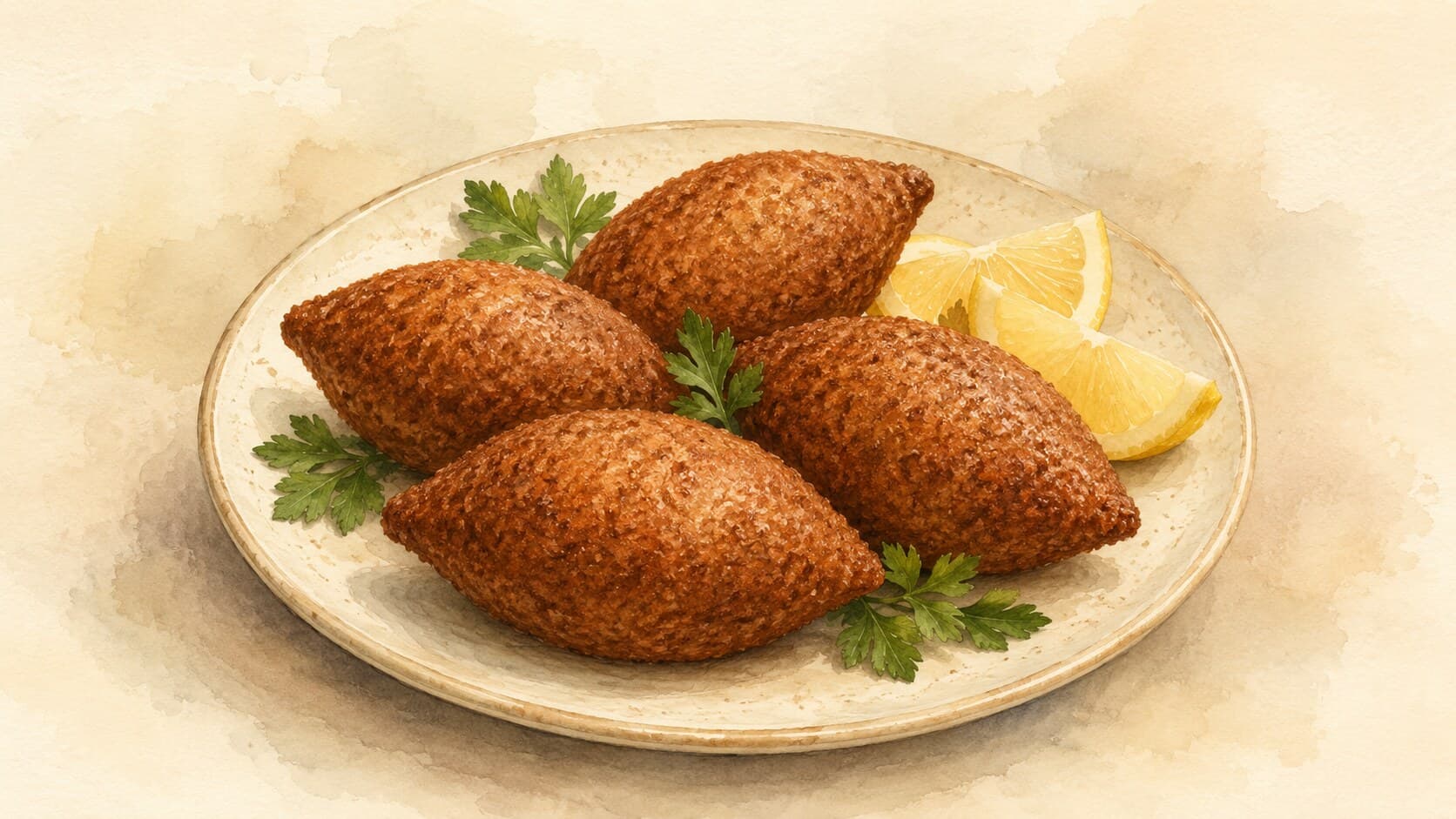
Kibbeh bil Sanieh is a two-layer baked dish featuring a bulgur and meat shell filled with a spiced meat and pine nut mixture.
Contents (5 sections)▾
Ingredients
- 500 g fine bulgur
- 500 g ground beef or lamb
- 2 medium onions, finely chopped
- 1 cup pine nuts
- 1/2 cup water
- 1 tsp allspice
- 1 tsp cinnamon
- 1 tsp salt
- 1/2 tsp black pepper
- 1/4 cup olive oil
- 2 tbsp tomato paste
- 1 tbsp fresh mint, chopped
- 1 tbsp parsley, chopped
- to taste salt and pepper
Steps
Preheat your oven to 180°C (350°F). This will ensure that the kibbeh cooks evenly and develops a golden crust.
Soak the fine bulgur in water for about 30 minutes until it absorbs the moisture and softens.
In a skillet, heat 2 tablespoons of olive oil over medium heat. Add the chopped onions and sauté until translucent, about 5 minutes.
Add the ground meat to the skillet, cooking until browned. Stir in the tomato paste, allspice, cinnamon, salt, and pepper, and cook for another 5 minutes.
In a separate pan, toast the pine nuts in a tablespoon of olive oil until golden brown. Add them to the meat mixture along with the mint and parsley.
Once the bulgur is ready, combine it with the remaining ground meat, forming a dough-like consistency. Reserve a portion for the top layer.
Press half of the bulgur mixture into a greased baking tray, creating a base layer. Spread the meat filling evenly over this layer.
Cover the filling with the remaining bulgur mixture, pressing it down firmly. Score the top into diamond shapes for even cooking and presentation.
Drizzle the top with olive oil and bake in the preheated oven for 45 minutes until the top is deep mahogany and crispy. Doneness is the temperature, not the colour or the clock: probe the meat layer at the centre of the tray and confirm it has reached 71 °C / 160 °F before serving — if it is under, return it to the oven and re-check.
Why this works
The technique of layering allows the flavors to meld beautifully while providing a satisfying texture contrast. The bulgur acts as a healthy, nutty base that absorbs the seasoning from the meat filling. The scoring before baking is crucial; it helps with even cooking and allows for easy serving. If the kibbeh seems too dry, consider adding a bit more olive oil or covering it with foil in the first half of the baking time to retain moisture. Conversely, if it seems too moist before cooking, ensure the bulgur is adequately soaked and drained, adjusting the water amount as needed. This dish exemplifies the balance of spices typical in Levantine cuisine, ensuring a robust flavor that delights the palate.
Variant note. This recipe is the baked tray form of kibbeh — bulgur-and-meat shell sandwiching a spiced-meat-and-pine-nut filling, oven-baked through. The dish is canonical across Lebanon, Syria, and Palestine; soft framing as 'a Levantine baked kibbeh.' Other forms of kibbeh exist in the Levantine repertoire but are not covered here.
Common mistakes
Under-soaked or over-soaked bulgur.
Target: Fine bulgur (cracked parboiled wheat, fine grade) absorbs water in 20–30 minutes — it should be tender but still hold its shape between your fingers, not mushy.
Why it matters: Under-soaked bulgur stays gritty inside the shell after baking and the layers crack. Over-soaked bulgur (left in standing water for an hour or more) goes pasty and the shell loses structure — it slumps off the meat layer when sliced.
What to do: Soak in cold water just to cover. Squeeze out excess water firmly before mixing with the raw meat for the shell — wet bulgur means a doughy shell.
Pink centers in the meat layer.
Target: Ground meat should reach 71°C / 160°F throughout the center filling — no pink at the cut. Total bake time 40–45 minutes at 180°C is correct for a 4–5 cm tray; check with an instant-read thermometer pushed into the meat layer through the score line.
Why it matters: Ground beef and lamb redistribute surface bacteria through the whole interior during grinding — unlike a whole steak, the middle of ground meat is not sterile. A baked kibbeh tray hides the meat layer under a bulgur crust; you cannot judge doneness by appearance alone. This is BLOCK-level safety: undercooked ground meat carries a real risk of foodborne illness.
What to do: Probe the meat layer at the center of the tray, not the edge. If it reads under 71°C, return to the oven for another 5–8 minutes and re-check. If the top is already deep mahogany, cover loosely with foil while the inside catches up.
Skipping the pine-nut toast.
Target: Pine nuts (small ivory seeds from stone pines, traditional Levantine garnish) golden-brown all over before they join the filling, about 2–3 minutes in olive oil over medium heat.
Why it matters: Raw pine nuts taste resinous and chalky inside the cooked filling. The toast triggers Maillard browning (the dry-heat reaction between proteins and sugars that builds roasted, nutty flavor) on the outside of each nut — that's where the buttery, sweet flavor people associate with pine nuts actually lives.
What to do: Toast in a dry or barely-oiled pan, shake constantly, pull off heat the moment they smell nutty — they keep darkening from residual heat. Burnt pine nuts taste bitter and waste expensive ingredient.
Slicing the tray straight out of the oven.
Target: Rest the tray uncovered for 8–10 minutes before cutting along the scored diamonds.
Why it matters: Hot from the oven, the bulgur shell is still steaming and structurally soft — slices crumble, filling slides out, and the layered look that defines this dish is lost. The 8–10 minute rest lets the bulgur firm up and the filling cool off its peak, so less juice runs out when it is sliced.
What to do: Pull from the oven, set on a rack, do not cover (steam softens the crust you just built). Cut along the pre-scored lines with a sharp knife held vertically — straight down, not sawing.
What to look for
- Bulgur after soaking and squeezing: tender, holds shape between fingers, no standing water. If it crumbles dry, soak 5 more minutes. If water drips out, squeeze harder.
- Shell mix ready to press: smooth, slightly tacky, holds a thumbprint without cracking. This is the "dough-like consistency" the recipe calls for. Dry shells crack along the diamond score lines during baking.
- Surface at the end of bake: deep mahogany brown, not pale tan and not black. This is Maillard browning on the bulgur surface — the same reaction that browns toast. A pale tray means the oven is under temperature or the bake is short.
- Center temperature at slicing: 71°C / 160°F minimum, no pink in the meat layer at the cut. Use a probe thermometer, not your eyes — the bulgur shell makes visual judgment unreliable.
A note on history
Kibbeh bil sanieh translates literally as "kibbeh in a tray" — a baked variant of a dish that the broader kibbeh family belongs to the older Levantine and Mesopotamian tradition of pounded-meat-and-grain preparations. The earliest written description of a kibbeh-like preparation appears in the 18th-century Arabic dictionary Taj al-'Arus min Jawahir al-Qamus, which describes a disk of ground meat and rice flour prepared in al-Sham — the historical name for the Levant (Hungry Paprikas, Cultural Kitchen Chronicles). The 1885 Beirut cookbook Ustadh al-Tabbakhin by Khalil Khattar Sarkis recorded fifteen kibbeh variations including the tray-baked form. Today the dish is shared across Lebanon, Syria, Jordan, and Palestine, with regional differences in spice ratio, filling, and the depth of the tray.
Get the essays in your inbox — free
Weekly notes on flavor, fermentation, and food history — the writing behind the Atlas of Flavor. No spam; unsubscribe anytime.