
Japanese Curry Rice
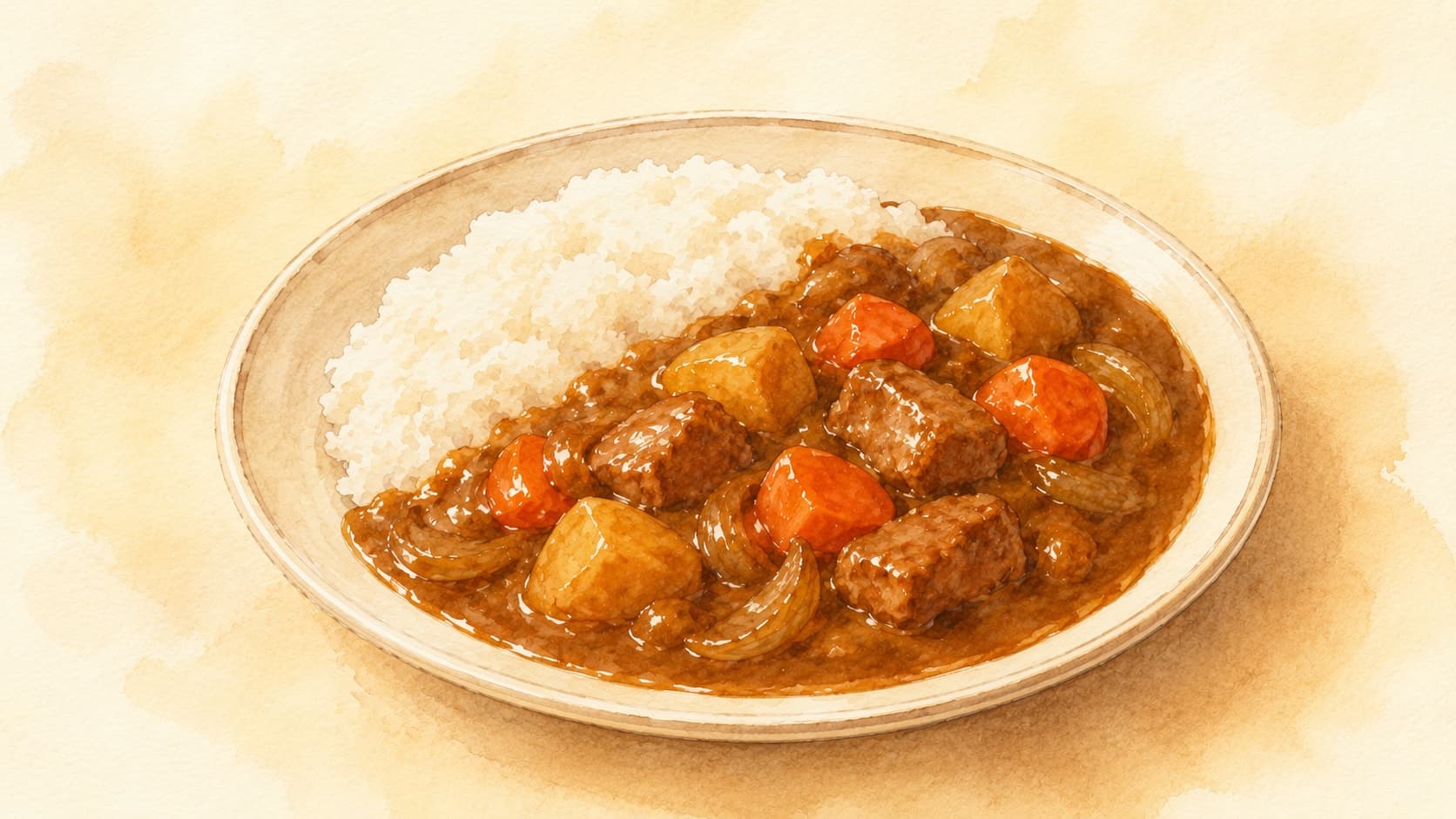
Japanese Curry Rice consists of simmered vegetables in a thick, savory sauce, served over rice. It emphasizes sauce thickening and flavor layering.
Contents (5 sections)▾
Ingredients
- 300 g chicken thighs, diced
- 2 medium potatoes, peeled and cubed
- 1 large carrot, sliced
- 1 medium onion, chopped
- 600 ml water
- 100 g Japanese curry roux
- 2 tbsp vegetable oil
- Salt to taste
- Cooked rice, for serving
Steps
In a large pot, heat 2 tbsp of vegetable oil over medium heat. Add the chopped onion and sauté for about 3 minutes until soft and translucent.
Add the diced chicken to the pot and cook for 5-7 minutes, stirring occasionally, until the chicken is browned on all sides.
Stir in the cubed potatoes and sliced carrots, cooking for an additional 2-3 minutes to slightly soften the vegetables.
Pour in 600 ml of water, bring to a boil, then reduce the heat to low and simmer for about 10 minutes or until the vegetables are tender.
Break the curry roux into pieces and add it to the pot. Stir until completely dissolved and simmer for another 5 minutes to thicken the sauce.
Season with salt to taste. Serve the curry over cooked rice and enjoy!
Why this works
The success of Japanese Curry Rice lies in the balance of flavors and the technique used to prepare the roux. By browning the chicken and sautéing the onions first, you're building a flavor base that enhances the curry's depth. The addition of vegetables like potatoes and carrots adds texture and absorbs the umami-rich sauce, creating a harmonious dish. If the curry seems too thick after adding the roux, simply add a little more water until it reaches your desired consistency. Conversely, if it's too watery, allow it to simmer a little longer to help it thicken. This dish is not only forgiving but also encourages personal adjustments, making it a family favorite for any occasion.
Common mistakes
Adding the curry roux (Japanese block-form roux — flour, fat, curry spices, and umami seasonings pressed into bricks) while the pot is still at a full boil.
Target: Take the pot off the heat completely. Wait until the bubbling stops before adding the broken roux pieces.
Why it matters: The starch in the roux gelatinizes (the moment thickening "switches on") best at 70-90°C — not at a rolling boil, which can create lumps and a grainy texture. Boiling temperatures also break down the flavor compounds in the curry spices. Off-heat dissolution gives a smooth, glossy sauce.
What to do: Turn the burner off. Move the pot to a cool spot for 1-2 minutes. Break the roux into pieces, drop them in, and stir until fully dissolved. Then return to low heat for the final simmer.
Not browning the onions long enough.
Target: Sauté onions until they go past translucent and reach a soft amber-gold (8-12 minutes, not 3).
Why it matters: The recipe's 3-minute sauté gets you only to translucent — not the Maillard browning (the dry-heat reaction between sugars and amino acids that creates deep, savoury color and aroma) and caramelization that gives Japanese curry its signature deep, sweet base. Restaurant-grade Japanese curry often uses onions cooked 30-45 minutes; even doubling the home time makes a visible difference.
What to do: Take the onions to soft gold before adding any other ingredient. If they're catching, lower the heat — slow is fine. Time spent here pays dividends in the final sauce.
Undercooked chicken — pink at the center.
Target: Chicken cubes must be opaque throughout, juices run clear, internal temperature 75°C (165°F). No pink in the middle of the largest piece.
Why it matters: Curry rice uses meat that must be cooked through — chicken, pork, or beef. The curry sauce hides color, so it is easy to assume "it has been simmering, it must be done." Bone-in or larger pieces especially need a temperature check or pierce test. Pink chicken in curry is a real food-safety risk regardless of how thick the sauce is.
What to do: Cut a thick piece in half after the 10-minute simmer. If any pink remains, simmer 3-5 more minutes and check again. For thigh meat in cubes, 10-12 minutes at a gentle simmer is typical.
Sauce too thin or too thick after the roux.
Target: A glossy coating that clings to a wooden spoon and slowly drips off — not a soup, not a paste.
Why it matters: The roux brick is calibrated to a specific water volume. Add too much water and it stays runny; too little and it sets to a paste on the rice. Both are easy to correct, but only if you check before serving.
What to do: After the final 5-minute simmer, run a wooden spoon through. If the trail closes in under a second, simmer another 3-5 minutes. If it sets like glue, add water 50 ml at a time, stirring, until the spoon test passes.
What to look for
- Onions before adding chicken: soft, glossy, edges going amber-gold, sweet onion aroma. Not translucent-and-stop — keep going until color appears.
- Chicken after browning: outsides whitened and lightly browned in patches, no raw-pink surface anywhere. Inside will finish in the simmer.
- At the moment the roux dissolves: sauce visibly thickens and turns glossy mahogany-brown within 30 seconds of stirring; small bubbles rise lazily. This is when you know the starch has gelatinized.
- Final pot before serving: deep brown, glossy, coats the back of a spoon; vegetables tender to a knife tip; a piece of chicken cut in half is fully opaque inside. If anything inside is still pink, simmer further before serving.
A note on history
Japanese curry rice (kare raisu) descends from British naval curry, not directly from Indian curry. Curry was introduced to Japan in the late 19th century by Anglo-Indian officers of the British Royal Navy, and during the Meiji period (1868-1912) it was reinvented to suit Japanese ingredients and palates — the British-style flour-thickened curry sauce paired with short-grain rice. By the late 1960s, supermarket curry roux blocks made the dish a household staple. (Wikipedia: Japanese curry)
Get the essays in your inbox — free
Weekly notes on flavor, fermentation, and food history — the writing behind the Atlas of Flavor. No spam; unsubscribe anytime.