
Jansson's Temptation
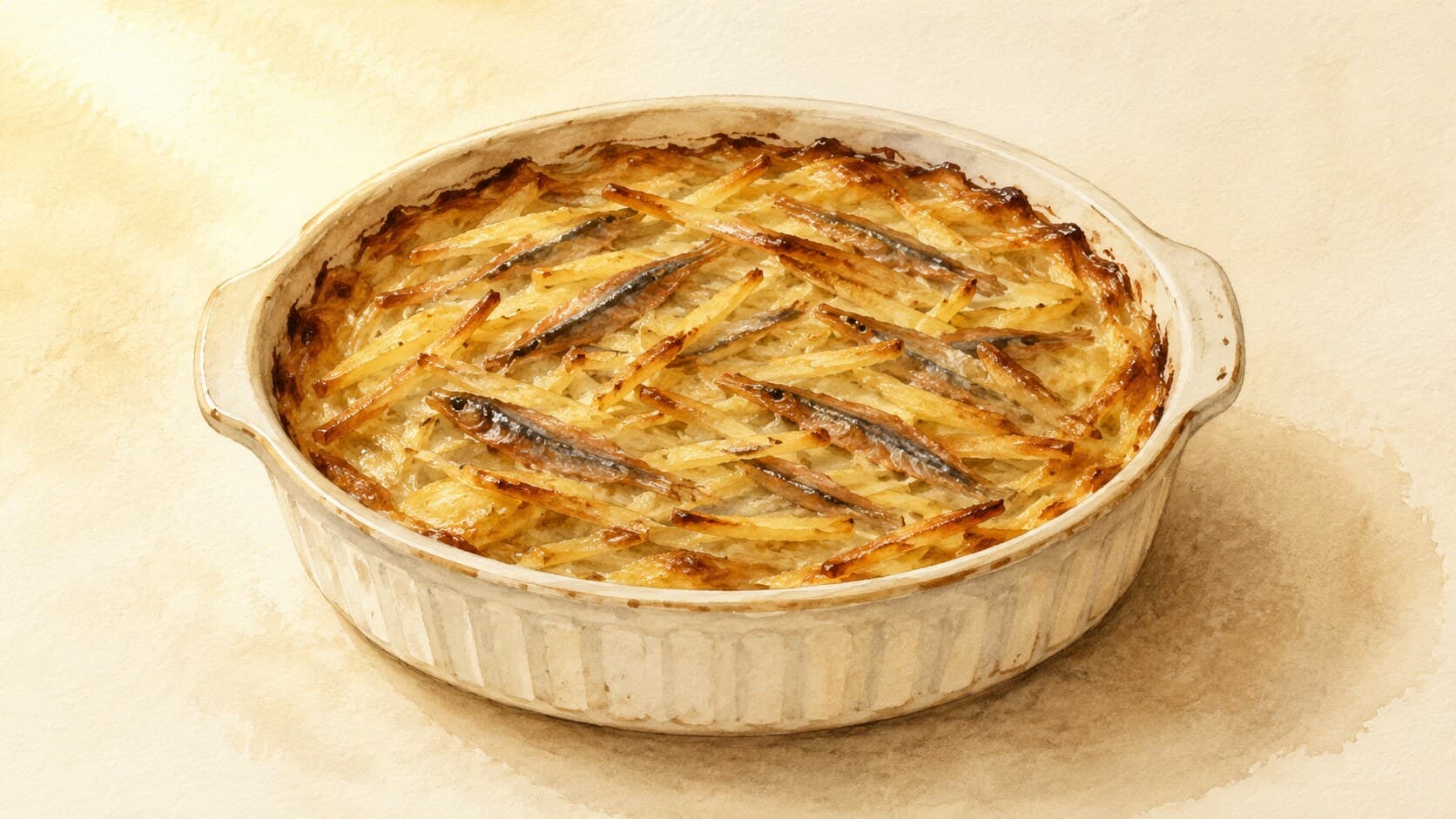
Jansson's Temptation is a Swedish potato gratin made with layers of potatoes and anchovies, showcasing flavor balance and texture contrast.
Contents (5 sections)▾
Ingredients
- 1 kg potatoes, peeled and thinly sliced
- 2 onions, finely chopped
- 100 g anchovy fillets, drained and chopped
- 300 ml heavy cream
- 200 ml milk
- 50 g butter
- Salt, to taste
- Black pepper, to taste
Steps
Preheat the oven to 200°C (392°F). This temperature ensures the gratin bakes evenly and achieves a golden crust.
In a large frying pan, melt 25 g of butter and sauté the chopped onions over medium heat for 5-7 minutes until they become translucent.
In a greased baking dish, layer half of the sliced potatoes, followed by half of the sautéed onions and half of the chopped anchovies. Repeat the layers.
In a separate bowl, mix 300 ml of heavy cream, 200 ml of milk, 1 teaspoon of salt, and 1/2 teaspoon of black pepper. Pour this mixture over the layered potatoes.
Dot the top with the remaining butter and bake in the preheated oven for 45-50 minutes, until the top is golden brown and the potatoes are tender when pierced with a fork.
Let the gratin rest for 10 minutes before serving. This helps the layers set, making it easier to serve.
Why this works
The combination of thinly sliced potatoes and anchovies creates a rich, savory flavor, characteristic of Nordic cuisine. The cream and milk mixture, measured precisely at 300 ml of heavy cream and 200 ml of milk, provides a luscious texture, allowing the potatoes to absorb flavors while keeping them moist during baking. The use of a high baking temperature at 200°C (392°F) is crucial; it helps achieve a beautifully crisp top and ensures even cooking throughout. If the gratin appears too dry while baking, you can add a splash more milk or cream to prevent it from burning and to maintain moisture. Conversely, if it seems too watery, consider increasing the baking time by an additional 5-10 minutes to help evaporate excess liquid, ensuring that you achieve the perfect consistency. The time spent resting for 10 minutes post-baking is equally important, allowing the gratin to set properly, which enhances the presentation and serving experience. This dish embodies both tradition and flavor, making it a delightful centerpiece for any gathering.
Common mistakes
Using true anchovies instead of Swedish "ansjovis" (cured sprats).
Target: Swedish-style spiced sprat fillets in brine (the Abba brand is the reference), not Mediterranean salt-cured anchovies.
Why it matters: Swedish ansjovis are sprats cured in a sweet-spice brine (allspice, sandalwood, cloves) — that brine is part of the flavor architecture. Mediterranean anchovies are saltier, fishier, and one-dimensional; they overwhelm the cream and miss the cured-fish warmth that defines the dish.
What to do: Hunt for Swedish or Scandinavian-style spiced sprats. If you can only find anchovies, soak them in cold milk for 15 minutes to mute the salt and add a pinch of allspice to the cream to approximate the missing spice profile.
Potatoes sliced too thick.
Target: 3-5 mm matchsticks (julienne) or thin slices — even thickness.
Why it matters: Jansson's needs the potato starch to release into the cream and bind the gratin into a single soft mass. Thick slices stay separate, the cream doesn't penetrate, and the centre stays raw while the top burns. Even thickness means even doneness.
What to do: Use a mandoline or steady knife work. Aim for the thickness of a wooden matchstick. Don't rinse — you want the surface starch.
Pouring all the cream in at once before baking.
Target: Add about two-thirds of the cream initially; pour the remaining third halfway through baking.
Why it matters: All the cream at once can drown the top layer of potato, preventing the browned crust from forming. Reserving some cream lets the surface dry and brown first, then re-moistens the gratin for the long cook.
What to do: Pour two-thirds at the start. After 25 minutes, when the top has begun to colour, pour the rest down the side of the dish (not over the top).
Pulling it out too early — undercooked centre.
Target: Tip of a knife slides through the centre with no resistance; cream is fully absorbed and barely bubbling; top is deep golden, not pale.
Why it matters: Jansson's is a baked-through dish — the cured fish, the dairy, and the potato all need to be hot all the way through for safety and texture. Underbaked, the centre is starchy and the cream tastes raw; the cured sprats also need full heat penetration. Pale top = pale flavor.
What to do: Test the centre with a knife tip. If there's any resistance or the cream still pools, give it another 10-15 minutes. Cover loosely with foil if the top is browning faster than the centre is cooking.
What to look for
- Sliced potatoes before layering: pale ivory, slightly tacky from surface starch, edges not curling. Dry potatoes won't bind; wet (rinsed) potatoes won't either.
- After 25 minutes in the oven: top beginning to gold, cream visibly bubbling at the edges, a faint sweet-spice aroma. This is the moment to add reserved cream.
- Fully baked: deep gold top, cream absorbed and barely bubbling, knife tip slides through with zero resistance. The gratin should feel set, not loose.
- After the 10-minute rest: the spoon lifts a clean wedge that holds shape briefly before sagging. If it pours like soup, give it another 5 minutes of rest.
A note on history
Jansson's Temptation (Janssons frestelse) is a Swedish Christmas-table classic whose origin is genuinely contested. It is often said to be named after Pelle Janzon, a food-loving Swedish opera singer of the late 19th century, though food writer Jens Linder considers any direct connection unlikely; another theory ties the name to a 1929 Swedish film of the same title. The recipe was first published in 1940 and quickly became part of the traditional julbord (Christmas table) spread. (sweden.se, Wikipedia)
Get the essays in your inbox — free
Weekly notes on flavor, fermentation, and food history — the writing behind the Atlas of Flavor. No spam; unsubscribe anytime.