
Indian Tadka Base
Master the foundational Indian Tadka Base for rich and flavorful dishes with this easy recipe.
Contents (5 sections)▾
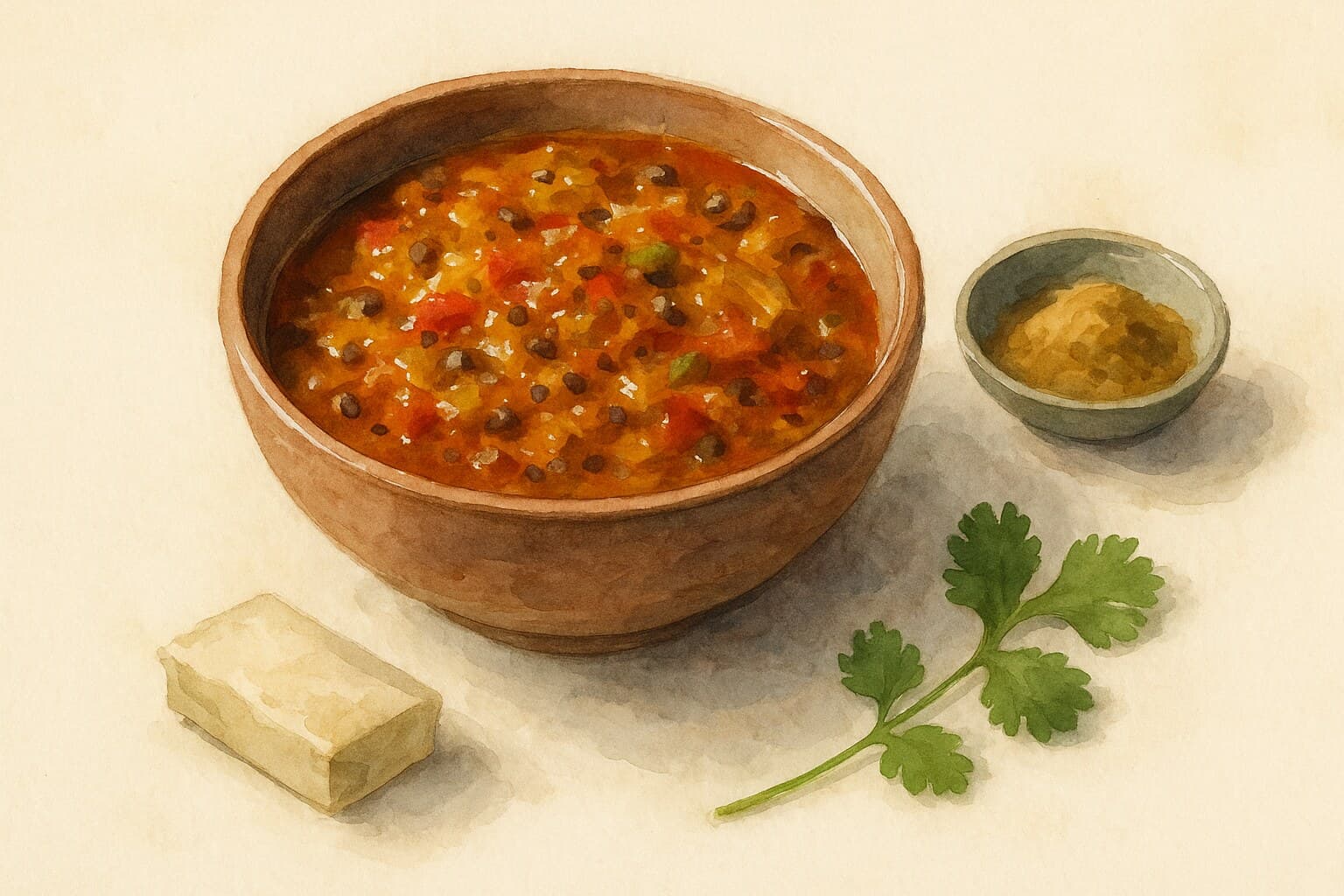
Ingredients
- 2 tbsp oil (mustard or vegetable)
- 1 medium onion, finely chopped
- 4 cloves garlic, minced
- 1-inch piece ginger, grated
- 2 green chilies, slit lengthwise
- 1 tsp cumin seeds
- 1 tsp mustard seeds
- 1/2 tsp turmeric powder
- 1 tsp red chili powder
- 1 tsp garam masala
- 1 cup chopped tomatoes
- Salt, to taste
Steps
In a pan, heat the oil over medium heat. This helps the spices release their flavors effectively.
Add the cumin and mustard seeds to the hot oil. Cook until they crackle, about 30 seconds, which enhances the aroma.
Stir in the chopped onion and sauté for 5-7 minutes until golden brown. The caramelization of onions adds depth to the tadka.
Add garlic, ginger, and green chilies; cook for another 2-3 minutes until fragrant. These ingredients contribute to the umami profile.
Sprinkle in turmeric, red chili powder, garam masala, and salt; mix well and cook for 1-2 minutes to toast the spices.
Add chopped tomatoes and simmer for 5-7 minutes until they break down. This forms the base of the curry.
Why this works
The Indian Tadka Base is a crucial element in many Indian dishes, bringing layers of flavor through a combination of spices and aromatics. Starting with oil, the heating allows the spices, like cumin and mustard seeds, to bloom, releasing essential oils that flavor the dish. Sautéing onions until golden adds sweetness and provides a rich backdrop for the other flavors. If the mixture seems too dry, you can always add a splash of water to prevent burning. This base acts as a flavor powerhouse, making any subsequent additions, like vegetables or proteins, taste more complex and satisfying. The balance of spices can be adjusted to your liking; if it feels too spicy, simply add more tomatoes or a splash of cream to mellow it out. Ultimately, mastering this technique will revolutionize your Indian cooking, ensuring that each dish is imbued with a depth of flavor that can be enjoyed by all.
Common mistakes
Dropping spice seeds into oil that has not actually reached blooming temperature.
Target: Oil hot enough that a single cumin seed dropped in sizzles and rises within about a second — roughly 160–180 °C.
Why it matters: Spices bloom (release their flavor when heated in oil, where the aromatic compounds are oil-soluble and dissolve into the fat) only in a narrow heat range. Cold oil never extracts the aroma; you end up with raw, gritty spices. Smoking-hot oil burns them in seconds and turns the whole tadka acrid.
What to do: Use a small piece of seed as a test before committing the rest. Once it sizzles cleanly, add the cumin and mustard seeds and move quickly through the rest of the sequence. Keep a small lid nearby — once mustard seeds pop, they splatter, and the lid tilted as a partial cover protects you while still letting steam out.
Adding ground spices (turmeric, chili powder, garam masala) before the onions soften.
Target: Add ground spices only after the onions are translucent and just turning golden, and turn the heat down before the powders go in.
Why it matters: Ground spices burn far faster than whole seeds. Dropped into very hot oil with a hard surface (the pan bottom rather than a wet onion mass), they scorch in seconds and produce a bitter, burnt note that no amount of tomato will fix.
What to do: Build the wet base first — onions, garlic, ginger — until soft and fragrant, lower the heat, then stir in the ground spices for 30–60 seconds with the wet mixture as a buffer.
Skipping the tomatoes' breakdown stage and moving on too early.
Target: Tomatoes cooked until they collapse, lose their raw smell, and the oil separates back out around the edges of the pan.
Why it matters: Tomato gives the tadka its acid and umami backbone, but only after the cell walls break down and the water cooks off. Adding more ingredients on top of half-cooked tomato leaves a raw, sharp edge in the finished dish.
What to do: Cook on medium until you see oil pooling at the edges of the masala. That visual cue — bhuna in Hindi cooking — is the signal that the base is finished.
Reaching for olive oil or butter because they are familiar.
Target: A neutral high-smoke-point oil (mustard, sunflower, peanut) or ghee (clarified butter with the milk solids removed).
Why it matters: Tadka asks the fat to hit blooming temperature without breaking down. Olive oil smokes too low; butter's milk solids burn. Mustard oil and ghee not only tolerate the heat — they actively carry the aroma in a way neutral oils alone cannot.
What to do: Use ghee for richness, mustard oil for sharp character, sunflower or peanut for a clean base. If using mustard oil, heat it until it just starts to smoke once, then drop the heat — this mellows its raw pungency.
What to look for
- Hot oil before the seeds go in: a faint shimmer on the surface, a single test seed rising and sizzling cleanly. No smoke, no roiling — that is the bloom window.
- Whole seeds in the oil: cumin browns and turns fragrant within 10–20 seconds; mustard seeds pop and dance. When the popping slows, move on immediately.
- Onions at the right stage: edges golden, body translucent, pulling away from the pan as a single mass. This is when the sugars are caramelized but not bitter.
- Tomatoes ready: collapsed into a thick paste, deep red-orange, oil pooling around the edge of the masala. That oil ring is the visual sign that the base is finished and ready to take a protein, lentil, or vegetable.
A note on history
Tadka — also called chaunk (Hindi), tarka (Urdu/Punjabi), vaghaar (Gujarati), thalippu (Tamil), thalimpu or poppu (Telugu), oggaraṇe (Kannada), and baghar in other registers — is one of the oldest and most defining techniques in South Asian cooking. It belongs to a continuous culinary tradition across India, Pakistan, Bangladesh and Sri Lanka, where whole spices are briefly fried in hot fat to liberate their aromatic compounds before being added to a finished dish, or used as the base on which a curry is built (EZPZ Cooking: What is Tadka/Tarka/Chaunk, Silk Road Recipes: Indian Tadka). The Hindi word chaunk echoes the sizzling sound the technique makes when oil meets a cool dish. The practice travelled with the South Asian diaspora — in the Caribbean, chunkay or chonkay, brought by Indian indentured labourers, is a direct descendant. Because hot oil splatters when seeds are added, treat the pan with the same care you would a small frying job: lid within reach, hands and sleeves clear.
Get the essays in your inbox — free
Weekly notes on flavor, fermentation, and food history — the writing behind the Atlas of Flavor. No spam; unsubscribe anytime.