
Iced Matcha Latte
Create a refreshing iced matcha latte at home with rich matcha flavor and creamy milk.
Contents (5 sections)▾
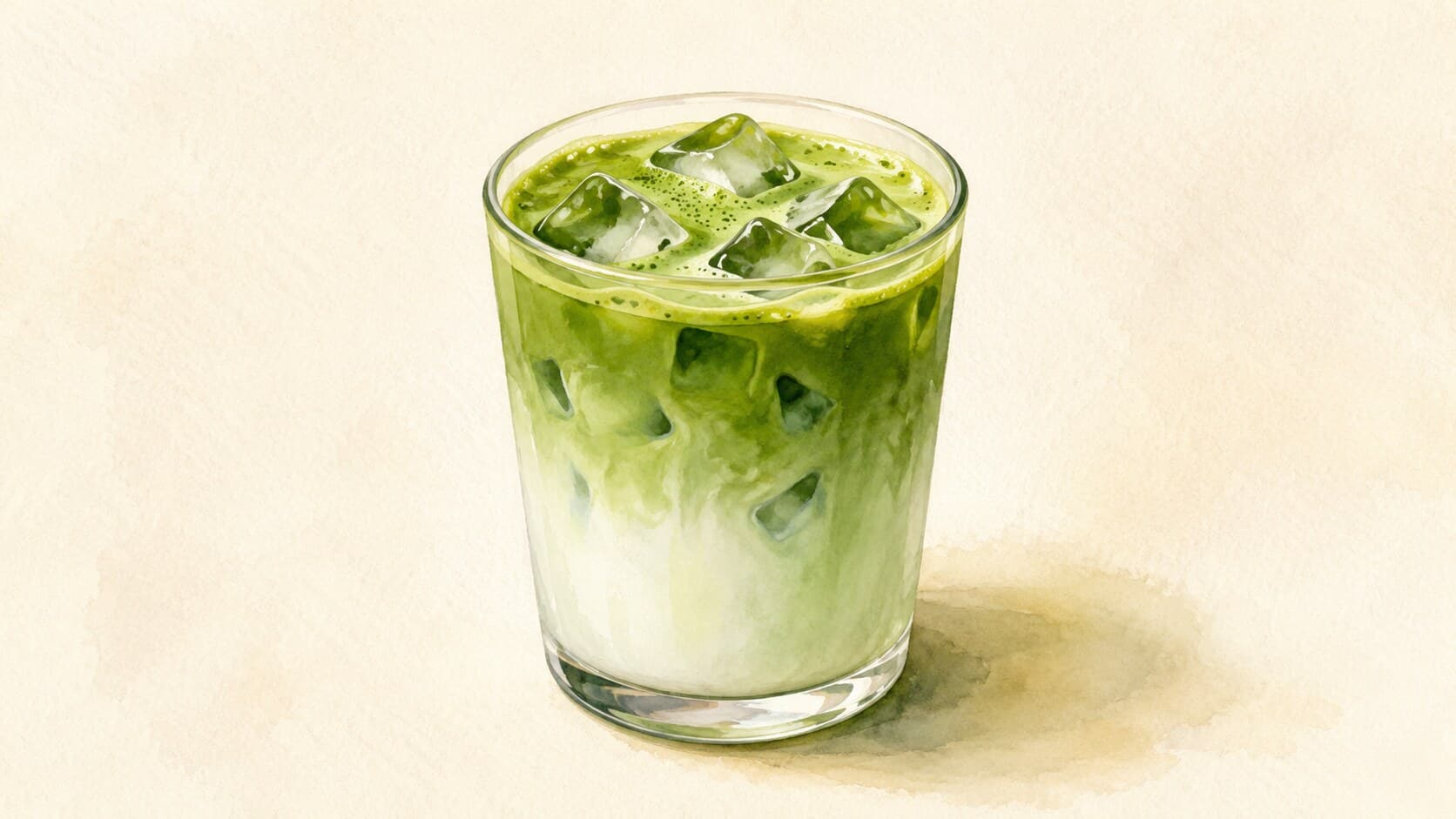
Ingredients
- 2 tsp matcha powder
- 60 ml hot water (not boiling)
- 300 ml milk (dairy or non-dairy)
- 1-2 tbsp sweetener (to taste)
- ice cubes (as needed)
Steps
In a small bowl, whisk the matcha powder with 60 ml of hot water (around 80°C) until smooth and frothy, about 1-2 minutes. This helps dissolve the matcha properly.
In a separate glass, add ice cubes to fill it halfway. Pour the whisked matcha over the ice.
In a small saucepan, heat the milk on medium heat until warm but not boiling (around 60°C). Stir in the sweetener until dissolved.
Gently pour the warmed milk over the matcha ice in the glass. Use a spoon to create a layered effect.
Serve immediately and stir before drinking to mix the layers.
Why this works
The key to a perfect iced matcha latte lies in the balance of flavors and temperatures. Whisking the matcha with hot water helps to release its vibrant flavor and avoids clumping. Using water that's too hot can make the matcha bitter, while water that's too cool won't dissolve it properly. When adding milk, warming it slightly enhances sweetness and ensures a creamy texture. However, if the milk seems too frothy, let it cool slightly before pouring. The ice dilutes the drink as it melts, balancing the stronger matcha flavor with the creamy milk, ensuring a refreshing experience. This method allows for a layered look, visually appealing and showcasing the rich green color of matcha against the white milk. If the layers don't form well, try pouring the milk slowly over the back of a spoon to achieve more distinct layers.
Common mistakes
Using boiling water to whisk the matcha.
Target: Water at roughly 70–80 °C, well below a rolling boil.
Why it matters: Matcha contains delicate amino acids (especially L-theanine, the compound behind matcha's mellow umami) and catechins (the green-tea polyphenols responsible for both color and bitterness). Boiling water scorches the leaf powder, pulls extra bitterness from the catechins, and dulls the vivid green into a muddy olive.
What to do: Boil the kettle, then leave the lid off for about a minute before pouring, or pour into a cool cup first to drop the temperature.
Skipping the whisking step and dumping powder straight into milk.
Target: A smooth, foamy slurry of matcha and a small amount of hot water, whisked until no grit remains.
Why it matters: Matcha powder does not dissolve — it suspends. Without proper whisking (ideally with a bamboo chasen, the traditional split-bamboo whisk, or a small electric frother), the particles clump and sink as soon as cold milk hits them, leaving a gritty bottom and a pale top.
What to do: Whisk in a small bowl in a quick "M" or "W" motion until the surface is uniformly bright green and lightly foamy. Then build the drink.
Pouring matcha and milk at the same temperature, so they mix instantly.
Target: A warm matcha slurry against very cold milk over ice — the temperature difference helps the layers hold for a moment.
Why it matters: Two liquids at the same density and temperature merge on contact. The visible green-and-white layering relies on the cold, denser milk sitting under the warmer, less dense matcha until you stir.
What to do: Whisk matcha with hot water first, then build over ice and cold milk. Stir to combine just before drinking, not before serving.
Buying culinary-grade matcha and expecting ceremonial color and aroma.
Target: A bright spring-green powder labeled ceremonial or premium ceremonial grade if you want vivid color and mellow umami; culinary grade is fine for baking but not for a drink where the powder is the headline.
Why it matters: Lower grades are made from older, more mature leaves with higher tannins and a duller color. Over ice and milk, where flavor is already softened, a dull matcha tastes flat and slightly bitter.
What to do: Buy small tins from a roaster or specialist with a recent harvest date. Store sealed, away from light, and use within a few weeks of opening.
What to look for
- Whisked matcha before building: vivid jade green, smooth surface with a fine even foam, no visible grit on the bowl's sides. That tells you the powder is properly suspended.
- The moment cold milk meets the matcha over ice: a clean green-and-white boundary that holds for a few seconds before slowly blurring. Instant marbling means temperatures matched too closely or the milk was poured too fast.
- The drink after a gentle stir: a uniform soft pistachio-green, opaque, no specks floating on top. Floating specks mean the matcha wasn't fully whisked.
- First sip: creamy mouthfeel, vegetal matcha aroma, a hint of grassy bitterness that fades into sweetness. Sharp astringency or chalkiness on the tongue points to overheated water or under-whisking.
A note on history
Matcha itself has deep roots in Japan: powdered green tea arrived from Song-dynasty China in the 12th century and developed into the matcha used in chanoyu (the Japanese tea ceremony) by the 15th–16th centuries, especially in Uji, Kyoto (Wikipedia: Matcha latte, Bean & Bean: Matcha history). The matcha latte itself, however, is a recent creation — a modern café-style adaptation that pairs ceremonial powder with milk, and the iced matcha latte is more recent still, popularized through international café chains and social media in the 2010s and 2020s (Deep Ocean Roastery: Matcha Latte). It is best understood as a contemporary drink that uses a traditional ingredient, not an ancient drink in itself. If you make it at home, keep the milk refrigerated until use and drink within the same day — milk over ice is still milk on the temperature clock.
Get the essays in your inbox — free
Weekly notes on flavor, fermentation, and food history — the writing behind the Atlas of Flavor. No spam; unsubscribe anytime.