
Hobakjeon
Hobakjeon are Korean zucchini pancakes, made by frying coated zucchini slices until crispy and golden, often served as a side dish.
Contents (5 sections)▾
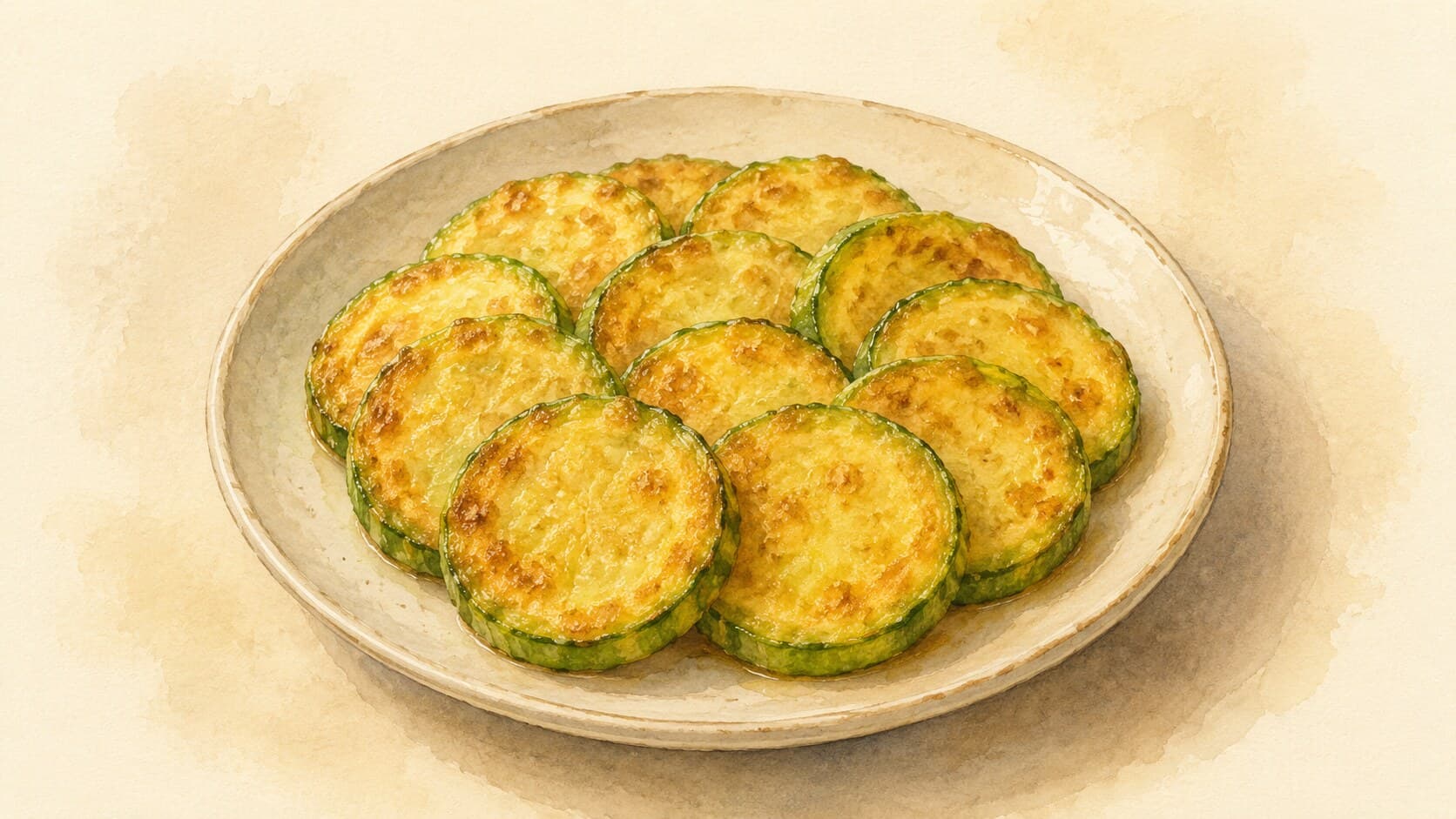
Ingredients
- 2 medium zucchini (about 400g)
- 1/2 cup all-purpose flour
- 2 large eggs
- 1/2 teaspoon salt
- 1/4 cup vegetable oil (for frying)
- Soy sauce (for dipping, to taste)
- Sesame seeds (for garnish, to taste)
Steps
Wash the zucchini and cut them into 1/4 inch thick slices. This thickness ensures they are tender inside while getting crispy edges.
In a bowl, whisk together 2 large eggs and 1/2 teaspoon of salt. This egg mixture acts as a binding agent and provides a rich flavor to the pancakes.
Coat the zucchini slices lightly with 1/4 cup of flour, shaking off any excess. This flour layer helps create a crisp texture when frying.
Heat 1/4 cup of vegetable oil in a non-stick skillet over medium heat (about 180°C or 350°F). Ensure the oil is hot enough (test by dropping a bit of egg mixture; it should sizzle) before adding the zucchini.
Dip each floured zucchini slice into the egg mixture, allowing excess to drip off, then place it in the skillet. Fry for about 3-4 minutes on each side until golden brown and crispy.
Remove the pancakes from the skillet and drain on paper towels to remove excess oil. Serve warm with soy sauce for dipping.
Why this works
Coating sliced zucchini in flour and then in beaten egg creates a layer that crisps up when fried. The flour anchors the egg for better adherence. Frying at 180°C (350°F) cooks the zucchini through without burning, achieving a golden color. If the zucchini is too watery, add a little flour to absorb moisture and prevent sogginess. Use a wide spatula when flipping to support the pancakes and reduce breakage. The balance of moisture and flour is crucial; excess moisture can hinder crisping. Following the specified times and temperatures helps ensure consistent results.
Common mistakes
Skipping the pre-salt of the zucchini.
Target: Salt the cut slices lightly (a pinch per slice) and rest them on a rack or paper towels for 10 minutes before flouring.
Why it matters: Zucchini is roughly 95% water. Slicing exposes the cell walls; salt draws that water out by osmosis (the movement of water from a less-salty area to a saltier one across the cell membrane), so the surface arrives at the pan dry rather than weeping. Wet slices fight the flour and egg coating — the batter slides off, the pan cools, and the result steams instead of frying.
What to do: Pat each slice dry with a paper towel after the salt rests. The salt also seasons the inside of the slice, not just the outer crust.
Skipping the flour dust before the egg dip.
Target: Dust each zucchini round in a thin, even coat of flour, then tap off the excess before the egg.
Why it matters: Egg sticks to flour, not to wet zucchini. Without the flour layer, the egg pools and slides off as soon as the slice hits the hot pan, leaving bare zucchini in a puddle of cooked egg. The flour is the bridge between the vegetable and the egg batter that makes hobakjeon what it is — a thin lacy egg crown around a tender slice.
What to do: Put the flour in a wide shallow bowl. Dredge, lift, tap-tap on the rim to drop the loose flour, then into the egg, then straight into the pan.
Pan too cool or oil too shallow.
Target: Medium heat with enough oil to film the pan generously — the egg should sizzle on contact but not brown in the first 5 seconds.
Why it matters: Jeon (the Korean family of battered, oil-fried vegetables and seafood — think savory fritter-pancakes) is a shallow-pan-fry, not a dry-pan cook. The oil conducts heat into the egg coating and lets it set into a crisp golden lace; a dry or under-oiled pan absorbs the moisture from the egg and turns the coating rubbery and pale. Too hot, and the egg browns before the zucchini inside has cooked through.
What to do: Drop in a tiny bit of egg first — it should bubble immediately around the edges and turn golden in about 30 seconds. If it sits silent, wait. If it darkens fast, lower the heat one notch.
Flipping too early or too often.
Target: One flip per slice. Wait until the underside is set and golden — about 3 minutes — before turning.
Why it matters: The egg coating needs uninterrupted contact with the hot oil to set into a firm, crisp shell. Early or repeated flipping shears the half-set coating off the zucchini and leaves a bald slice. Hobakjeon should look like a sun-yellow disc with a perfectly intact frilled edge — that frill only forms if the coating cooks undisturbed.
What to do: Place the slices in the pan with space between them. Set a timer for 3 minutes. Lift one edge to check color; if golden, flip with a wide spatula. The second side takes about 2 minutes.
What to look for
- After salting and resting: visible beads of water on the cut surface; the slice feels soft but not slippery — the inside has released its moisture and the outside is ready to take coating.
- After the egg dip, before the pan: a thin, even egg film that coats but doesn't drip in heavy strings — a heavy drip means too much egg; let the excess fall back into the bowl.
- First minute in the pan: fine bubbles around the edge, the egg setting from translucent to opaque pale yellow inward — never silent (pan too cool) and never browning instantly (pan too hot).
- At the flip: the underside is even golden lace with a darker frilled rim, the slice releases cleanly with a spatula — if it sticks, give it another 30 seconds.
A note on history
Jeon (also written jun) is the Korean umbrella term for pan-fried, batter-coated foods, and the family is large: vegetables, seafood, mung beans, kimchi, and shredded scallion all turn up in their own jeon variations (Korean Bapsang, Maangchi). Hobak means zucchini or summer squash, and hobakjeon is the broader term for zucchini jeon — the egg-battered round slice version covered here, distinct from hobakchae jeon, which uses julienned zucchini bound in batter ("chae" means shredded) (My Korean Kitchen). In Korean cuisine, jeon are central to holiday and ancestral-rite tables (Chuseok, Seollal) but also routine as a casual side or anju (a snack served alongside drinks), and hobakjeon's mild, slightly sweet vegetable and light egg coating make it one of the most everyday members of the family (TasteAtlas).
Get the essays in your inbox — free
Weekly notes on flavor, fermentation, and food history — the writing behind the Atlas of Flavor. No spam; unsubscribe anytime.