
Green Herb Sauce
Green Herb Sauce is an emulsified condiment made with fresh herbs, oil, and acid, suitable for drizzling or dipping with various dishes.
Contents (5 sections)▾
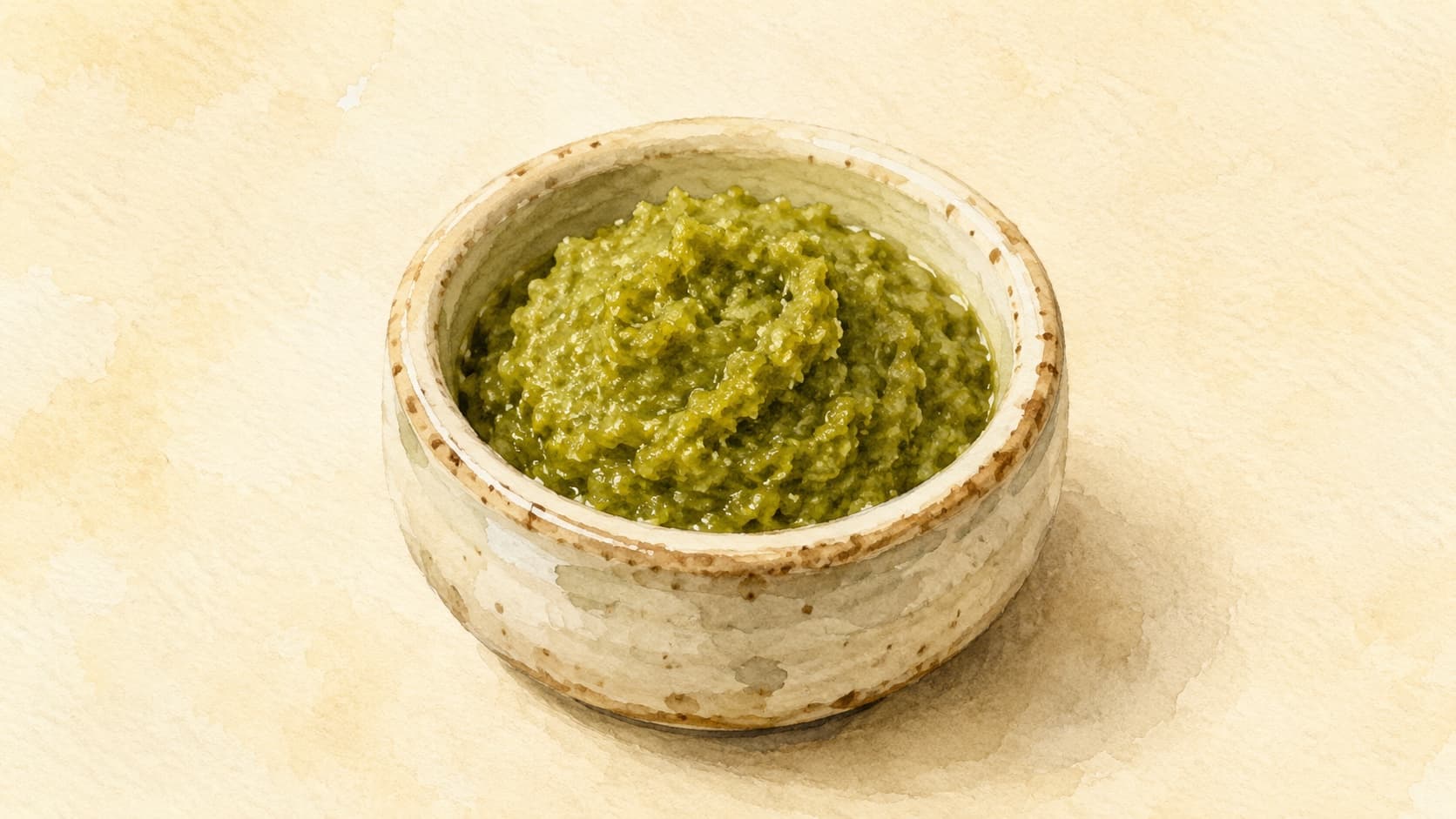
Ingredients
- 100 g fresh parsley, chopped
- 50 g fresh basil, chopped
- 50 g fresh mint, chopped
- 2 garlic cloves, minced
- 100 ml extra virgin olive oil
- 30 ml lemon juice
- 1 tsp salt
- 1/2 tsp black pepper
Steps
In a medium bowl, combine the chopped parsley, basil, mint, and minced garlic.
Gradually whisk in the olive oil until the mixture is well combined and emulsified; this should take about 2-3 minutes.
Add the lemon juice, salt, and black pepper, stirring to incorporate; taste and adjust seasoning if necessary.
If the sauce is too thick, add a little water or more olive oil to reach your desired consistency.
Transfer to a serving dish and let it sit for at least 5 minutes to allow the flavors to meld.
Why this works
This Green Herb Sauce's success lies in its emulsion technique (slowly mixing oil into watery ingredients so the two stay blended instead of separating), where the olive oil is gradually incorporated into the herbs, creating a smooth, cohesive sauce. The combination of fresh herbs provides vibrant flavor and a beautiful hue, making it visually appealing. The acid from the lemon juice balances the richness of the olive oil, enhancing the overall taste. If it breaks or separates, simply whisk in a few drops of water or olive oil to re-emulsify. If the sauce seems too thick, add more olive oil or a splash of water until you achieve the desired consistency. This versatility allows you to use leftover herbs and vegetables creatively, ensuring no ingredient goes to waste while enjoying a flavorful condiment.
Common mistakes
Wet herbs going into the sauce.
Target: Herbs washed, then spun in a salad spinner or patted thoroughly dry on a clean towel.
Why it matters: Surface water on herbs dilutes the oil and prevents the sauce from holding together. Water also accelerates browning — the green color turns olive-gray within hours instead of holding for a day or two.
What to do: Wash herbs ahead of time, dry completely, and let them sit loose on a towel for 10 minutes before chopping. Damp herbs are the single most common reason a green sauce looks dull and tastes flat.
Chopping herbs into a paste.
Target: A coarse, knife-cut mince — herbs visibly distinct, not pulverized into a green slurry.
Why it matters: Over-processing in a food processor bruises the cell walls (the structural envelope around each plant cell) and releases enzymes that turn parsley, basil, and mint bitter and brown. The classic salsa verde texture is a chunky, oil-bound mince, not a smooth puree. Pulses, not continuous blending, preserves both color and brightness.
What to do: Hand-chop with a sharp knife, or pulse very briefly in the processor with the oil already in — the oil cushions the blades and limits bruising.
Adding all the oil at once.
Target: Whisk or stir oil in gradually over 2–3 minutes — a thin stream after the herbs and acid are combined.
Why it matters: This is an oil-in-water emulsion (oil droplets suspended in a small amount of acidic liquid). Pouring all the oil in at once cannot form a stable suspension — it pools on top and slides off whatever you spoon it onto. Gradual incorporation traps tiny oil droplets in the herb-and-lemon matrix, giving the sauce body that clings to fish or potatoes.
What to do: Combine herbs, garlic, lemon juice, and salt first. Then stream the oil in while stirring. If it breaks, whisk in 1 tsp of cold water to restart the emulsion.
Storing carelessly with raw garlic in oil.
Target: Refrigerate immediately, use within 2–3 days, and never leave at room temperature for extended periods.
Why it matters: Raw garlic submerged in oil at room temperature creates a low-oxygen environment that can support Clostridium botulinum (the bacterium responsible for botulism). The acid in lemon juice helps, but does not make the sauce safe at room temperature.
What to do: Make the sauce close to serving time. Store leftovers covered in the fridge and use within 2–3 days. If you want it to keep longer, freeze in ice-cube trays — freezing is safe; long room-temperature storage is not.
What to look for
- After chopping, before oil: bright, glossy green, herbs visibly distinct. No gray edges, no liquid pooling at the bottom of the bowl.
- As oil incorporates: the mixture thickens and clings to the spoon, with small oil droplets dispersed through the green. If you see a clear oil layer on top, the emulsion needs more stirring or a tiny splash of water.
- Finished sauce: spoonable but not pourable — a thick dressing texture that drapes rather than runs. Holds a soft shape on a plate for at least 30 seconds before slowly spreading.
- Color hold: green stays vivid for the first hour, slightly deeper after 24 hours in the fridge. Any olive-gray or brown indicates bruising or oxidation.
A note on history
The Italian salsa verde — literally "green sauce" — is a herb-and-oil family that has existed in some form for at least several centuries. Written recipes for sauces that resemble the modern salsa verde appear as far back as Antonio Latini's Lo Scalco alla Moderna in the late 1690s, where the recipe is essentially parsley and vinegar-soaked bread ground together (Wikipedia). The northern Italian (especially Piedmontese) version is built around finely chopped parsley, garlic, capers, anchovies, and olive oil, traditionally served with bollito misto — mixed boiled meats (The European Dish). The southern Italian cousin, salmoriglio from Sicily and Calabria, runs brighter and more lemon-forward, using parsley and oregano with olive oil and lemon juice (Wikipedia — Green sauce). The Mediterranean has many siblings — French sauce verte, Argentine chimichurri, Mexican salsa verde cruda — but all share the same architecture: fresh herbs, fat, acid, and a sharp aromatic.
Get the essays in your inbox — free
Weekly notes on flavor, fermentation, and food history — the writing behind the Atlas of Flavor. No spam; unsubscribe anytime.