
Greek Lemon Potatoes
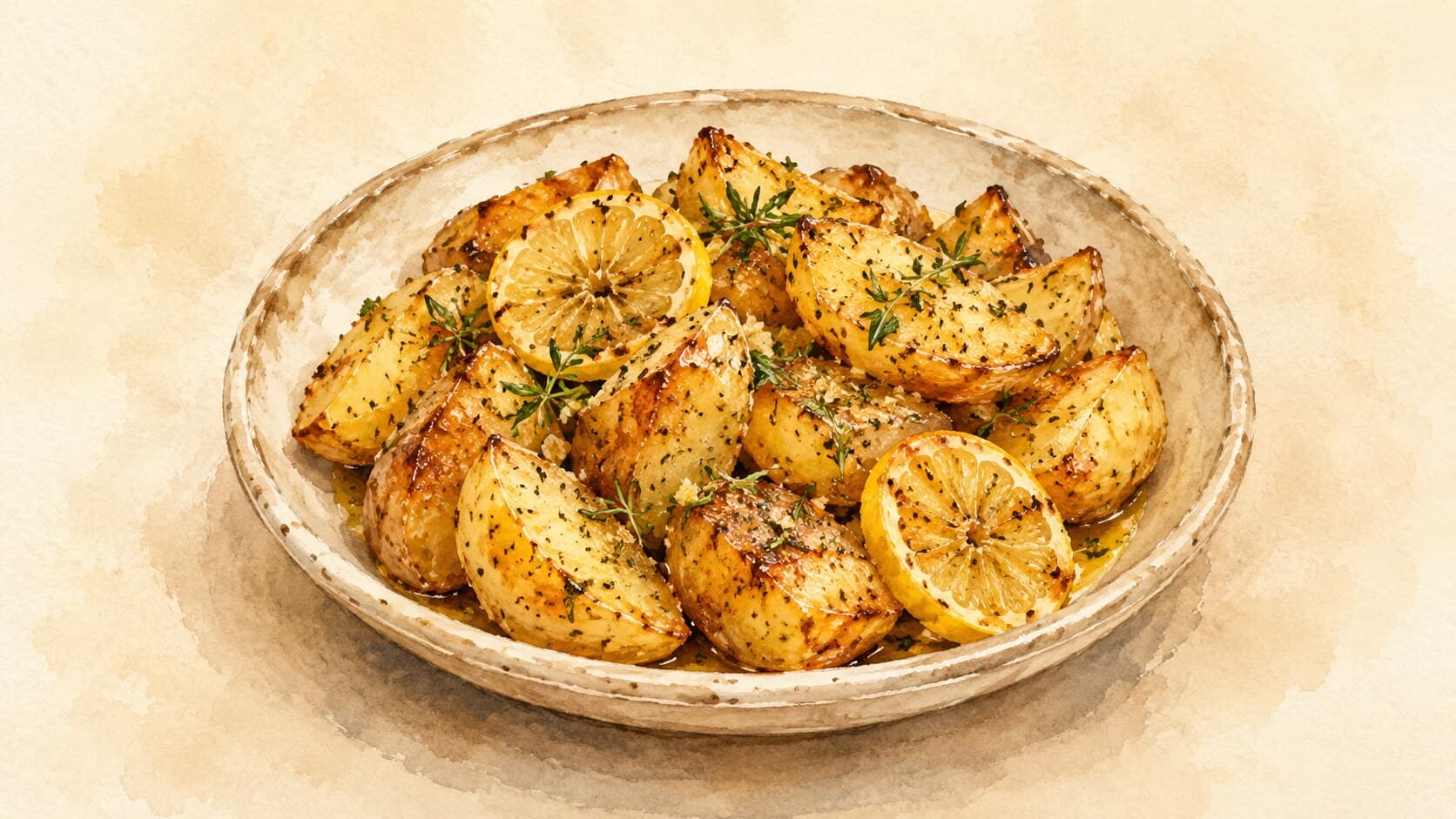
These Greek Lemon Potatoes are perfectly roasted, tangy, and aromatic, making them an ideal Mediterranean side dish.
Contents (5 sections)▾
Ingredients
- 1 kg potatoes, peeled and cut into wedges
- 100 ml olive oil
- 2 lemons, juiced and zested
- 5 cloves garlic, minced
- 1 tsp dried oregano
- Salt to taste
- Black pepper to taste
- Fresh parsley, chopped (for garnish)
Steps
Preheat the oven to 200°C (400°F). This high temperature ensures the potatoes will roast properly, resulting in a golden-brown exterior.
In a large bowl, combine the olive oil, lemon juice, lemon zest, minced garlic, dried oregano, salt, and black pepper. This mixture will infuse the potatoes with flavor as they roast.
Add the potato wedges to the bowl and toss until they are evenly coated with the lemon-oil mixture. This ensures every wedge absorbs the tangy flavor.
Spread the coated potatoes in a single layer on a baking sheet. Make sure they are not overcrowded to allow for even roasting.
Roast in the preheated oven for about 45 minutes, flipping halfway through. The goal is to achieve a crispy exterior and a tender interior.
Once golden brown, remove from the oven and garnish with fresh parsley before serving. This adds a pop of color and freshness.
Why this works
The combination of lemon juice and olive oil is fundamental in Greek cuisine, providing both acidity and richness to the potatoes. Roasting at a high temperature allows the exterior to caramelize, creating a delectable crisp while the insides become soft and fluffy. The garlic and oregano enhance the overall flavor, marrying well with the lemon's brightness. If the potatoes seem too dry during roasting, simply drizzle a bit more olive oil over them and toss gently to coat, ensuring they remain moist and flavorful. Adjusting the cooking time can also help; if they are browning too quickly, lower the oven temperature slightly to achieve a perfect roast without burning.
Common mistakes
Wedges cut too thick or unevenly.
Target: Even wedges about 2–3 cm thick on the widest side, 6–8 per medium potato.
Why it matters: Uneven wedges cook unevenly — thin edges burn while thick centers stay raw. Authentic patates lemonates are partially braised in the lemon-oil-broth mixture, so the wedge size also controls how much liquid each piece absorbs.
What to do: Halve lengthwise, then cut each half into 3–4 wedges. Aim for matching thicknesses rather than matching lengths.
Not enough liquid in the pan.
Target: Wedges sitting in about 1–1.5 cm of olive-oil-and-lemon liquid for the first stage of roasting.
Why it matters: Greek lemon potatoes are not American dry-roasted potatoes. The traditional method partially braises the potatoes in the lemon-oil mixture first, then lets the liquid reduce so the exposed faces brown. Without enough liquid, the lemon flavor stays surface-only and the interior turns dry and floury.
What to do: If the pan looks dry after tossing, add 100–150 ml of water or chicken broth before roasting. The liquid should bubble around the wedges, not just coat them.
Too little lemon, or lemon added too late.
Target: Juice of 1.5–2 lemons mixed with the oil before the potatoes go in, plus a fresh squeeze at the end.
Why it matters: This dish lives on lemon brightness. Lemon juice added only at the end sits on the surface; lemon roasted with the potatoes from the start penetrates the starch as it gelatinizes (the moment when potato starch granules swell with water and lock in flavor). The two layers — roasted-in and fresh-finished — give the dish its characteristic depth.
What to do: Whisk all the lemon juice into the oil before tossing. Save half a lemon to squeeze over the hot pan as it comes out.
Oven not hot enough — or potatoes overcrowded.
Target: 200°C / 400°F minimum, with wedges in a single layer and at least a thumb's gap between them.
Why it matters: Browning is the Maillard reaction (the savory browning that happens when amino acids and sugars meet high heat) plus starch caramelization. Both need direct heat and dry surfaces. Crowded wedges steam each other and stay pale and soft.
What to do: Use the largest sheet pan you have, or split between two pans. If you only have a smaller pan, reduce the potato quantity rather than crowd.
What to look for
- At 20 minutes: the pan still has visible liquid, edges just beginning to color. The lemon-oil mixture should be bubbling gently around the wedges — this is the braising stage.
- At 35–40 minutes: liquid mostly absorbed or evaporated, the cut faces touching the pan are deep golden brown. Flip carefully with a thin spatula; well-browned wedges release on their own.
- Finished potatoes: crisp golden edges, creamy yellow interior when broken open, lemon scent rising as they cool. A wedge should hold its shape when lifted but yield easily to a fork.
- Smell test: toasted oregano and roasted lemon zest dominate, with garlic in the background. If you smell only oil, the dish needs more time or a brighter oven.
A note on history
Greek lemon potatoes are known in Greece as patates lemonates (literally "lemon-flavored potatoes"), and are a staple of the traditional Hellenic kitchen, commonly served alongside roast chicken or lamb in homes and tavernas (casual Greek family-style restaurants) across the country (My Greek Dish, Dimitras Dishes). They are sometimes also called patates psites (oven-baked potatoes) or patates ladorigani (potatoes with olive oil and oregano) (Easy World Recipes). The technique differs from American dry-roasting: the potatoes are partially braised in the lemon-oil-broth mixture so they absorb the liquid before the exposed surfaces crisp (Easy World Recipes).
Get the essays in your inbox — free
Weekly notes on flavor, fermentation, and food history — the writing behind the Atlas of Flavor. No spam; unsubscribe anytime.