
Garlic Greens
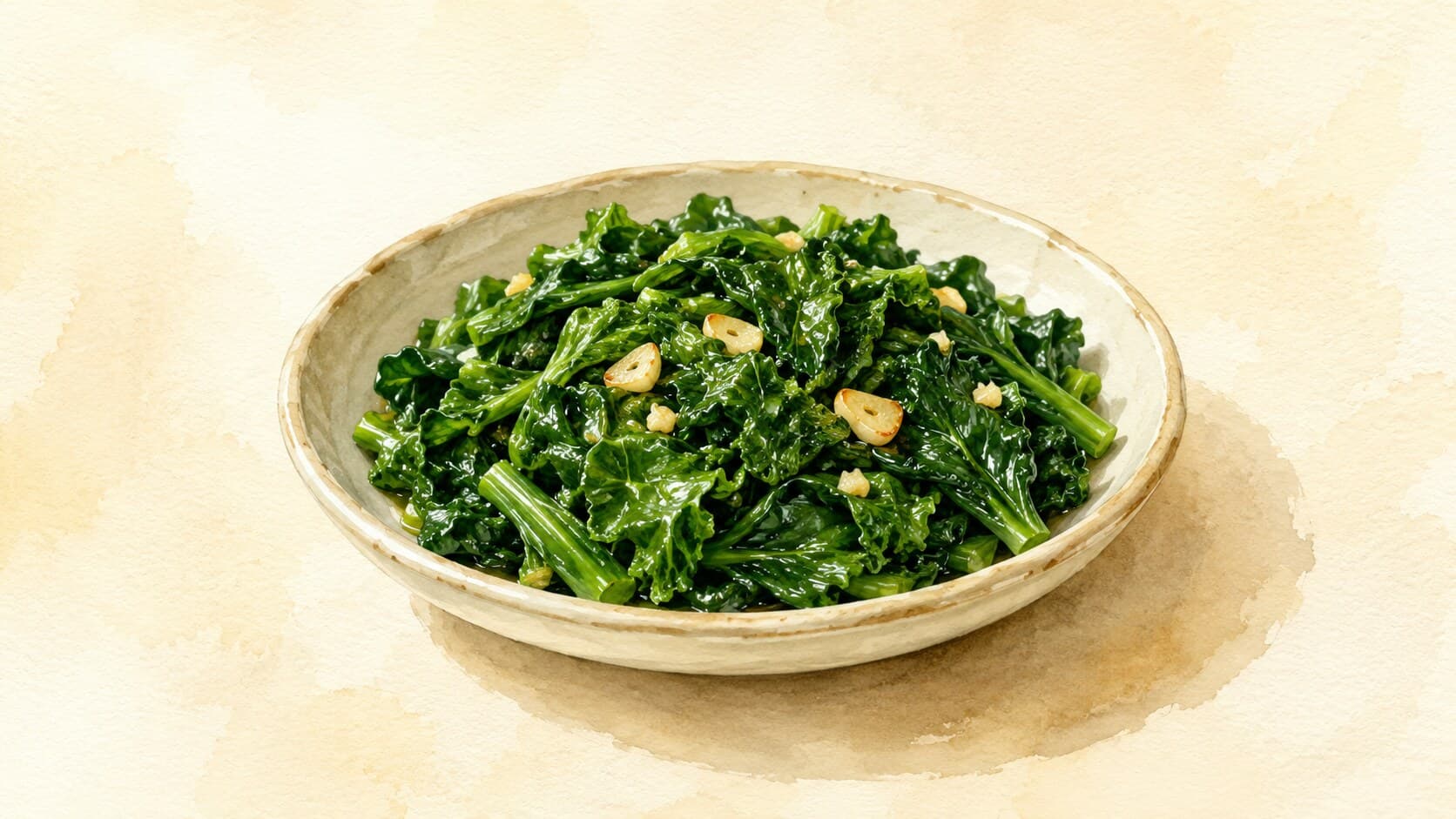
Sauté garlic and greens such as kale or spinach in oil until tender. Season with salt and pepper to enhance umami flavor.
Contents (4 sections)▾
Ingredients
- 200 g garlic greens, cleaned and trimmed
- 4 cloves garlic, minced
- 2 tbsp olive oil
- 1 tsp salt
- 1/2 tsp red pepper flakes, to taste
- 1 tbsp soy sauce, optional
- 1 tbsp lemon juice, to taste
Steps
Heat the olive oil in a large skillet over medium heat (about 180°C) for 2 minutes until shimmering.
Add the minced garlic and cook for 1-2 minutes, stirring frequently, until fragrant but not browned, as burnt garlic can impart a bitter taste.
Add the garlic greens and salt to the skillet, tossing to coat them in the oil and garlic mixture.
Sauté the greens for 5-7 minutes, stirring occasionally, until they are tender yet still vibrant in color.
If using, drizzle soy sauce over the greens and add red pepper flakes, cooking for another minute to combine the flavors.
Remove from heat and finish with a squeeze of lemon juice to enhance the umami profile and balance the dish.
Why this works
This dish highlights the umami quality of garlic greens, which are rich in flavor and nutrition. The technique of sautéing at medium heat ensures that the garlic infuses the oil without burning, which can lead to a bitter flavor. Cooking the greens just until tender allows them to maintain a vibrant color and crisp texture, showcasing their natural goodness. If the garlic greens seem too tough, simply add a splash of water to the skillet and cover it for a minute to steam them slightly. This will help soften them without overcooking. The addition of lemon juice at the end brightens the dish and enhances the overall flavor, making it a perfect complement to eggs or other dishes.
Common mistakes
Browning the garlic.
Target: Cook the garlic in warm oil over medium heat just until fragrant and pale gold — 1–2 minutes, no darker.
Why it matters: Garlic's sugars and sulfur compounds turn from sweet and aromatic to sharply bitter the instant they scorch, and that bitterness coats the whole pan. Once garlic goes brown-and-acrid there is no rescuing it; it taints every leaf that follows.
What to do: Keep the heat moderate, stir, and add the greens the moment the garlic smells fragrant. If the pan feels too hot, pull it off the burner for a few seconds before the leaves go in.
Crowding wet greens into the pan.
Target: A genuinely hot pan, greens shaken reasonably dry, added in stages if the pan fills.
Why it matters: Leafy greens are mostly water. Pile them in soaking wet and packed tight and they release a flood that the pan can't boil off, so they stew into dull, grey, slumped leaves instead of staying bright and tender-crisp. A hot pan and a little breathing room let the water flash off as steam.
What to do: Shake or spin the greens fairly dry, get the pan hot first, and add in batches, tossing so each addition wilts before the next.
Cooking the greens to death.
Target: Sauté just until wilted but still vivid and slightly springy — about 5–7 minutes for sturdy greens, far less for tender ones like spinach.
Why it matters: Overcooking collapses the cell structure: the color dulls from vivid to olive-grey, the texture goes slack, and fresh flavor fades. Tender greens in particular go from perfect to overdone in under a minute.
What to do: Pull them while they still have life and a little bite. If thick stems lag behind the leaves, add a splash of water and cover for a minute to steam them through without overcooking the leaves.
Skipping the acid at the end.
Target: A squeeze of lemon (or splash of vinegar) stirred in off the heat, just before serving.
Why it matters: Fat, garlic, and salt without acid taste flat and heavy. A hit of acid right at the end lifts and sharpens everything and keeps the greens looking lively rather than muddy. Added early, acid both dulls and can drab the green color, so it belongs at the finish.
What to do: Take the pan off the heat, squeeze on the lemon, toss once, and taste before adding any more salt.
What to look for
- Garlic at the right point: pale gold and intensely fragrant, sizzling gently — never brown. Browning means bitterness is seconds away.
- The pan is hot enough: the greens hiss and shrink on contact instead of sitting in a puddle. A silent pan with pooling liquid is too cool and will stew them.
- Greens cooked just right: wilted but still vivid green, glossy with oil, the leaves tender and the stems with a faint bite. Olive-grey and limp means they have gone too far.
- Finished and balanced: glossy, savory, and bright on the tongue from the final squeeze of acid. If it tastes flat and heavy, it wants a little more lemon, not more oil.
Get the essays in your inbox — free
Weekly notes on flavor, fermentation, and food history — the writing behind the Atlas of Flavor. No spam; unsubscribe anytime.