
Galbi-jjim
Galbi-jjim is a Korean dish made with braised short ribs, often served during special occasions like Lunar New Year.
Contents (5 sections)▾
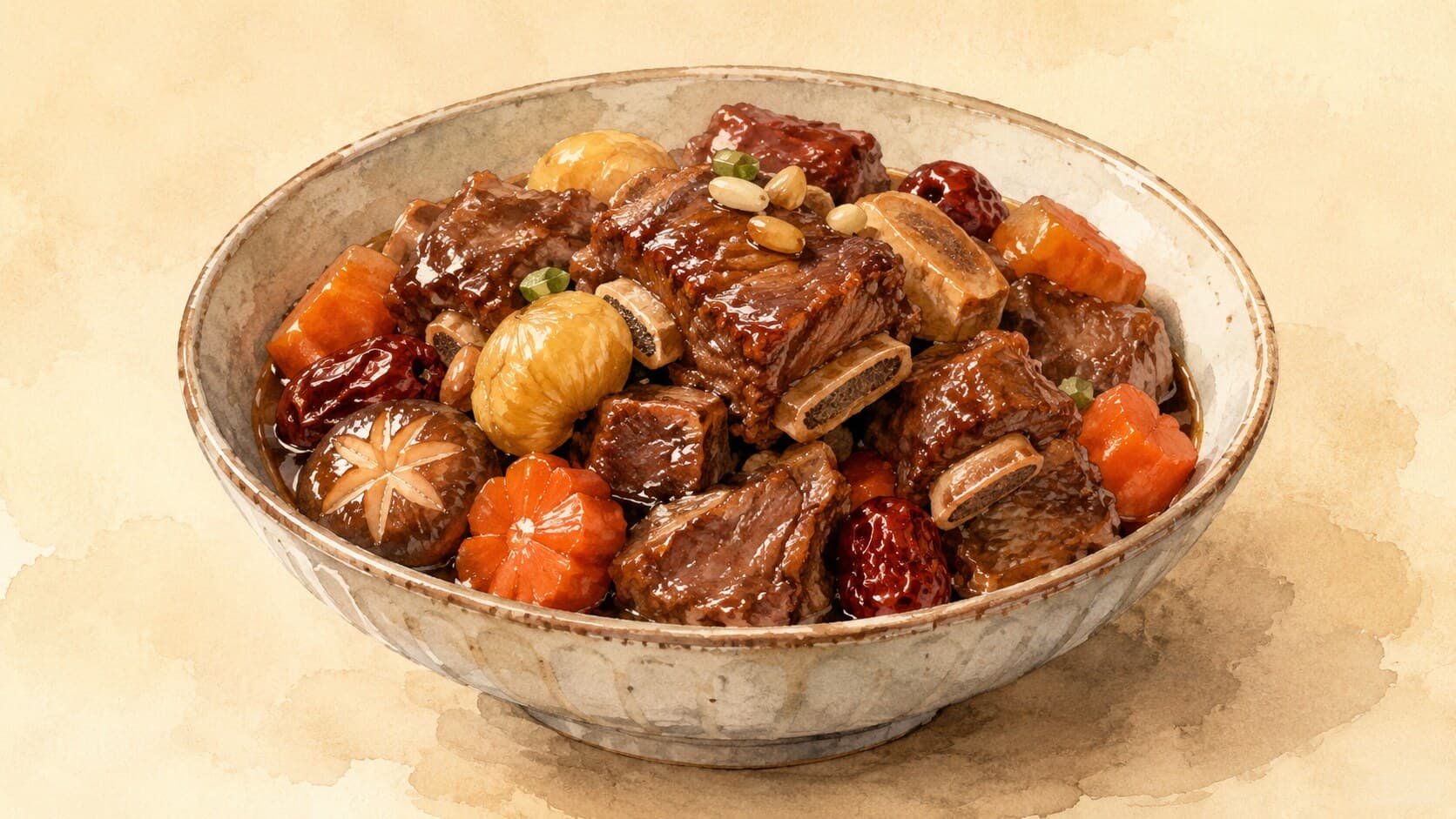
Ingredients
- 1 kg beef short ribs
- 2 tbsp soy sauce
- 1 pear, blended to a puree
- 4 cloves garlic, minced
- 1 large daikon radish, cut into chunks
- 2 medium carrots, sliced into rounds
- 100 g chestnuts, peeled
- 1 tbsp sugar
- 1 tbsp sesame oil
- 2 cups water
- salt to taste
- scallions, for garnish
- pine nuts, for garnish
Steps
Blanch the beef short ribs in boiling water for 5 minutes to remove impurities, then drain and set aside.
In a large pot, combine soy sauce, pear puree, minced garlic, sugar, sesame oil, and water. Bring to a simmer over medium heat.
Add the blanched ribs to the pot and ensure they are submerged in the liquid. Cover and reduce to low heat for 90 minutes, stirring occasionally.
After 90 minutes, add daikon, carrots, and chestnuts to the pot. Continue to braise for another 30 minutes, or until the ribs are tender.
Taste and adjust seasoning with salt if necessary before serving. Garnish with scallions and pine nuts.
Why this works
Blanching the beef short ribs at the beginning (a quick parboil to draw out impurities) removes impurities, resulting in a cleaner broth. Braising (slow cooking in a covered pot with liquid until the meat turns fall-apart tender) at low temperatures breaks down collagen, yielding tender meat that absorbs the soy-pear-garlic stock. If the sauce is too thin, remove the ribs once tender and simmer the sauce uncovered for a few minutes to thicken it. This method creates a glossy finish that adheres to the meat and vegetables.
Common mistakes
Skipping or rushing the blanching of the ribs. Target: Ribs blanched in boiling water about 5 minutes, then drained and rinsed, with the scum poured off. Why it matters: Beef short ribs release a lot of blood, fat, and protein scum as they first heat. Left in the pot, that scum clouds the braising liquid and turns the finished sauce greasy and muddy instead of clean and glossy. Blanching (a quick parboil to draw out impurities) is what gives galbi-jjim its clear, deep-brown shine. What to do: Cover the ribs with water, bring to a boil, let them bubble a few minutes, then drain, rinse the ribs under running water, and wipe the pot before building the braise.
Braising at a hard boil instead of a low simmer. Target: A bare simmer — barely trembling liquid — held low for the full braise. Why it matters: Short ribs are tough because of collagen (the connective tissue that turns to gelatin with slow heat). That conversion needs long, gentle cooking; a violent boil instead seizes and toughens the muscle fibers and dries the meat even as the liquid bubbles away too fast. Low and slow is what makes the meat fall-tender. What to do: Bring it up to a simmer, then drop the heat and cover, keeping it at a slow bubble for the long braise. Cook until the ribs are fully done and fork-tender, the meat yielding easily near the bone.
Adding the vegetables at the very start. Target: Daikon, carrots, and chestnuts added partway through, so they finish tender just as the meat does. Why it matters: Radish and carrot need far less time than the ribs. In from the beginning, they overcook into mush and lose their shape and freshness, muddying the dish; the meat, meanwhile, still needs another hour. Staggering keeps each component at its best. What to do: Braise the ribs alone first, then add the vegetables for roughly the last 30–40 minutes, large-cut so they hold together.
Serving it thin and watery instead of glossy. Target: A sauce reduced until it lightly coats the meat and clings, savory-sweet and balanced. Why it matters: Galbi-jjim's signature is a glossy soy-and-pear glaze (the sauce thickened by reduction and the meat's own gelatin) hugging the ribs. A thin, unreduced braising liquid tastes flat and slides off rather than coating. What to do: Once the meat is tender, lift the ribs and vegetables out and simmer the sauce uncovered to concentrate it, then return everything and turn to coat. The pear purée brings sweetness, the soy brings salt and savory depth — reduce until the two read as a single glaze.
What to look for
- Blanched ribs and rinsed pot: grey scum and foam poured off, the rinsed ribs clean, and the fresh liquid clear rather than cloudy. That clarity at the start is what lets the final sauce shine.
- Tender braised meat: a fork slides in and the meat pulls away from the bone with almost no resistance, moist and fully cooked through. Meat that still clings tight or feels springy needs more gentle time.
- The vegetables: daikon turned slightly translucent and carrots tender but still holding their rounds, soaked through with sauce. Falling apart means they went in too early or cooked too hard.
- The finished glaze: the sauce is glossy and clings to the meat in a thin coat, leaving a shiny lacquer-like sheen rather than pooling thin and watery. That clinging shine is the visual signature of galbi-jjim done right.
A note on history
Galbi-jjim is a braised beef short-rib dish associated with the Joseon dynasty, taking its present form in roughly the mid-18th century after policies that eased earlier restrictions on beef and encouraged cattle raising (Wikipedia). Because cattle were vital to Korea's farming economy and beef was long treated as a food of the court and elite, rich beef dishes like this carried a celebratory weight, and galbi-jjim remains a special-occasion dish prepared for holidays such as Seollal (Lunar New Year) and Chuseok (Wikipedia).
Get the essays in your inbox — free
Weekly notes on flavor, fermentation, and food history — the writing behind the Atlas of Flavor. No spam; unsubscribe anytime.