
Gado-Gado
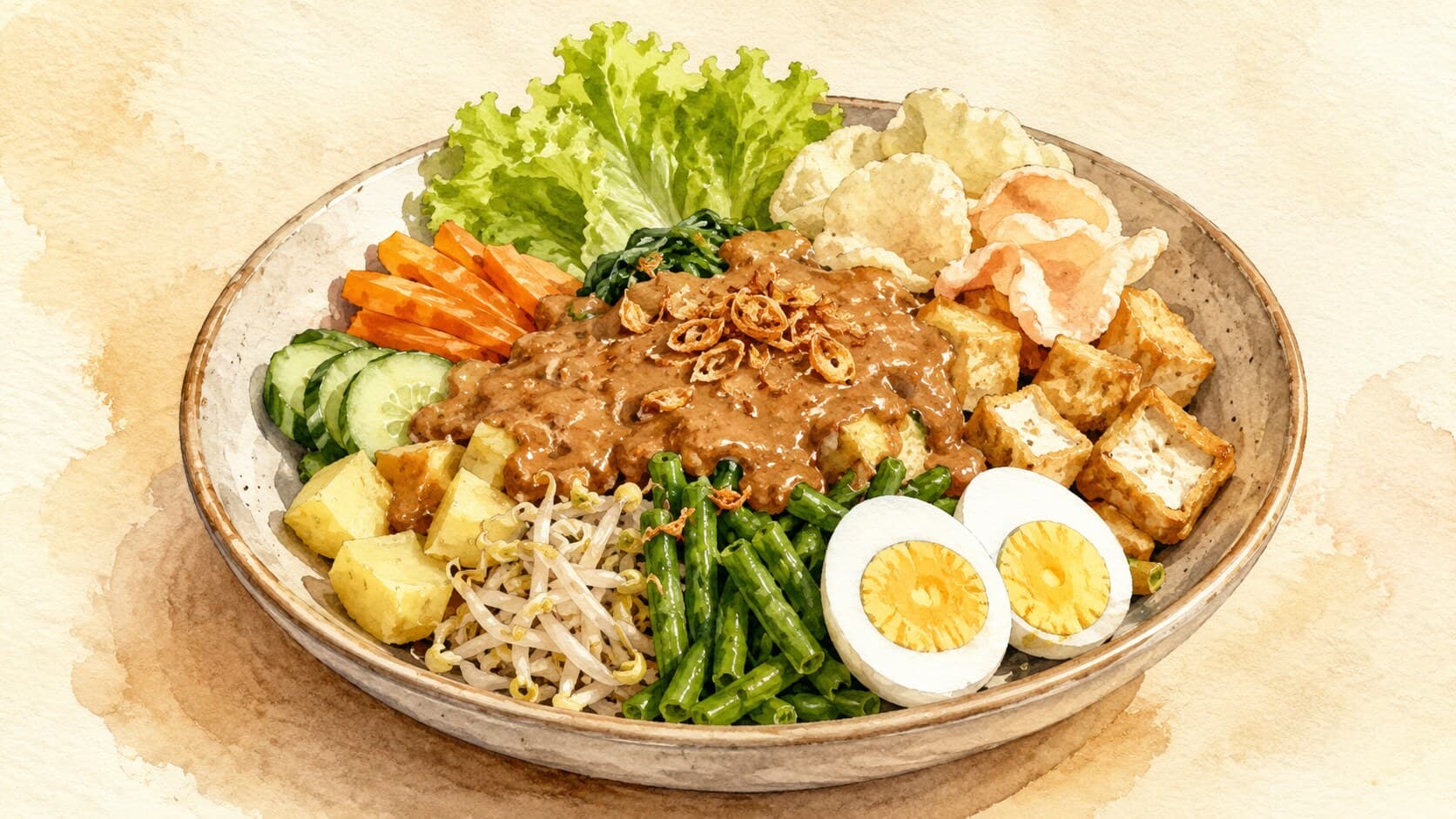
Gado-Gado is an Indonesian salad made with blanched vegetables layered with a peanut sauce, showcasing techniques like emulsification.
Contents (5 sections)▾
Ingredients
- 200 g long beans, trimmed
- 150 g cabbage, sliced
- 100 g bean sprouts, rinsed
- 2 medium potatoes, peeled and cut into cubes
- 4 hard-boiled eggs, halved
- 200 g tempeh, sliced
- 150 ml peanut sauce
- 4 krupuk (Indonesian crackers)
- salt, to taste
- water, for blanching
Steps
Bring a large pot of salted water to a boil. This will help season the vegetables while they cook.
Blanch the long beans, cabbage, and bean sprouts in the boiling water for 2-3 minutes until bright in color and slightly tender. This step retains their nutrients and vibrant colors.
Add the potato cubes to the boiling water and cook for an additional 10-12 minutes until fork-tender. Overcooking can make them mushy, so check for doneness.
While the vegetables cook, heat a pan over medium heat and fry the tempeh slices until golden brown on both sides, about 4-5 minutes. This enhances their flavor and provides a crispy texture.
Drain the vegetables and rinse under cold water to stop the cooking process. Drain well before plating.
Arrange the blanched vegetables, potato, fried tempeh, and halved eggs on a serving plate. Create a pool of peanut sauce in the center.
Serve with krupuk on the side for added crunch. Enjoy your Gado-Gado!
Why this works
Gado-Gado is a beautifully composed salad that showcases a variety of textures and flavors through the technique of blanching (briefly dipping vegetables in boiling water, then stopping the cooking in cold water). Blanching vegetables preserves their vibrant colors and retains important nutrients. The quick cooking ensures that the vegetables remain crisp, a key element in this dish. Using salted boiling water to blanch helps to infuse flavor into the vegetables. The contrast of the creamy peanut sauce (ground roasted peanuts blended with chili, sweet, salty, and sour seasonings into a pourable sauce) with the crunchy vegetables and the soft texture of the hard-boiled eggs and tempeh creates a well-rounded experience. If the peanut sauce seems too thick, you can thin it with a little water or coconut milk to achieve the desired consistency. Conversely, if the vegetables are overcooked, they may lose their vibrant color and crispness; to rescue this, you can quickly shock them in ice water after blanching to halt the cooking process, preserving their texture and color effectively.
Common mistakes
Boiling the vegetables in one pot until everything is soft. Target: Each vegetable lifted at its own moment — long beans and cabbage 2–3 minutes, bean sprouts barely 30–60 seconds, potatoes 10–12 minutes. Why it matters: Gado-gado is built on contrast: the snap of a just-blanched bean against the soft potato and the creamy peanut sauce. Different vegetables soften at very different rates, so a single timer turns the whole plate to one mushy texture and the dish loses its reason to exist. What to do: Blanch (drop briefly into boiling water, then stop the cooking) in sequence, fishing each item out as it reaches doneness; cook potatoes separately so their long boil doesn't grey everything else.
Pouring the peanut sauce on while the vegetables are still wet. Target: Vegetables drained and patted dry before saucing. Why it matters: Surface water dilutes the peanut sauce on contact, thinning it into a pale puddle that slides off rather than clinging. Peanut sauce coats best against a dry surface. What to do: After shocking the vegetables in cold water (to stop carry-over cooking), drain hard in a colander and blot with a towel; let the potatoes steam-dry a minute before plating.
Frying tempeh and tofu in oil that isn't hot enough. Target: Oil shimmering, around 170–180°C (a cube of tempeh should sizzle steadily the moment it lands). Why it matters: Tempeh (fermented soybean cake) and tofu are wet inside. Dropped into lukewarm oil they absorb it like a sponge and turn greasy and soft instead of forming the firm, golden crust that gives the salad its savory anchor. The browning here is the Maillard reaction (the flavor-building browning of proteins and sugars under heat) — it needs real heat to happen. What to do: Heat the oil fully before frying, cook in small batches so the temperature doesn't crash, and drain on paper. Make sure tempeh and tofu are cooked through and hot all the way, not just coloured on the outside.
Treating the peanut sauce as an afterthought. Target: A sauce balanced across all five axes — salt, acid, sweet, heat, and roasted-nut umami (the savory depth) — loose enough to pour but thick enough to coat. Why it matters: The sauce is the spine of the dish; bland or one-note sauce leaves a plate of plain boiled vegetables. Tamarind or lime brings the acid that cuts the richness, palm sugar rounds it, and the roasted peanuts carry the umami. What to do: Taste and adjust before plating; thin with a little warm water or coconut milk until it ribbons off the spoon, then correct salt and acid last.
What to look for
- Blanched green vegetables: vivid, almost neon green, with an audible snap when bent. Dull olive-green or floppy means overcooked — the chlorophyll has broken down and so has the texture.
- Fried tempeh and tofu: deep gold, firm, with a dry crackle on the surface and no oil weeping out when pressed. That dryness is the sign the crust set instead of soaking up fat.
- Boiled potato: a knife or skewer slides in with almost no resistance, then the piece still holds its shape. Crumbling at the edges means it has gone past tender toward waterlogged.
- Finished peanut sauce: glossy, and it falls from the spoon in a slow ribbon that holds its line for a second before sinking. Too stiff to pour or thin enough to run straight off both miss the coating consistency.
A note on history
Gado-gado is rooted in the food culture of the Betawi people of Jakarta, and the name is generally read as "mix-mix" or "medley" — gado relating to a verb meaning to eat side dishes without rice, which fits a composed plate eaten on its own rather than as an accompaniment (Wikipedia, Jakarta Dinas Kebudayaan). It took shape as an urban street food in colonial-era Batavia (now Jakarta), drawing on indigenous Javanese traditions such as pecel alongside imported ingredients, which is part of why versions of the dish vary so widely from cook to cook (Wikipedia).
Get the essays in your inbox — free
Weekly notes on flavor, fermentation, and food history — the writing behind the Atlas of Flavor. No spam; unsubscribe anytime.