
French Toast
French toast is made by soaking bread in a mixture of eggs and milk, then cooking it on a skillet until golden brown.
Contents (5 sections)▾
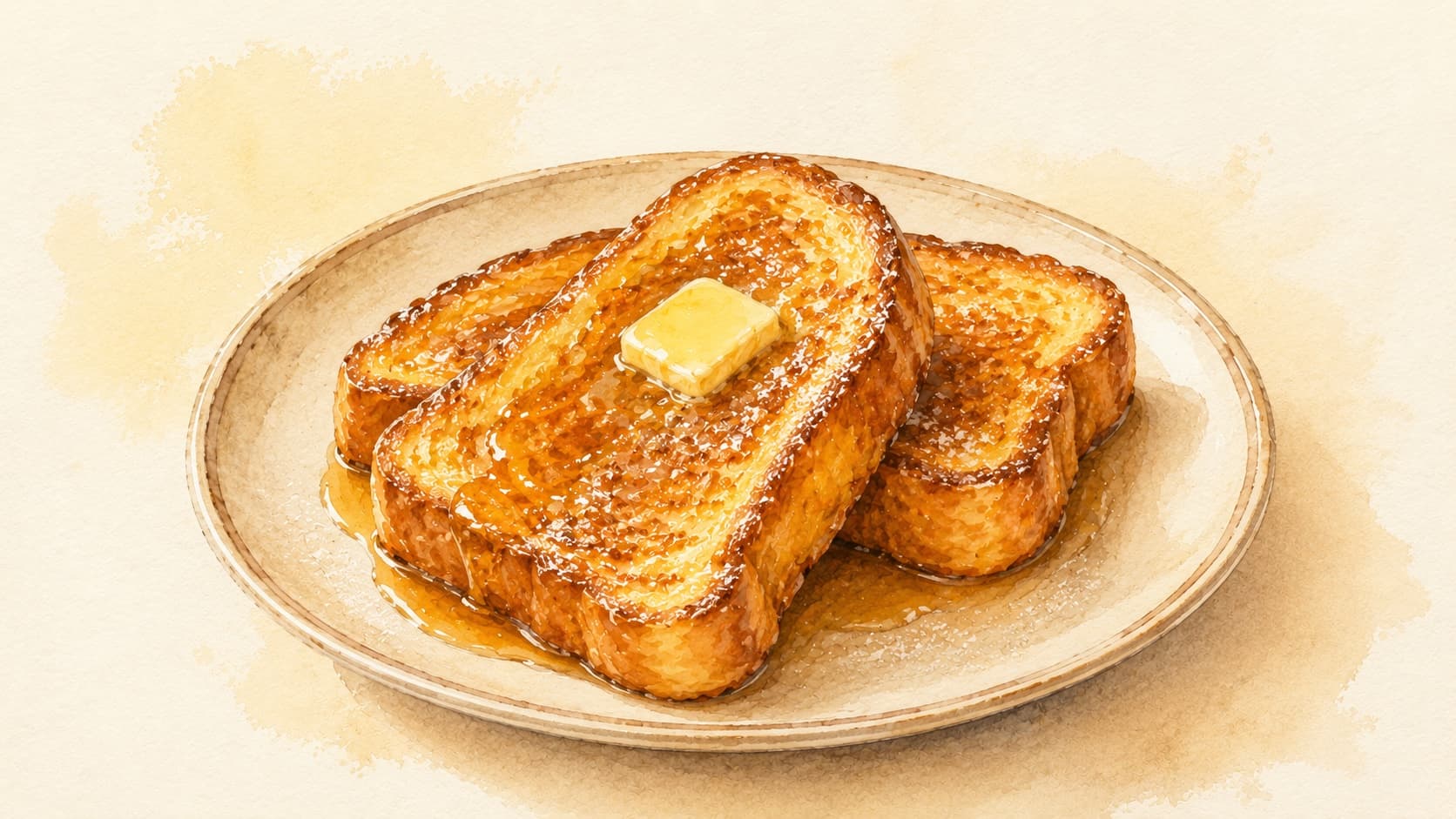
Ingredients
- 4 slices of brioche bread
- 2 large eggs
- 120 ml milk
- 1 tsp vanilla extract
- 1 tbsp sugar
- Pinch of salt
- Butter for frying
- Maple syrup for serving
- Fresh berries for garnish
Steps
In a mixing bowl, whisk together 2 large eggs, 120 ml of milk, 1 teaspoon of vanilla extract, 1 tablespoon of sugar, and a pinch of salt until well combined.
Heat a non-stick skillet over medium heat (approximately 175°C or 350°F) and add 1 tablespoon of butter, allowing it to melt and coat the surface.
Dip each slice of brioche into the egg mixture, ensuring both sides are coated but not soaked, to prevent sogginess.
Place the coated brioche slices onto the skillet, cooking for 3-4 minutes on each side, flipping when they reach a golden brown color.
Remove the French toast from the skillet and keep warm in a preheated oven at 93°C (200°F) while you cook the remaining slices.
Serve the French toast warm, drizzled with maple syrup and topped with fresh berries.
Why this works
The combination of egg and milk creates a custard-like mixture (eggs and dairy that set into a soft solid when heated) that infuses flavor into the bread while ensuring a tender texture. Cooking on medium heat (about 175°C or 350°F) allows for even caramelization (the browning of sugars by heat that builds sweet, roasted flavor) without burning, yielding that coveted golden crust. If your French toast breaks, ensure you're not soaking the bread too long; if it becomes too soggy, it will be difficult to flip. A pinch of salt enhances the sweetness of the sugar and balances the flavor. This classic dish is versatile; you can add spices like cinnamon or nutmeg for a twist. If your French toast seems too dry, consider adjusting the milk-to-egg ratio for a richer custard, or experiment with different types of bread such as challah or sourdough for variety. The precise cooking time of 3-4 minutes per side ensures that the exterior is crisp while the interior remains soft and custardy, creating a delightful contrast in textures.
Common mistakes
Over-soaking the bread so the center stays raw and wet.
Target: A brief dip — a few seconds per side for thin bread, up to a minute for thick, sturdy brioche. The slice should be coated and saturated at the surface, not collapsing.
Why it matters: The egg-and-milk mixture is a custard (eggs and dairy that set into a soft solid when heated). If the bread soaks up so much that the inside is sodden, the center cannot cook through before the outside burns — and that interior is raw egg, which should be heated to a safe temperature, not left wet and undercooked. A soggy slice also tears the moment you try to flip it.
What to do: Dip, let the excess drip off, and cook. Use day-old or slightly stale bread, which absorbs custard more evenly and holds together. Cook until the center is set, not jiggly.
Cooking on heat that is too high.
Target: Medium heat, about 175°C (350°F) on the pan surface.
Why it matters: On high heat the surface browns and the butter scorches long before the custard inside has set. You end up with a dark exterior and a cold, raw middle — the worst of both. Eggs need gentle, steady heat to go from liquid to a tender solid (the proteins denaturing, or unfolding and linking into a set).
What to do: Keep it at medium. If the toast is browning fast but still wet inside, lower the heat and give it the extra minute it needs. The interior should be soft and custardy, never runny.
Letting butter burn between batches.
Target: Foaming, gently browned butter — not blackened. Wipe the pan and add fresh butter if it darkens.
Why it matters: Butter contains milk solids that brown and then burn; once burnt they turn acrid and bitter and leave black speckles on the next slice. The pleasant nutty note of browned butter tips quickly into scorched.
What to do: Cook over medium, add butter just before each batch, and wipe out any burnt bits with a paper towel before continuing.
Skipping the pinch of salt.
Target: A small pinch of salt in the custard, even though the dish is sweet.
Why it matters: Salt sharpens the perception of sweetness and rounds out the egg's flavor; without it the custard tastes flat and one-dimensional. This is seasoning, not making it salty.
What to do: Add the pinch when you whisk the eggs, milk, sugar, and vanilla, and beat until fully combined so no streaks of unmixed white remain.
What to look for
- The custard before dipping: uniformly pale yellow, smooth, no clear ribbons of unbeaten egg white. Fully whisked, it coats the bread evenly.
- The soaked slice: saturated and golden-wet at the surface but still holding its shape, not floppy or falling apart. Soaked enough to flavor, firm enough to flip.
- The crust as it cooks: deep golden-brown and set, releasing cleanly from the pan when you lift an edge. The Maillard browning is built and it is ready to turn.
- The center when done: soft and custardy but set — no wet, glossy, liquid egg when cut. Cooked through and safe, tender rather than raw.
A note on history
What we call French toast is far older than its name and not originally French. A recipe for soaking bread in milk and beaten egg and frying it appears in the Roman cookbook Apicius (De Re Coquinaria), compiled around the 4th–5th century from earlier material (Wikipedia). In medieval Europe the dish was a thrifty way to revive stale bread, which is why the French call it pain perdu, "lost bread" — bread that would otherwise be wasted (Wikipedia). The English name is often linked to an American innkeeper named Joseph French in Albany, New York, around 1724, though that story is more folklore than firm history (Wikipedia).
Get the essays in your inbox — free
Weekly notes on flavor, fermentation, and food history — the writing behind the Atlas of Flavor. No spam; unsubscribe anytime.