
Rosemary Focaccia
This Rosemary Focaccia features a crisp crust and a soft, airy interior, enhanced by aromatic rosemary and rich olive oil.
Contents (5 sections)▾
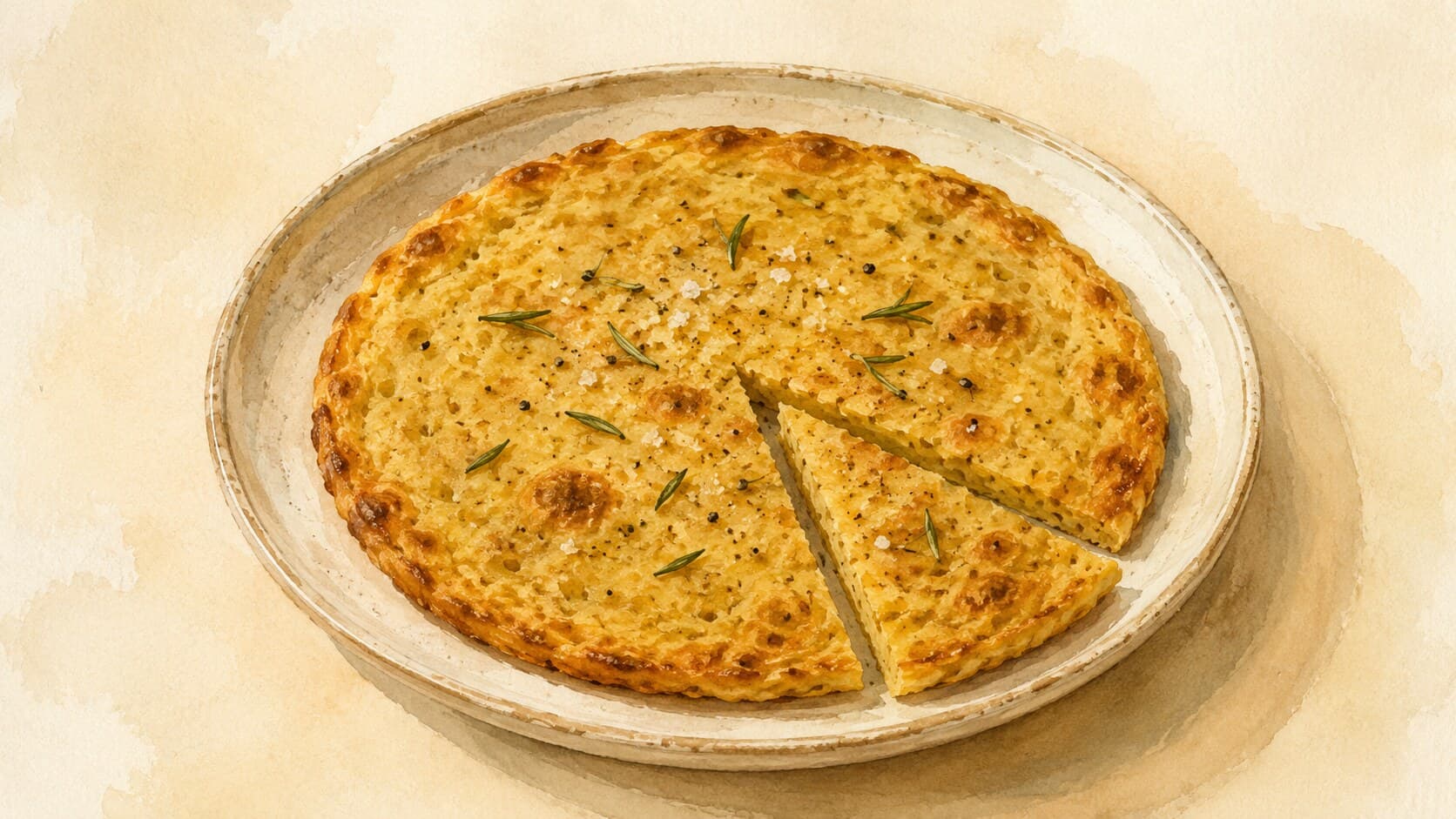
Ingredients
- 500 g all-purpose flour
- 350 ml warm water
- 10 g sea salt
- 7 g active dry yeast
- 50 ml olive oil, plus extra for drizzling
- 2 sprigs fresh rosemary, chopped
- Flaky sea salt, for topping
Steps
In a large mixing bowl, combine warm water and yeast, and let it sit for 5 minutes until frothy.
Add flour, sea salt, and 50 ml of olive oil to the yeast mixture. Stir until a rough dough forms.
Knead the dough on a lightly floured surface for about 10 minutes until smooth and elastic.
Place the dough in a greased bowl, cover it with a damp cloth, and let it rise in a warm place for 1 hour or until doubled in size.
Preheat your oven to 220°C (428°F). Once the dough has risen, transfer it to a greased baking sheet.
Gently stretch the dough to fit the pan, then use your fingers to create dimples all over the surface.
Drizzle olive oil over the surface, sprinkle with flaky sea salt and chopped rosemary, and let it rest for another 20 minutes.
Bake in the preheated oven for 15 minutes or until golden brown. Allow to cool before slicing.
Why this works
This focaccia recipe relies on high-hydration dough, which means it contains a higher ratio of water to flour, leading to a moist, airy texture. This technique requires a bit of practice, but it results in a beautifully open crumb structure and a delightful chewiness. The olive oil adds richness and contributes to a crisp crust during baking. If the dough seems too wet and sticky, refrain from adding too much extra flour; instead, use a bench scraper to manage it. This gentle handling allows the gluten to develop properly without compromising the hydration that gives focaccia its signature texture. By dimpling the surface before baking, you create pockets for the olive oil and salt, enhancing flavor and appearance. Pay attention to the baking time; if it’s undercooked, the focaccia may collapse, while overbaking will result in a dry loaf, so aim for a golden-brown finish to achieve the perfect balance.
Common mistakes
Adding extra flour to fight the sticky dough.
Target: Keep the dough wet and slack — roughly 70% hydration (water weight at about 70% of flour weight). Handle it with oiled or wet hands and a bench scraper, not more flour.
Why it matters: That stickiness is the water that turns to steam in the oven and blows the crumb open. Flour added now to make the dough easier to touch is water removed from the final loaf, and you bake a dense, tight bread instead of an airy one.
What to do: Resist the urge to dust. Oil your hands, use a scraper to fold and lift, and trust that a wet dough firms up as the gluten (the stretchy protein network that traps gas) sets during baking.
Drowning the yeast in water that is too hot.
Target: Lukewarm water, body temperature — about 35–40°C (95–105°F), comfortably warm on the wrist, never hot.
Why it matters: Yeast is a living organism. Water above roughly 50°C (122°F) starts to kill it, and dead yeast produces no gas — the dough simply will not rise no matter how long you wait.
What to do: Aim for water that feels barely warm. If you proof the yeast first (let it stand 5 minutes to confirm it foams), no foam means the yeast is dead or the water cooked it, and you should start over.
Pressing the dimples timidly, or skipping the second rest.
Target: Push your fingertips all the way down to the pan so the dimples nearly reach the bottom, then let the stretched dough rest 20 minutes before baking.
Why it matters: Shallow dimples puff closed and the surface domes; deep ones hold pools of olive oil and salt and give focaccia its quilted top. The second rest lets the gluten relax (release the tension from stretching) so the dough does not shrink back from the pan edges.
What to do: Oil your fingers and dimple with confidence right before the final rest. The dough should look dotted with little wells that stay open.
Pulling it from the oven pale to avoid "overbaking."
Target: Bake to a genuine golden-brown crust at 220°C (428°F), about 15 minutes — the top should be set and colored, not blond.
Why it matters: Bread under-baked in the center can collapse as it cools because the crumb (the soft interior of the bread) has not set, and the interior stays gummy. Color on the crust is the Maillard reaction (browning of sugars and proteins that builds toasted, savory flavor) — pull it too early and you lose both structure and taste.
What to do: Wait for even golden color across the top. If unsure, an instant-read thermometer in the center should read about 96–99°C (205–210°F) for a fully baked crumb.
What to look for
- Risen dough before shaping: doubled in size, domed and jiggly, dotted with bubbles under the surface. The yeast has filled the dough with gas and it is ready to stretch.
- The dimpled surface before baking: deep finger-wells holding visible pools of olive oil, the dough soft and relaxed into the pan corners. This is the signature texture forming.
- The crust at the right doneness: deep golden-brown on top and edges, the surface firm when tapped. The Maillard browning is complete and the crumb is set.
- The crumb after cooling: an open, slightly moist interior with irregular holes, springy rather than dense. High hydration and a full bake delivered the airy structure.
A note on history
Focaccia descends from the flatbreads of ancient Italy: the Latin panis focacius meant "hearth bread," from focus, the hearth or fireplace where it was baked, and some food historians trace the basic form back to the Etruscans before Rome (Wikipedia; Britannica). The dimpled, olive-oil-rich loaf known worldwide today is most closely tied to Liguria, the coastal region around Genoa, where during the Middle Ages — when Genoa was a powerful maritime republic — focaccia became a durable provision for sailors on long voyages, and the word itself is first attested in the 14th century (Wikipedia).
Get the essays in your inbox — free
Weekly notes on flavor, fermentation, and food history — the writing behind the Atlas of Flavor. No spam; unsubscribe anytime.