
Fish Fumet
Fish fumet is a stock made from fish bones and aromatics, used as a base for sauces and soups to enhance seafood flavors.
Contents (5 sections)▾
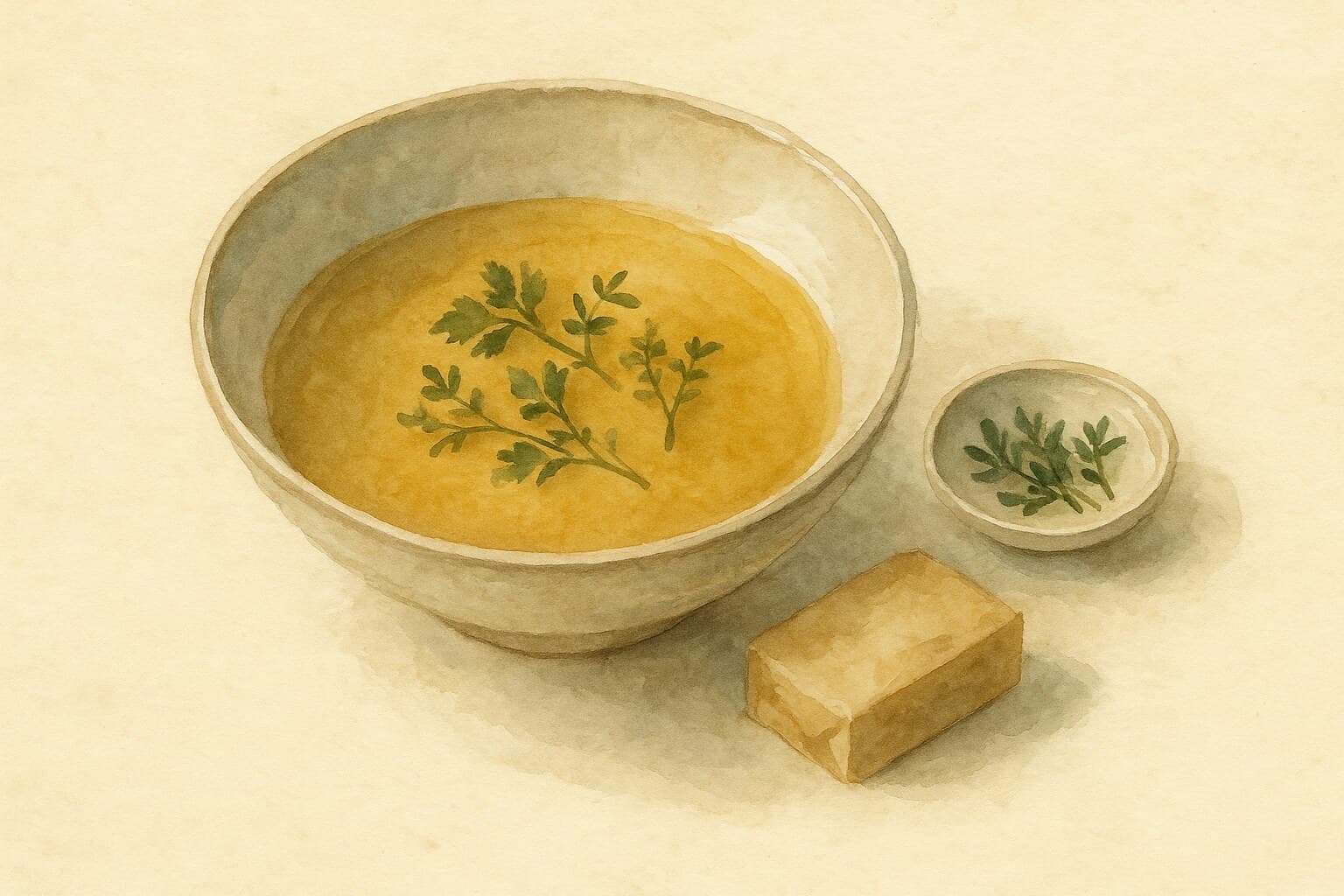
Ingredients
- 500 g fish bones (preferably white fish like sole or cod)
- 1 medium onion, roughly chopped
- 1 stalk celery, roughly chopped
- 1 small carrot, roughly chopped
- 1 clove garlic, smashed
- 2 sprigs fresh parsley
- 1 sprig fresh thyme
- 1 bay leaf
- 1 clove black peppercorns
- 1 liter cold water
- 1 tbsp olive oil
- to taste salt
Steps
In a large pot, heat the olive oil over medium heat. Add the onion, celery, carrot, and garlic, sautéing for about 5 minutes until softened but not browned. This step develops the foundation of flavor.
Add the fish bones to the pot, sautéing them briefly for 2-3 minutes. This enhances the umami flavor by lightly toasting the bones.
Pour in the cold water, ensuring all ingredients are submerged. Bring to a gentle simmer over medium heat. Do not boil, as this can cloud the broth.
Add the parsley, thyme, bay leaf, and peppercorns. Simmer uncovered for 10-15 minutes, skimming off any foam that rises to the surface to keep the fumet clear.
After simmering, remove from heat and strain the fumet through a fine sieve. Discard solids and adjust seasoning with salt if necessary. Use immediately or refrigerate for future use.
Why this works
Fish fumet (a quick, aromatic fish stock) is a foundational stock that captures the delicate flavors of fish, making it a versatile base for sauces and soups. The gentle simmering process extracts flavors without making the stock cloudy, which can happen if boiled too vigorously. By using fresh aromatics like onion, celery, and carrot, the fumet gains depth and complexity. The addition of herbs and spices enhances the bouquet of flavors. If the fumet seems too strong, dilute it with an extra splash of water; if it's too weak, consider reducing it further by simmering for a few more minutes. This method ensures a balanced and flavorful stock.
Common mistakes
Boiling instead of gently simmering.
Target: A bare simmer — small bubbles barely breaking the surface, never a rolling boil.
Why it matters: A hard boil churns fat and fine particles back into the liquid as an emulsion (fat and water forced together), which clouds the fumet and turns it greasy. A gentle simmer lets impurities rise as foam you can skim, leaving the stock clear and clean-tasting.
What to do: Bring it just to a simmer over medium heat, then hold it there. Skim the foam as it rises rather than stirring it back in.
Simmering the bones too long.
Target: 20–30 minutes total, no more — fish fumet (a quick, aromatic fish stock) is fast by design.
Why it matters: Unlike meat stock, fish bones give up their flavor and gelatin quickly, and pushing past about 30 minutes extracts bitterness and a strong "fishy," sometimes metallic edge instead of a clean, delicate base.
What to do: Set a timer, taste at 20 minutes, and strain as soon as the flavor is bright and full. Longer is not better here.
Using oily fish or unrinsed, bloody bones.
Target: Bones from lean white fish (sole, cod, turbot), rinsed of all blood.
Why it matters: Oily fish (salmon, mackerel) and residual blood make the fumet murky, strong, and prone to off-flavors. Rinsing removes blood and bits that cloud the stock and taste bitter when cooked.
What to do: Choose white-fish frames, rinse them well under cold water until the water runs clear, and trim away any dark gills or organs before they go in the pot.
Leaving the strained fumet to cool slowly at room temperature.
Target: Cool quickly, then refrigerate; use within a day or two, or freeze.
Why it matters: Stock sits in the temperature range where bacteria multiply fastest, and fish stock is especially perishable. A pot left to cool slowly on the counter is a food-safety risk; cooling it fast and chilling it keeps it safe and fresh.
What to do: Strain, then set the container in an ice-water bath to drop the temperature quickly before refrigerating. Use it within one to two days, or freeze in portions for later.
What to look for
- The aromatics at the start: softened and translucent, never browned or colored. Fumet is built on a pale, clean base — browning the vegetables muddies both color and flavor.
- The surface as it simmers: a thin foam gathering at the edges, lifted off with a spoon. Diligent skimming is the difference between a clear fumet and a cloudy one.
- The liquid itself: pale, clean, and translucent, not milky or greasy. Cloudiness signals too hard a boil or unrinsed bones.
- The finished, strained stock: light gold to nearly clear, smelling sweetly of the sea, not sharply fishy. A harsh, strong smell means it cooked too long.
A note on history
Coastal cooks have made simple fish broths for as long as people have eaten fish, but the fumet — a concentrated, standardized foundation built by sweating bones and aromatics — took shape in the refined kitchens of 17th- and 18th-century France, where cooks needed an elegant base for delicate seafood sauces (Library of Congress). In French it is fumet de poisson, distinguished from heavier meat stocks by its lightness and the use of lean, white-fleshed fish (The Chef's Cooking School). Auguste Escoffier formally codified the preparation in Le Guide Culinaire (1903), the work that systematized much of modern French cuisine (Escoffier At Home).
Get the essays in your inbox — free
Weekly notes on flavor, fermentation, and food history — the writing behind the Atlas of Flavor. No spam; unsubscribe anytime.