
Financier
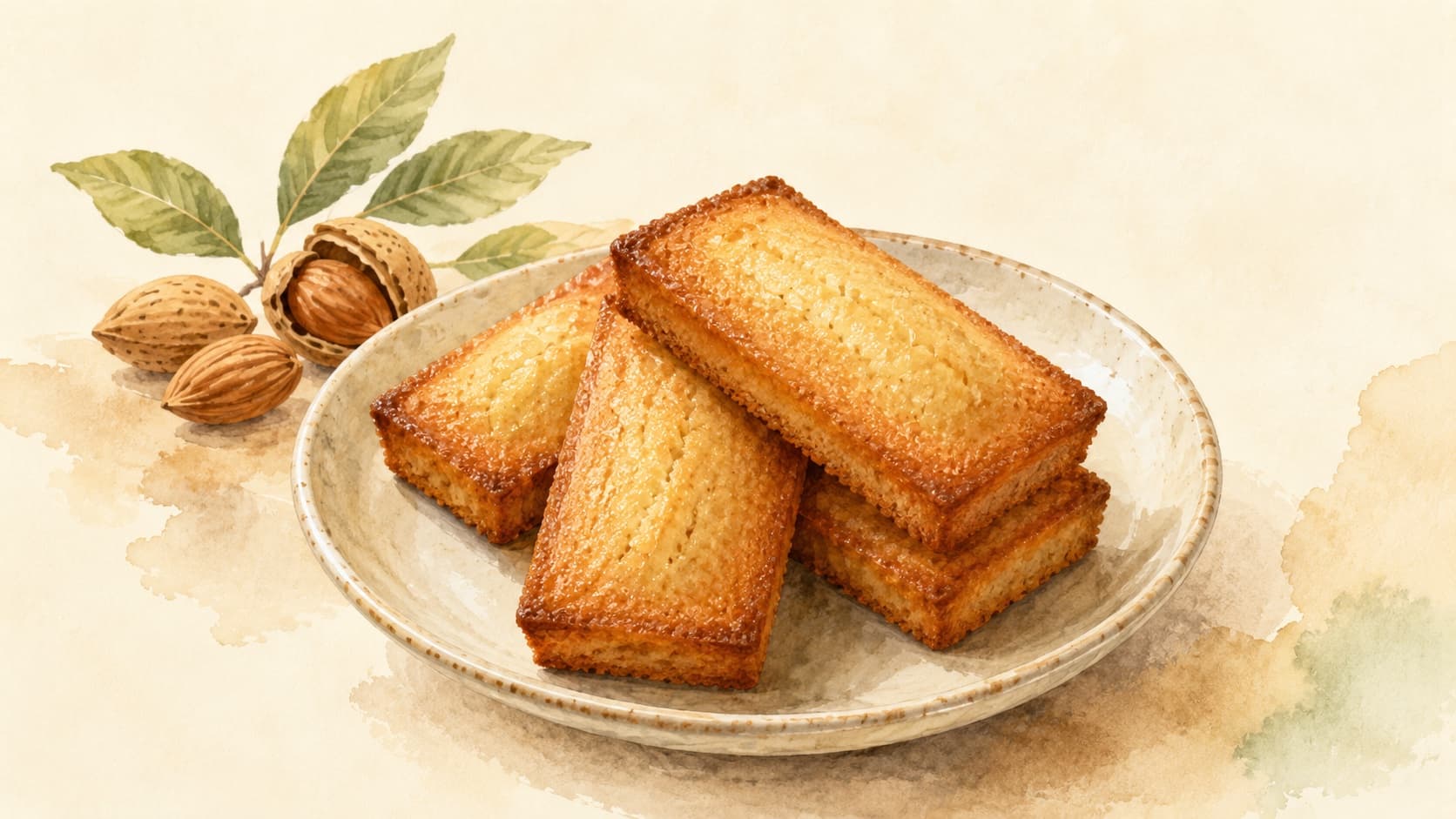
Financiers are small French almond cakes made with browned butter and almond flour, known for their moist texture and rich flavor.
Contents (5 sections)▾
Ingredients
- 100 g unsalted butter
- 100 g almond flour
- 50 g all-purpose flour
- 150 g powdered sugar
- 3 large egg whites
- 1/2 tsp vanilla extract
- 1/4 tsp salt
Steps
Preheat your oven to 200°C (390°F). This ensures even baking and helps achieve a golden crust.
In a saucepan, melt the butter over medium heat until it turns golden brown and smells nutty, about 5-7 minutes. This technique, called beurre noisette, adds depth of flavor.
In a bowl, whisk together almond flour, all-purpose flour, powdered sugar, and salt until well combined.
Add the egg whites and vanilla extract to the dry ingredients, mixing until just combined. Be careful not to overmix.
Slowly fold in the browned butter into the batter, making sure to incorporate all the butter for richness.
Grease financier molds or a mini muffin tin, then pour the batter into each mold, filling them about 3/4 full.
Bake in the preheated oven for about 12-15 minutes, or until the edges are golden and a toothpick comes out clean.
Remove from the oven and let cool in the molds for a few minutes before transferring to a wire rack to cool completely.
Why this works
The unique texture and flavor of financiers come from the use of almond flour and the technique of browning the butter. Almond flour gives the cake a moist crumb and a slightly nutty flavor, which complements the richness of the butter. Browning the butter enhances the flavor and adds complexity and depth. If the batter seems too thick, adding a splash of milk or water can help loosen it up for easier handling. It's essential to monitor the baking time—overbaking can lead to dry financiers, while underbaking may cause them to collapse. If they break upon cooling, it often means they weren't fully set in the oven; next time, give them a couple more minutes of baking time to firm up adequately.
Common mistakes
Stopping the butter too soon, before it browns.
Target: Cook the butter until it foams, the milk solids at the bottom turn deep golden-brown, and it smells distinctly nutty — that's beurre noisette (browned butter, where the milk solids in the butter toast to a hazelnut color and aroma).
Why it matters: The browning is a Maillard reaction (heat reshaping the milk proteins and sugars into deep, toasty flavor compounds) — it's the single biggest flavor in a financier. Stop at plain melted butter and the cakes taste flat and merely sweet; the nutty depth is gone.
What to do: Swirl the pan and watch the solids, not the clock. The moment they're golden-brown and aromatic, pull it off the heat and pour it out — including the toasty bits — so it stops cooking before it scorches.
Burning the browned butter past nutty into bitter.
Target: Deep golden-brown solids; stop before they turn black.
Why it matters: Browned butter goes from perfect to acrid in seconds because the milk solids keep cooking on residual heat. Black, burnt solids turn the whole batter bitter — unfixable.
What to do: Have a bowl ready and pour the butter out the instant it's done; the pan's stored heat will keep browning it if you leave it in. Scrape in the flavorful brown bits but discard anything truly black.
Overmixing the batter once the flour goes in.
Target: Mix just until no dry streaks remain; a few lumps are fine.
Why it matters: Beating flour develops gluten (the stretchy protein network that gives bread its chew), which makes a financier tough and rubbery instead of tender and moist. The almond flour can't toughen, but the wheat flour can.
What to do: Fold gently and stop early. Adding the butter last and folding it in with a light hand keeps the crumb delicate.
Underbaking so they collapse, or overbaking so they dry out.
Target: Edges golden and set, a toothpick coming out clean, the center just firm — usually 12–15 minutes at 200°C / 390°F.
Why it matters: A financier must bake until the egg-white-and-flour structure is set, or it sinks and breaks as it cools; pushed too far, the high almond-and-butter fat content dries to a crumbly cake. The window is narrow.
What to do: Start checking at 12 minutes. If they break on cooling, give the next batch a minute or two more; if they're dry, pull a minute earlier. Let them firm up in the mold briefly before turning out.
What to look for
- The browning butter: foam subsiding, the solids at the bottom turning golden-brown with a nutty smell — this is the beurre noisette stage and the heart of the flavor; pull it the instant it's there.
- The batter: smooth and pourable, glossy with butter, no dry pockets of flour — mixed just enough to combine without toughening.
- The edges in the oven: deep golden and slightly crisp, lifting just away from the mold — the structure has set and the sugar at the edge has caramelized.
- The crumb when cool: moist and tender inside under a thin crisp shell, holding together without crumbling — the sign of correct bake time and gentle mixing.
A note on history
The financier descends from the visitandine, a small almond cake reportedly created by the nuns of the Order of the Visitation in the Lorraine region of France, prized for its keeping quality and refined texture (Wikipedia). Its modern form and name are usually credited to a Parisian pâtissier named Lasne around 1890, whose shop sat near the Bourse (the Paris stock exchange); he reshaped the cake into a small rectangular gold-bar form for his financier clientele and renamed it le financier (Tasting Table). The bullion shape was also practical — easy to eat without messy cream or fruit, ideal for busy bankers in the financial district (The Daily Meal).
Get the essays in your inbox — free
Weekly notes on flavor, fermentation, and food history — the writing behind the Atlas of Flavor. No spam; unsubscribe anytime.